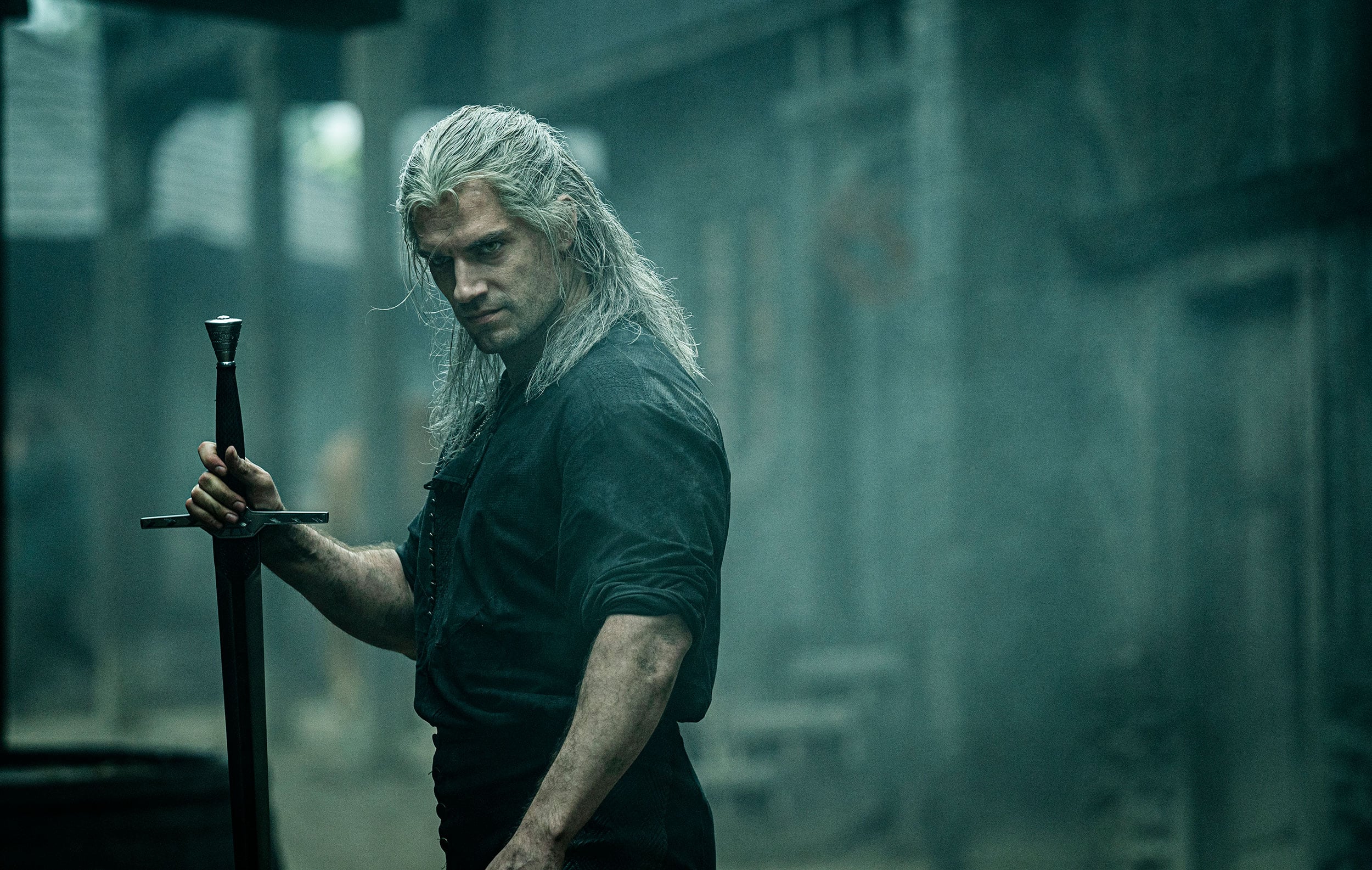
In the first episode of The Witcher: Blood Origin, a trio of fugitives from the crown, with bounties on their heads and no coins in their purses, walk into a bank and find it picked clean. Following a ruthless coup that consolidated the power of three kingdoms into a single empire, the common folk saw the storm coming, gathered what they could, and fled. The standout sequence of the four-episode series subsequently ensues, in which beloved bard Éile (Sophia Brown), tenacious royal guard Fjall (Laurence O’Fuarain), and reclusive swordmaster Scian (Michelle Yeoh) fend off an attack from soldiers who’ve tracked them down. The strikingly lucid, tightly choreographed fight ends with the bank up in flames.
Unfortunately, Blood Origin features too little action and spectacle of this sort, and frequently resorts to bluntness rather than nuance when expressing its ideas. Set more than a thousand years before The Witcher, the series gestures at themes central to the tale of Geralt of Rivia—about the power of stories, the nature of monstrousness, and the oppression of class—but proves too hurried and scattered to penetrate much beyond the surface of its universe and characters.
Éile, Fjall, and Scian assemble a motley party of companions to depose Princess Merwyn (Mirren Mack), the figurehead planted atop the throne by chief sage Balor (Lenny Henry) and military commander Eredin (Jacob Collins-Levy). The crew of humbled outcasts suggests a bargain-bin Fellowship of the Ring. But while Blood Origin occasionally gives us compelling glimpses into the grief, guilt, and fury motivating its heroes—as with Meldof (Francesca Mills), a bruiser who joins the group with a death wish after completing a zealous quest for revenge—it largely fails to imbue its characters with the sense of interiority that made Frodo and company so memorable in Peter Jackson’s adaptation of J.R.R. Tolkien’s books.
Indeed, Blood Origin all but locks us out from the inner lives of its protagonists. The show’s abbreviated timeline only exacerbates the issue. When Éile and Fjall, who first meet as adversaries, develop a fervent romance, it’s difficult to feel anything but shock at their relationship’s sudden flourishing. They discover a shared grievance and vow to exact justice—but that’s true of the entire party, and the particularities of the couple’s bond remain murky.
Theirs is but one of many ostensibly deep loves—familial and romantic, lifelong and nascent—that Blood Origin consistently states rather than unspools. The politicking between Merwyn and her co-conspirators, meanwhile, quickly grows tiresome, as those in power in the world of the show do a great deal of talking but don’t have much of interest to say.
The plotting and subterfuge begin to bear intriguing fruit in the last 20 or so minutes of the final episode, as we learn more about the “conjunction of the spheres,” a cataclysm that sends the worlds of elves and dwarves, humans, and monsters crashing into each other. The dazzling depiction of the event conveys its unfathomable scale and implications, its profound reorientation of space and time. But both the upheaval and Blood Origin itself end shortly after they begin. Having, at last, built up a head of steam, the series ends in a fizzle.
Since 2001, we've brought you uncompromising, candid takes on the world of film, music, television, video games, theater, and more. Independently owned and operated publications like Slant have been hit hard in recent years, but we’re committed to keeping our content free and accessible—meaning no paywalls or fees.
If you like what we do, please consider subscribing to our Patreon or making a donation.