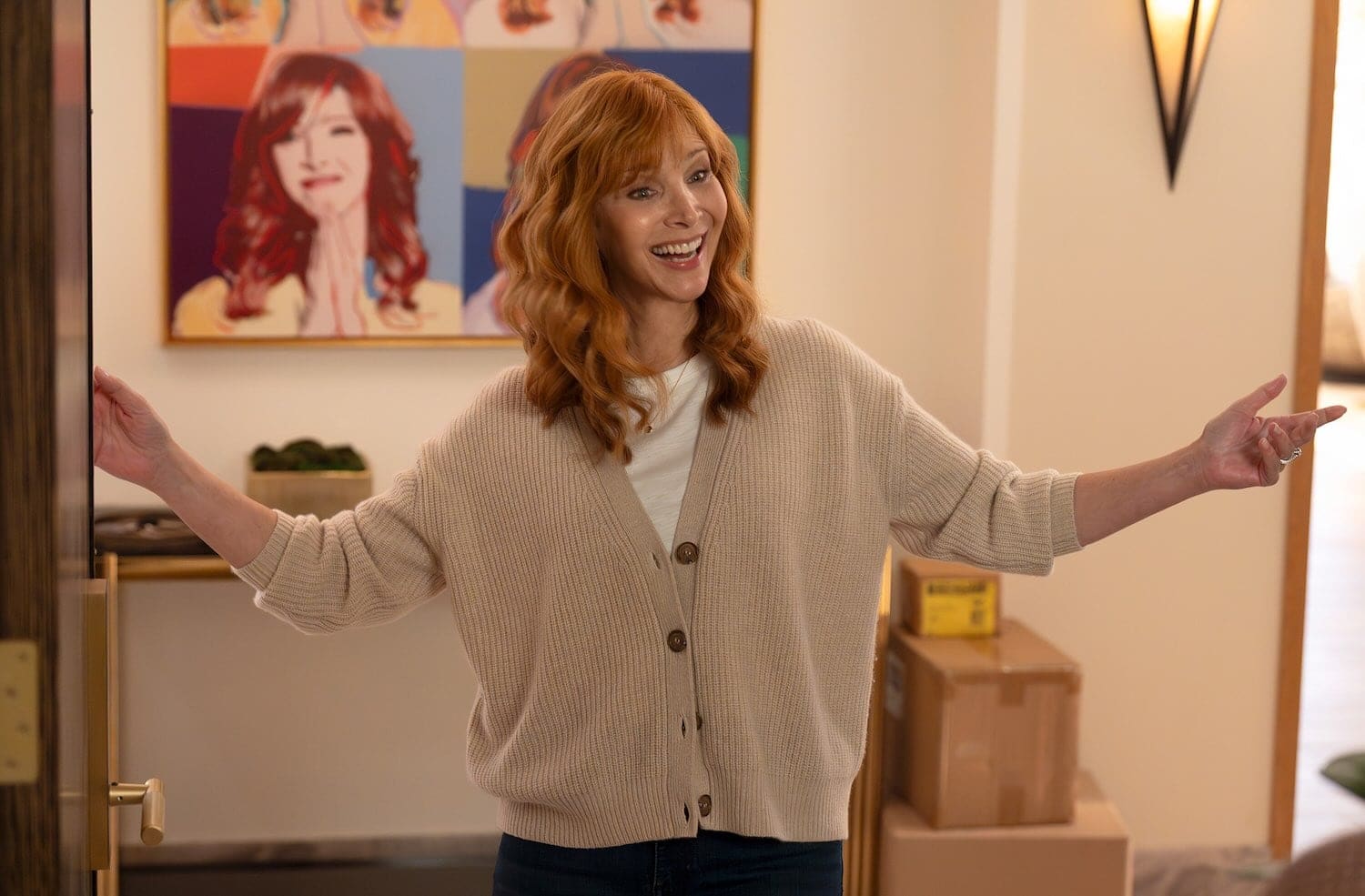
“I hope Rome burns to the ground,” Abbi Jacobson’s embittered TV writer tells sitcom veteran Valerie Cherish (Lisa Kudrow) in the final season of HBO’s The Comeback. You’d be hard-pressed to locate even a stitch of comedy in Jacobson’s delivery or Kudrow’s reaction, as both the actors and their characters can read the A.I.-generated writing on the wall: For Hollywood, this is the end times.
Which is an unusual hook on which to hang an entire season of a comedy, starring one of TV’s most iconic comic actors. But this is, after all, a series that began over two decades ago by satirizing the industry’s treatment of a “woman of a certain age,” as the head of programming (Will Higgins) at a new streamer puts it in the second episode of the third season.
In the 12 years since The Comeback’s last season, a surfeit of new technologies and platforms has emerged for Val to, well, whatever the opposite of master is: voice memos, podcasts, Waymo, just to name a few. One of the season’s funniest and most relatable bits is tossed off during the end credits of episode two, when Val, ever stridently attempting to wrest control of her life and career, willfully ignores the voice navigation in her car.
Created by Kudrow and Michael Patrick King, The Comeback shines a light on the vanity and incompetence of the people running Hollywood, a town filled with writers, directors, and agents simultaneously afflicted with imposter and main character syndromes. Dan Bucatinsky, for one, is truly cringe-inducing as Billy, Val’s self-serving publicist turned manager who’s perpetually vying for his own spotlight.

With a few exceptions, though, the new season lacks the rapid-fire mania of the show’s earlier seasons, as it swings between Val’s new gig on a multi-cam sitcom that’s being covertly written by an A.I. program and a gratuitous B-plot in which her husband, Mark (Damian Young), sets out to find himself via a trip to Burning Man with their doorman. A joke about skid marks is enough to make you wonder if the series itself was written by A.I. (the show’s final title card assures us that it was, in fact, not).
For better or worse, Val is no longer the subject of ritualistic humiliation, which leaves the final season feeling less sadistic but also less sharp. There’s not a single moment here as devastating or as potent as Val’s “unfuckable” monologue from season two. What we’re left with is something arguably more chilling: a sense of hopelessness. With its hyper-focus on the dehumanization of artists and the plagiaristic nature of A.I., The Comeback begins to feel less like comedy and more like dystopian horror.
The show’s big comeback is backdropped by Paramount Skydance’s doomsday acquisition of Warner Bros. Discovery, HBO’s parent company, painting a grim meta-portrait of not just Hollywood and the creation of entertainment in the age of technological insurgency, but humanity as a whole. A series willing to mercilessly take on the industry, including its own network, feels brave, even radical—until the final episode, when it seems to hedge its bets.
A scene in which Val is summoned to the office of a well-respected showrunner sees the writers’ guild reduced to a cabal of condescending white men (played by Bradley Whitford, Adam Scott, and Justin Theroux) who attempt to strong-arm Val into speaking up for them. It’s a reasonable request, but the series seems to acquiesce to the inevitability of A.I. when it has Val pit out-of-work writers against the hundreds of other union workers who are employed by a hit TV show.
Earlier in the season, Val reunites with Paulie G. (Lance Barber), the abusive co-creator of her “comeback” sitcom Room and Bored and a flesh-and-blood reminder that the best writers are decidedly human—and often “bruised and broken.” Her instinct for self-preservation thwarts what could have been a redemption arc for both of them, and by season’s end, she’s given a convenient escape hatch to avoid a real reckoning. Forget Rome. To reference another soon-to-be Paramount Skydance property, if Hollywood is King’s Landing, Valerie Cherish is the Queen of Dragons.
Since 2001, we've brought you uncompromising, candid takes on the world of film, music, television, video games, theater, and more. Independently owned and operated publications like Slant have been hit hard in recent years, but we’re committed to keeping our content free and accessible—meaning no paywalls or fees.
If you like what we do, please consider subscribing to our Patreon or making a donation.