The most common criticism levied against NBC’s Community during its chaotic and generally acclaimed six-season run was that it was all snark and no heart. It’s a complaint that’s been levied at many self-aware, pop culture-literate works by Gen Xers. But in this case, it was flat-out wrong. Threaded alongside creator Dan Harmon’s meta-sitcom-as-sitcom commentary was a poignant and gut-twisting look at loneliness and purpose that suggested that even being part of a co-dependent hot mess of a friend group was better than navigating life solo.
By the final episode, the writers had turned their half-hour sitcom about seven maladjusted people in a study group at Greendale Community College into a sandbox in which they could do everything from riff on conspiracy theories, fanboy over Ken Burns and The Wire, and eventually question the nature of reality. The series was arch and arty but goofy as well. Harmon was an improv comic nerd looking to tick off the suits and rage against the strictures of broadcast TV’s sausage factory. Deep down, though, he was also that kid who just loved Cheers, understood the comfort it provided, and wanted to channel it in his own fashion.
Although the fan hashtag #SixSeasonsAndAMovie first popped up when it looked like season two might be the show’s last, a Community feature film remained a pipe dream until Peacock announced they were moving ahead with it in September 2022, seven years after the last episode aired. A year later, promises were still being made, but shooting has reportedly not yet started.
Editor’s Note: Chris Barsanti’s new book, co-written with Brian Cogan and Jeff Massey, Six Seasons and a Movie: How ‘Community’ Broke Television, is available now.

10. “Emotional Consequences of Broadcast Television,” Season 6, Episode 13
Less despised than the show’s subpar fourth season—when a fired Harmon went off and podcasted while hired-gun showrunners did their best Community impression (bad as it sounds)—but a little unfairly dismissed, the final season still had gems. The last episode includes a lovely moment from Abed (Danny Pudi), the show’s autistic TV obsessive, comparing relationships to television: “It’s a friend you’ve known so well and for so long you just let it be with you. And it needs to be okay for it to have a bad day, or phone in a day.” Then there’s the end tag, a fake commercial with a family playing a Community board game. It starts as a riff on St. Elsewhere’s ending, and concludes with the father telling his son, “We don’t exist. We’re not created by God. We’re created by a joke.” Is television a comfort, a trap, or a playground for wrangling with existential quandaries? Who can say? Next up: Mama’s Family.
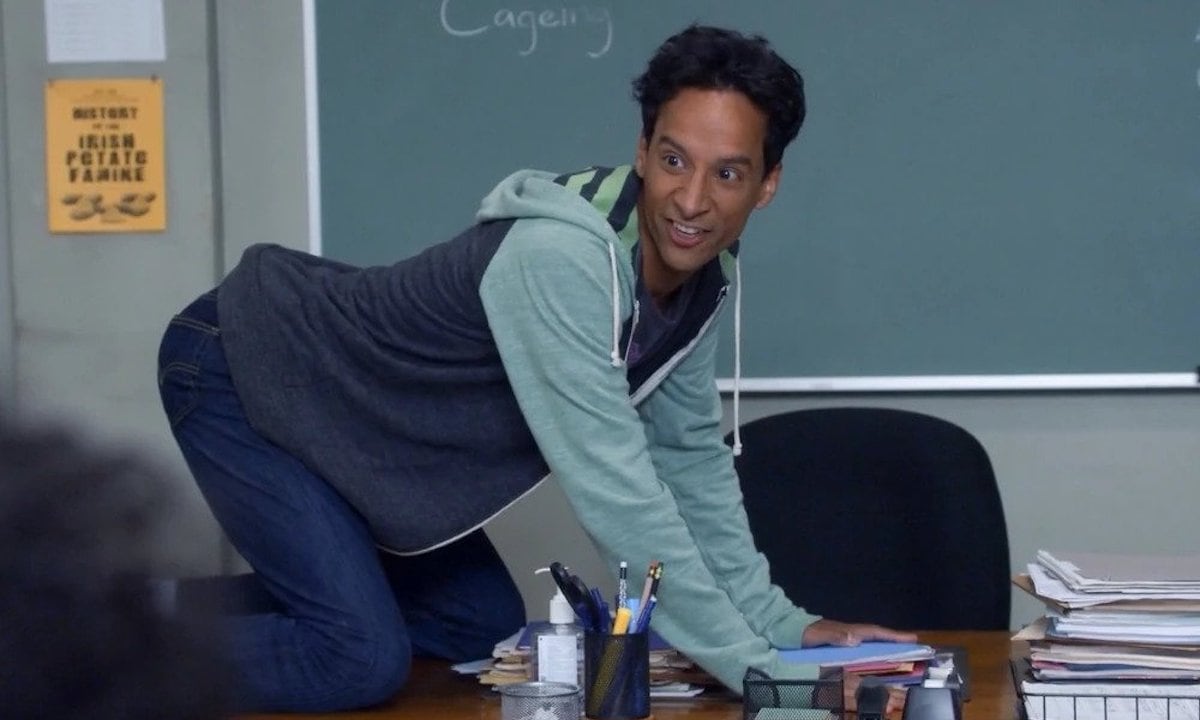
9. “Introduction to Teaching,” Season 5, Episode 2
Years before The Unbearable Weight of Massive Talent and too many Nicolas Cage memes, Abed captured the actor’s essential unknowability when he enrolls in the seminar “Nicolas Cage: Good or Bad?” Trying to answer that question hurls Abed into a media vortex. He’s spit out the other end as a frazzled, howling, slightly broken shell of a fanboy who’s discovered the clear taxonomies once defining his worldview (“Robert Downey Jr.: Good; Jim Belushi: Bad”) don’t apply anymore and that maybe they never did. Cage is a hack. Cage is a genius. Cage is a black hole of unknowability. Elsewhere, somebody declares, “It’s riot time!” and the student body reacts in dutiful fashion.

8. “Investigative Journalism,” Season 1, Episode 13
Only about halfway into the first season and the series was already stretching its wings. Guest stars Jack Black and Owen Wilson highlight the heat that Community was getting on Twitter in halcyon pre-X 2010. It broke sitcom rules by having the group acknowledge the passing of time when they return from Christmas. Also, a running M*A*S*H gag isn’t just an excuse for Winger (Joel McHale), the disgraced amoral ex-lawyer and unofficial study group leader, to play Hawkeye to Abed’s Radar, wonderful as that is. It also starts widening the meta-TV narrative beyond Abed’s imagination and shows that Community already has characters memorable enough to not get lost in the shadow of the icons they’re embodying.
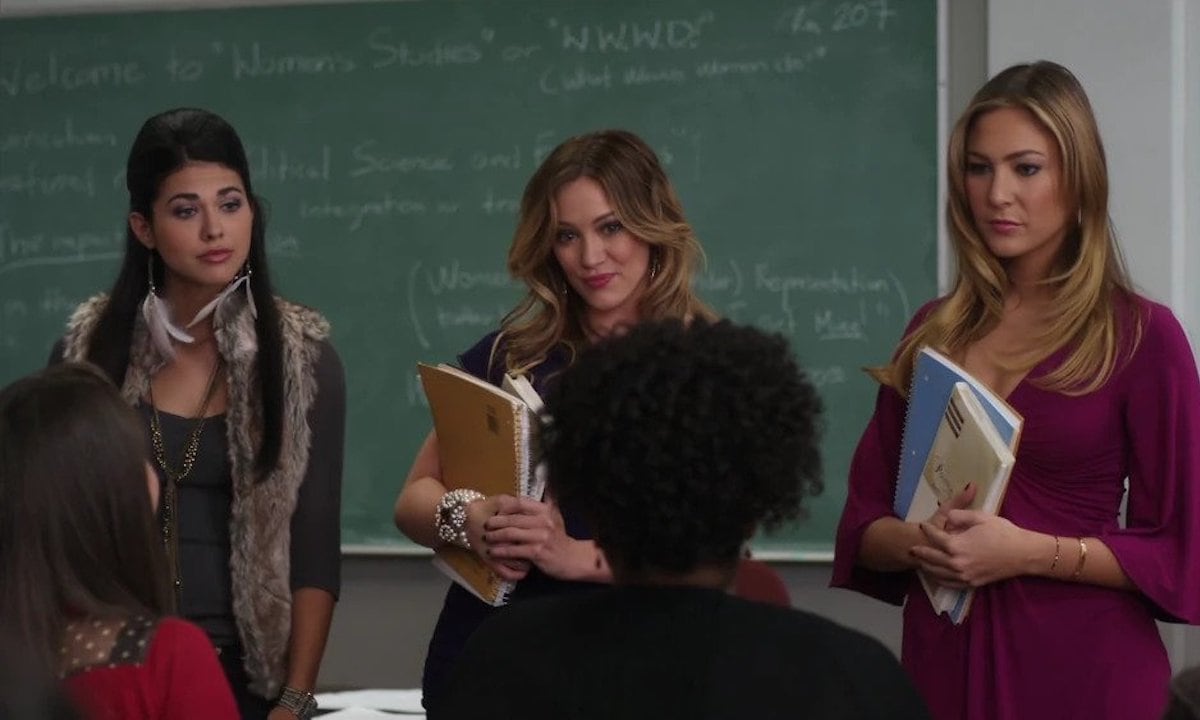
7. “Aerodynamics of Gender,” Season 2, Episode 7
Despite being among the weaker Abed episodes—his side caper as a RoboCop of bitchery has a bit too much lesson-of-the-week in it—this enters the pantheon regardless, and not because of the Hilary Duff cameo. In one of the first instances of Community casting off real-world rules, a mock-Lost development has Troy (Donald Glover) and Winger discover a secret magic trampoline that gives ecstatic bliss to jumpers who follow one cardinal rule “No double bouncies.” Matt Walsh masterfully deadpans as the mysterious trampoline guardian Joshua, whose blissed-out dharma-dude persona is a smokescreen for not-so-well-hidden white supremacy. The episode delivers both a snapshot of serene contentment and a surprisingly crushing return to reality.
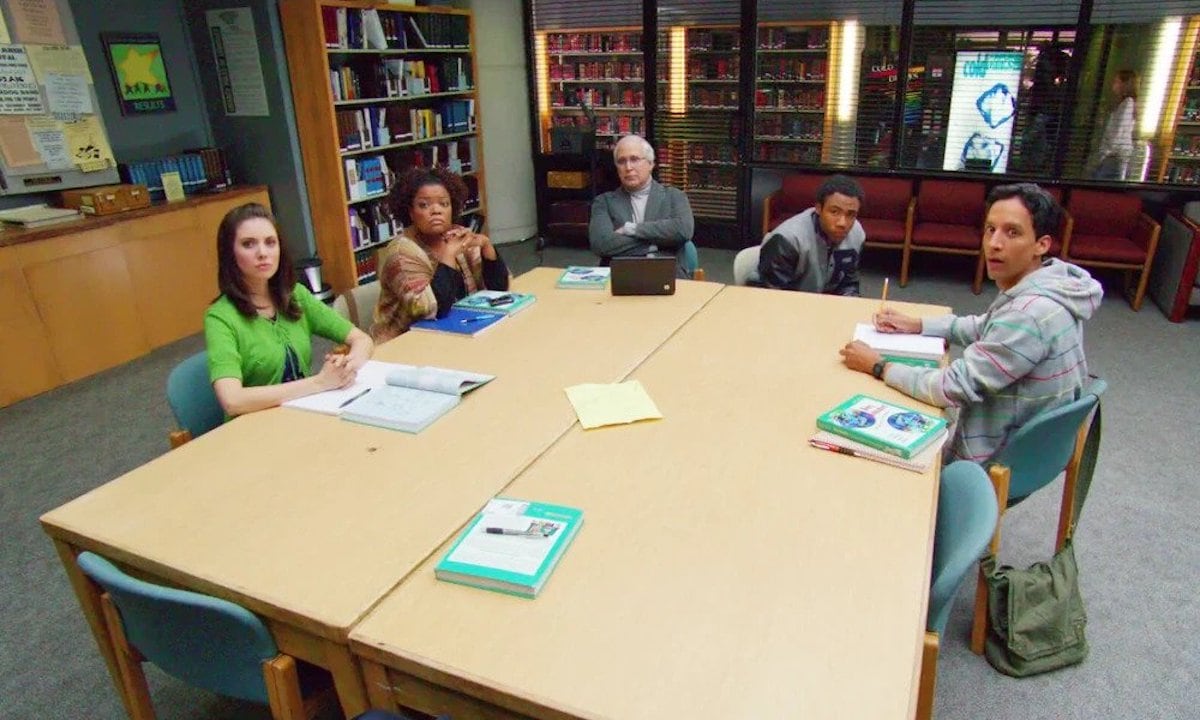
6. “Pilot,” Season 1, Episode 1
For a series that packed in as many orations as The West Wing throughout its run, the first episode is a beaut. The pilot has some typical introductory sitcom issues, with character exposition taking up way too much space and some jokes not landing with their intended zing. But though Community gave some characters room to grow—Troy turned from jock-like cockiness to a more innocent sweetness while Gillian Jacobs’s Britta transitioned from generic blond “hot girl from Spanish class” fending off Winger’s advances to manic insecure chaos generator—the episode delivered two showcase moments that largely defined who they were for the remainder of the run. Abed’s non sequitur recitation of Banner’s “smoke up, Johnny!” The Breakfast Club scene, done with the sincere belief that an iconic film scene communicates his meaning better than anything original, shows the degree to which his life is mediated through, well, media. But Winger’s attempt to heal the bickering group with an analogy about forgiveness (“People can connect with anything. We can sympathize with a pencil, we can forgive a shark, and we can give Ben Affleck an Academy Award for screenwriting”) sets up the “Winger speech” as the failsafe for buttoning up episodes.
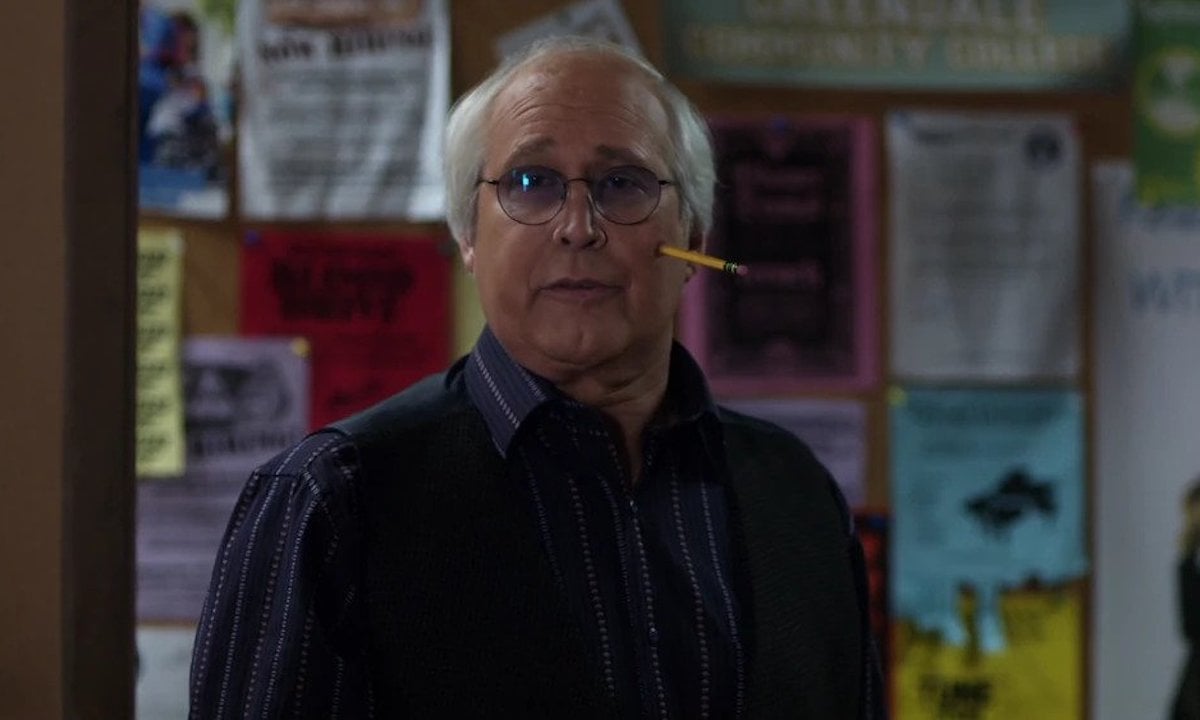
5. “Intro to Political Science,” Season 2, Episode 17
Harmon channeled his cynicism about politics into this slashing take on demagoguery. Annie (Alison Brie), in full Tracy Flick mode, runs for student government only to have Winger challenge her out of annoyance with her idealism. Though Annie gets her revenge—embarrassing Winger by showing a clip of his performing George Michael’s “Faith” in an audition tape for The Real World: Seattle—that’s only after Winger gives a stem-winder that makes him sound like a latter-day Lonesome Rhoads: “I think that beer should be cold and boots should be dusty. I think 9/11 was bad.” To clear up any uncertainty about the episode’s take on electoral democracy, Winger follows up another empty applause-getter (“These people don’t want me to say what I’ll do, they want me to do what I’ll say”) with an aside to a shocked Annie: “They love it when you shuffle the words around.”
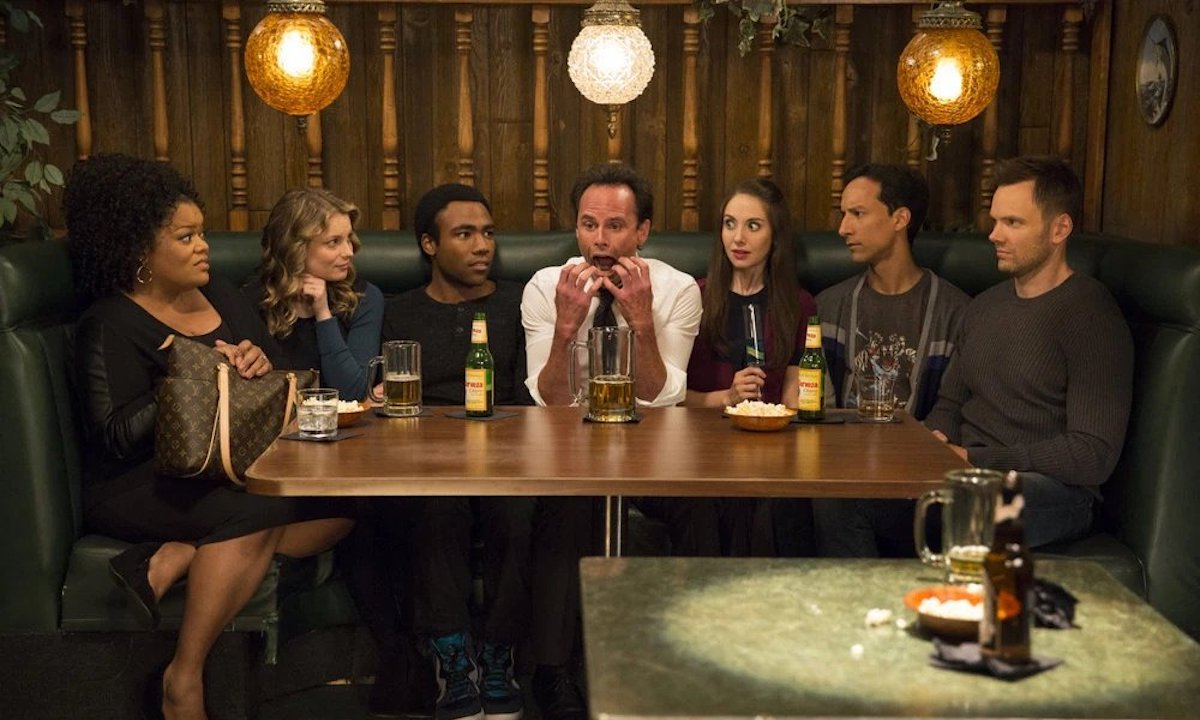
4. “Cooperative Polygraphy,” Season 5, Episode 4
A tightly packed bottle episode with an explosive payoff. It starts with the group returning from the off-screen funeral of Pierce (Chevy Chase)—the churlish Chase, forced on the show by NBC’s insistence it have a star, had long been persona non grata on set and either quit or was fired during season four—and fast descends into a callback to the recrimination fest of season two’s “Cooperative Calligraphy.” Walton Goggins plays straight man as the executor of Pierce’s will. This balances pot-stirring revelations with touching insight, the latter more realistic with Chase’s absence. Just when the emotionally whipsawed group is reassessing the legacy of their (as Winger once put it) “closest, oldest, craziest, most racist, oldest, elderly crazy friend,” the punchline comes in Pierce’s “bequeathments”: vials of his sperm.
3. “Modern Warfare,” Season 1, Episode 23
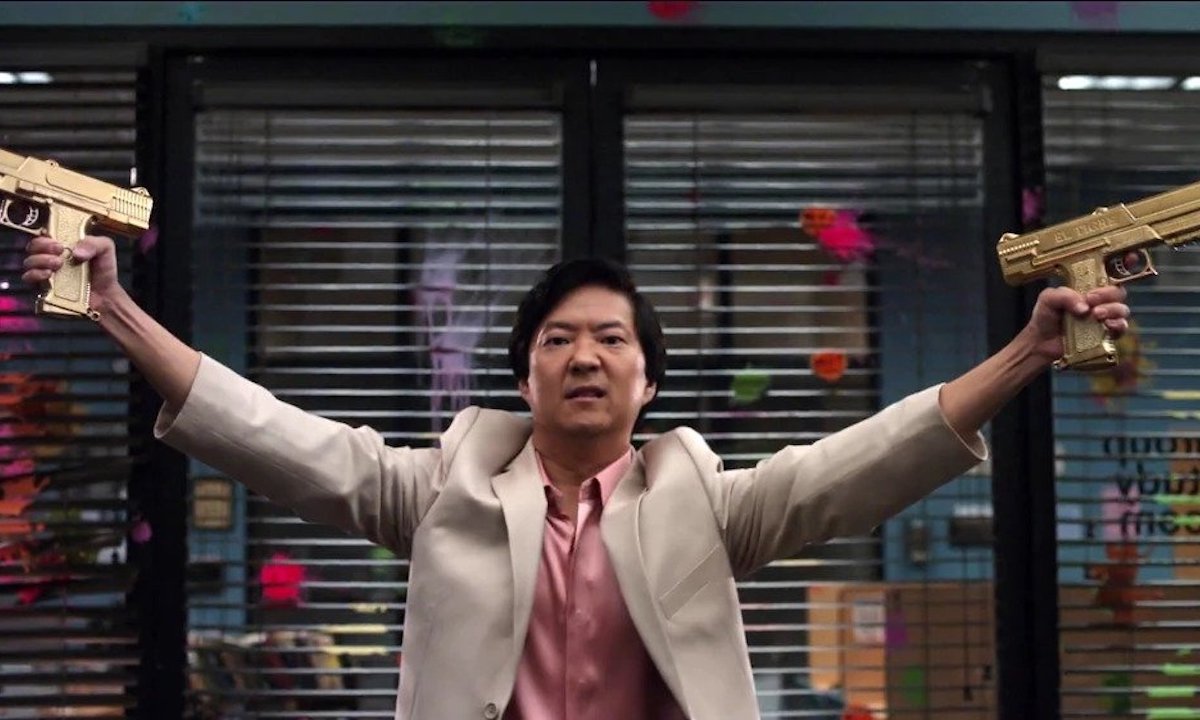
Sometimes first is best. When it comes to Community combat episodes (yes, there are multiple), some prefer the doubleheader that capped off season two (“A Fistful of Paintballs,” “For a Few Paintballs More”), maybe believing more is always better. But the giddy blast of delight delivered by “Modern Warfare” near the end of season one couldn’t quite be recaptured. In the first of his many horrible decisions, Dean Pelton (Jim Rash) announces a game of paintball assassin to determine who gets priority class registration. The campus is transformed near-instantly into a paint-splattered apocalyptic landscape roamed by feral student gangs with vividly costumed identities, a la The Warriors. The blizzard of film references (The Road Warrior to Terminator 2 and A Better Tomorrow) and cosplay self-awareness (Abed’s Riddick-style goggles and Mad Max swagger) somehow don’t overwhelm the sharp, fast-paced humor and anything-goes world-building. After this, anything seemed possible.
2. “Critical Film Studies,” Season 2, Episode 19
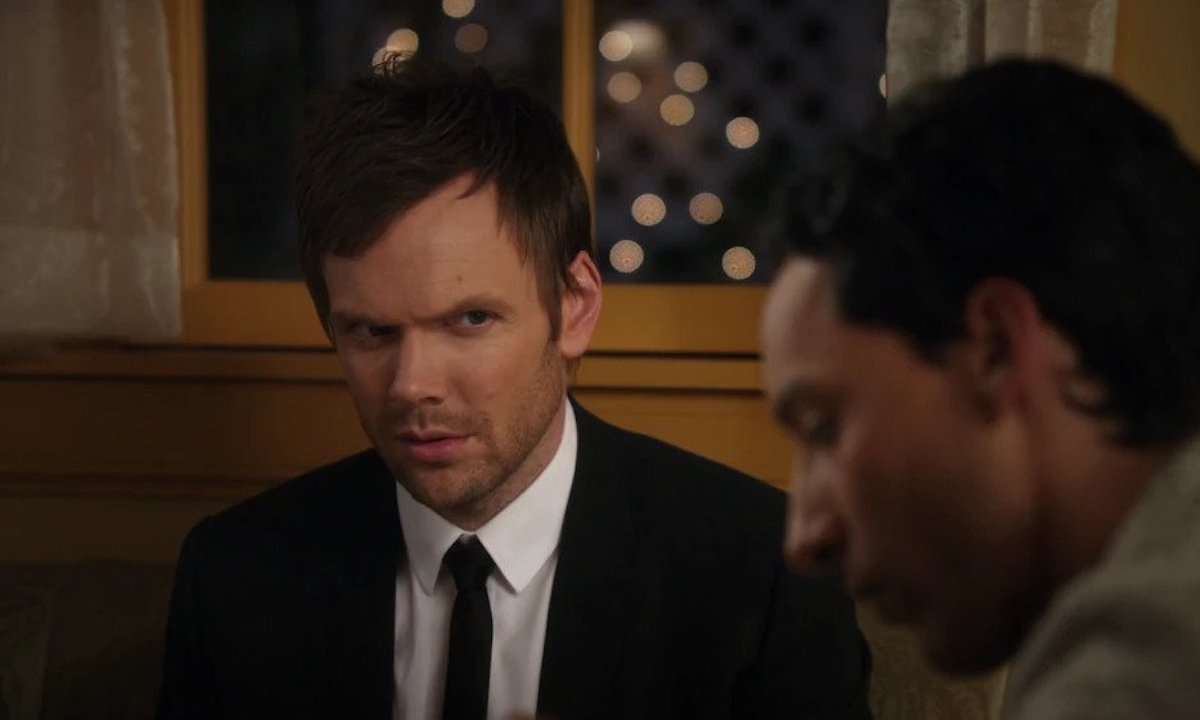
Not long after episode 39, “Advanced Dungeons & Dragons,” made clear what gigantic nerds the makers of Community were, the series plunged deep into its culture-vulture side with this film reference-littered episode, keenly directed by the underrated Richard Ayoade. In the primary storyline, Abed lays out to Winger how he supposedly abandoned his obsessive, “coolcoolcool” media-dork persona and became his idea of a grown-up (genial sweater, soothing Mr. Rogers voice). The sidebar story has the rest of the group waiting at a retro diner as part of an elaborate Pulp Fiction-themed birthday party for Abed. The episode’s kicker turns a late-reveal film reference into a comment on the temporary nature of most seemingly meaningful epiphanies.

1. “Remedial Chaos Theory,” Season 3, Episode 4
Tempting as it is to go with a less obvious choice, there’s no better episode to show how Community warped sitcom boundaries back in the pre-streaming era. A season-three bottle episode about the group playing Yahtzee turns into a multiverse scrambler once they decide to roll a six-sided die to determine who goes downstairs to get the pizza. Each roll creates a new butterfly-effect timeline where the same elements (Winger hits his head on the ceiling fan, Britta sings “Roxanne”) sprout different endings when somebody makes a slightly different decision. Results range from benign (Troy and Britta flirt ever so slightly) to devastating (Pierce is shot, the apartment catches on fire, Troy screams in horror). The episode is formally inventive, spooky-funny in its depiction of the “darkest timeline,” but also reassuring in Abed’s soliloquy in favor of predictability: “Chaos already dominates enough of our lives.”
Since 2001, we've brought you uncompromising, candid takes on the world of film, music, television, video games, theater, and more. Independently owned and operated publications like Slant have been hit hard in recent years, but we’re committed to keeping our content free and accessible—meaning no paywalls or fees.
If you like what we do, please consider subscribing to our Patreon or making a donation.