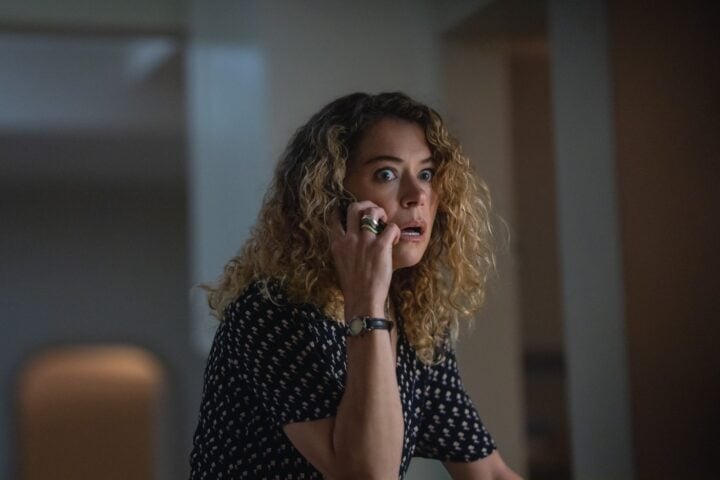
What about the current political climate could have possibly inspired Jack Thorne, co-creator of last year’s Adolescence, to adapt William Golding’s 1954 classic Lord of the Flies for 2026? Could it be the novel’s grim outlook on the flimsiness of democratic order, the ease with which charismatic warmongers exploit fear to fracture social trust, or the potential for people to commit unspeakable atrocities on a private tropical island?
Indeed, the real-world implications embedded in each frame of this mildly impressionistic take on Golding’s novel are haunting. Alas, Thorne and director Marc Munden’s stylish yet clumsily assembled four-episode series doesn’t quite capture the raw power of its source material.
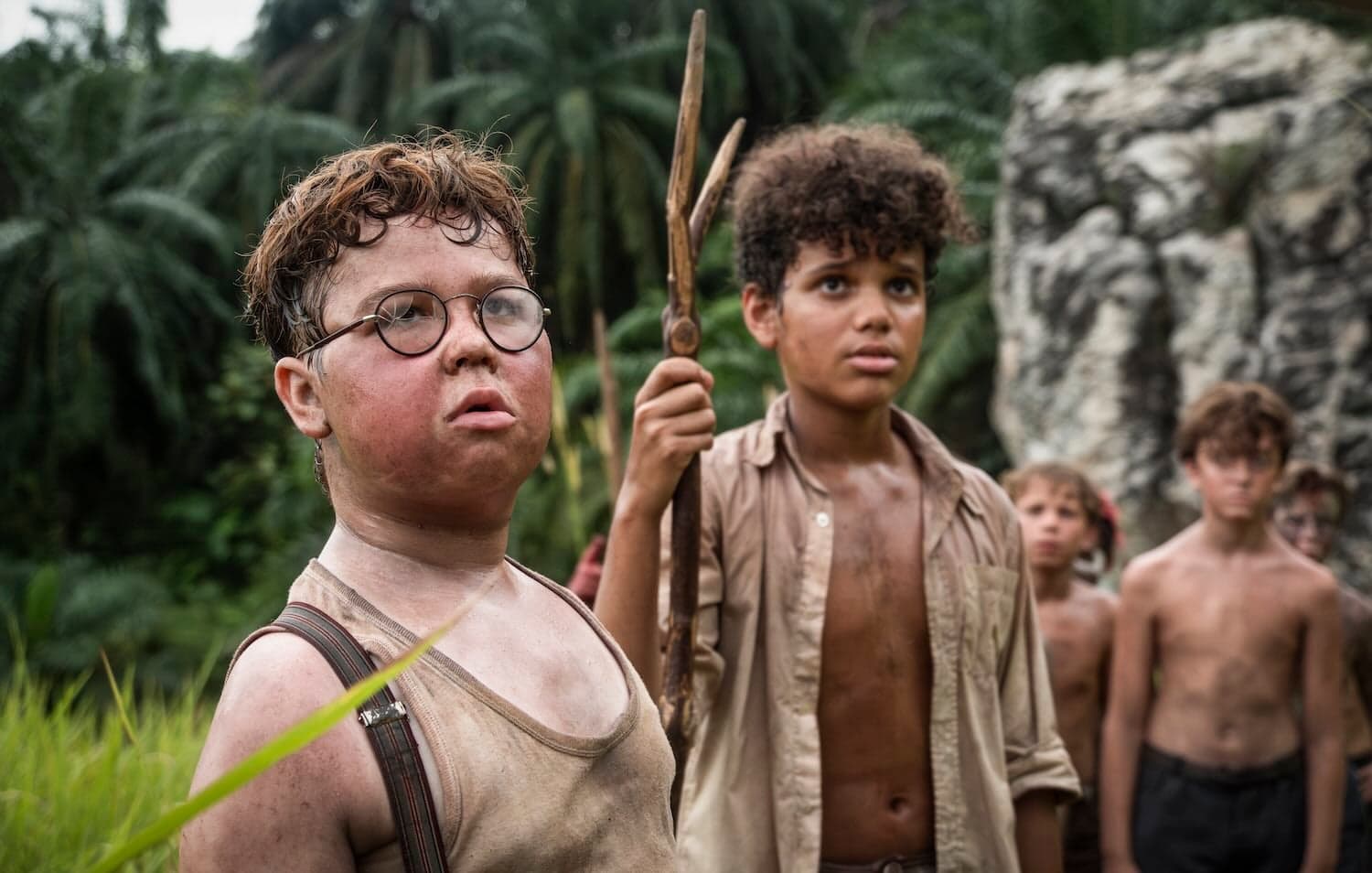
As in the novel, the series centers on a group of British schoolboys marooned on an island after their plane goes down during an unspecified global conflict. The sensible yet unbearable Piggy (David McKenna) and the benevolent but naïve Ralph (Winston Sawyers) immediately set to work on establishing a strategy for maintaining order and ensuring shelters are built, food is hunted and gathered, and a signal fire is kept alit. But the tyrannical impulses of the hotheaded Jack (Lox Pratt) and the threat of a beast that communicates via the supernaturally sensitive Simon (Isaac Talbut) begin to eat away at the boys’ thinly drawn social contract.
At its best, Lord of the Flies realizes the awe and brutality of Golding’s midcentury fable, with each episode of the series mostly focused on the perspective of one of the main characters. The set pieces are compelling—a boar-hunting sequence, which features a long take that anticipates Jack’s overthrow of nature itself, is jaw-dropping—and the young cast is uniformly exceptional. But while slight modifications to the novel are easily forgiven, odd formal decisions may consistently hinder your immersion in the narrative.
This is apparent from the first frame. Munden’s camera—which often employs a garish fisheye lens, lingering over the imposing (and ultra-saturated) equatorial landscape and lurking from a distance half-submerged in the beach’s low tides—ostensibly means to stir a certain sense of voyeuristic unease. Instead, the approach is distracting and distancing. Whereas Adolescence’s stylish one-takes imbued its story with a rich sense of claustrophobic devastation, here the bombastic camera positions, dreamy montages, and overwrought orchestral score telegraph the emotional stakes rather than inviting us to read between the lines.
Much of the novel’s terrifying impact resides in its initial posturing as an adventure story, as the dread that we feel for the boys’ crumbling sense of decency creeps in over time. The series, perhaps assuming that audiences are already familiar with the plot’s trajectory, shows its hand too early. Too much time is spent on using the blunt instruments of foreboding shots of blood-red fauna and masked children dancing spasmodically in the sand, and not enough time on the characters’ shifting allegiances and psychological war games.
Each episode feels at once bloated and unfinished, ultimately dulling the show’s buildup in intensity and, therefore, political relevance. And Piggy’s weight and Northern Irish accent work to illustrate the posh (and Aryan) Jack’s feelings of superiority, but the implications of Ralph’s biracial identity go conspicuously unexplored, leaving a head-scratching gap in the show’s logic that does little to rectify or interrogate the novel’s troubling imperialistic undertones.
Still, these flaws can’t fully undermine the show’s most harrowing moments, including a finale that’s as gripping as it is heartbreaking. Things may fall apart for Ralph and company by the end of fourth episode, but this adaptation of Lord of the Flies manages to rally when it counts the most. Hopefully, the series means to say, the systems that we have in place to uphold the stability of our own civilization can do the same.
Since 2001, we've brought you uncompromising, candid takes on the world of film, music, television, video games, theater, and more. Independently owned and operated publications like Slant have been hit hard in recent years, but we’re committed to keeping our content free and accessible—meaning no paywalls or fees.
If you like what we do, please consider subscribing to our Patreon or making a donation.