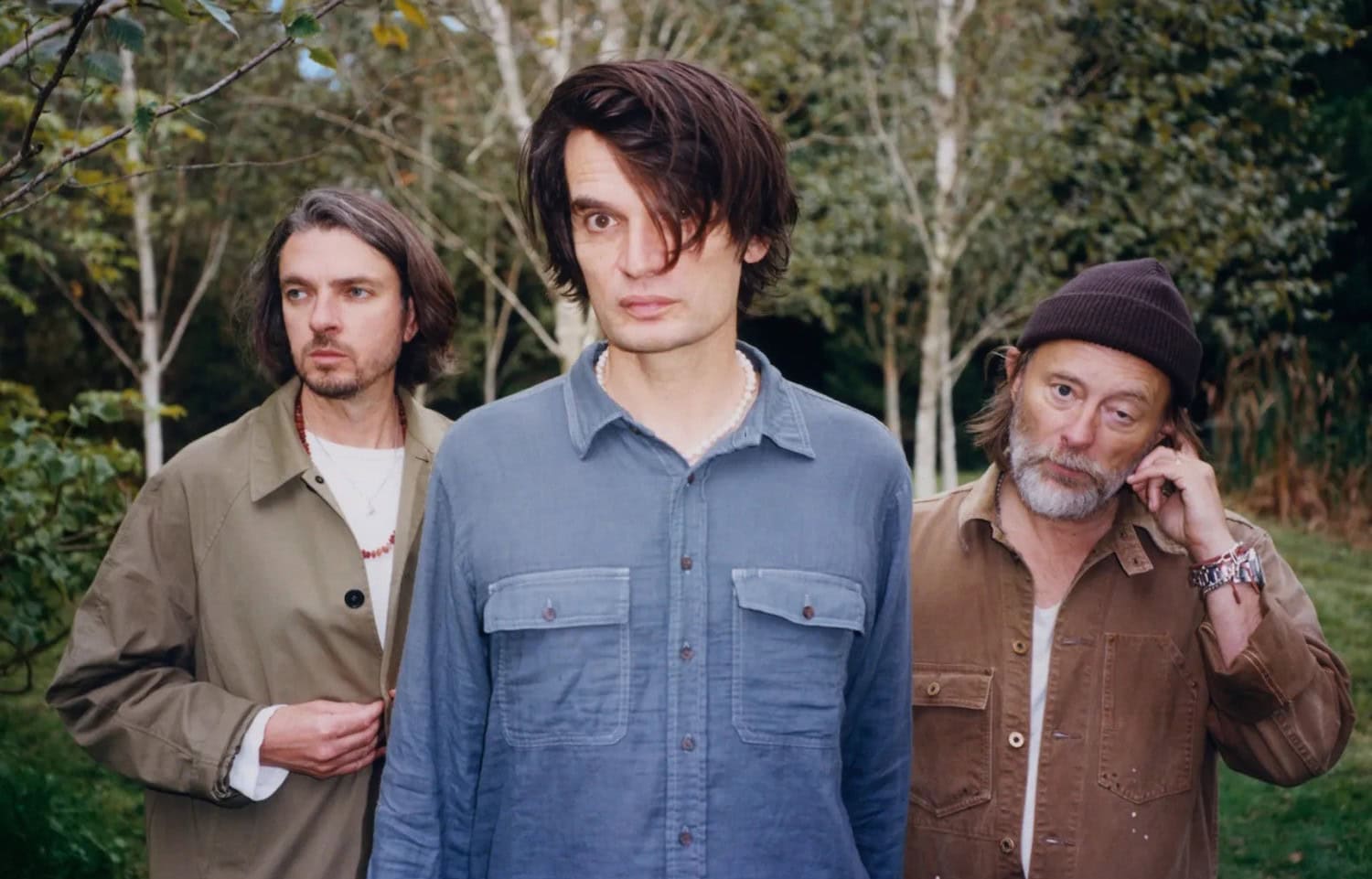
With Thom Yorke and Jonny Greenwood comprising two-thirds of the Smile’s lineup, the band is unlikely to ever escape comparisons to Radiohead. There’s a certain undefinable quality to the latter group’s music that courses conspicuously through the Smile’s Wall of Eyes, but there are also some more easily identifiable similarities between the two bands.
For one, most of the eight tracks here are built around drumbeats that help to anchor ephemeral melodies. On the title track, ambient synths ebb and flow, washing over the song’s acoustic guitars in a way that’s reminiscent of Radiohead’s “How to Disappear Completely.” Elsewhere, the surreal electric guitar of the eight-minute “Bending Hectic” serves as a touchstone around which fever-pitched synths continually circle, similar to those on albums like Hail to the Thief.
“Friend of a Friend” breaks from Wall of Eyes’s electronic sound, with a piano-driven melody and a string arrangement that mimics the rest of the album’s synth-based ambience. The song’s dreamy vocals, the newscaster voices buried deep in the mix, and the crescendo that leads to a sudden conclusion all nod to the Beatles’s “A Day in the Life,” and drummer Tom Skinner’s motoric-style beats throughout the album add to that ’60s-inspired vibe.
In fact, it’s Skinner’s contributions that separate the Smile’s music from that of Radiohead. His skeletal beats, pulling from his experimental jazz roots, seem to inspire in Yorke and Greenwood a more minimalist approach to songwriting. The five-and-a-half minute “I Quit,” for instance, boasts a mere 57 words, almost all of them existing as a stew of half-thoughts: “Wild ghosts/Wild feelings/Leaning windmills.”
Amid that song’s unsettling atmosphere, Yorke plainly sings, “This is the end of the trip/A new path of out the madness/To wherever it goes.” Whether Wall of Eyes is a last stop for the Smile or merely a layover to some yet-undefined place, it’s an undeniably mesmerizing trip.
Since 2001, we've brought you uncompromising, candid takes on the world of film, music, television, video games, theater, and more. Independently owned and operated publications like Slant have been hit hard in recent years, but we’re committed to keeping our content free and accessible—meaning no paywalls or fees.
If you like what we do, please consider subscribing to our Patreon or making a donation.