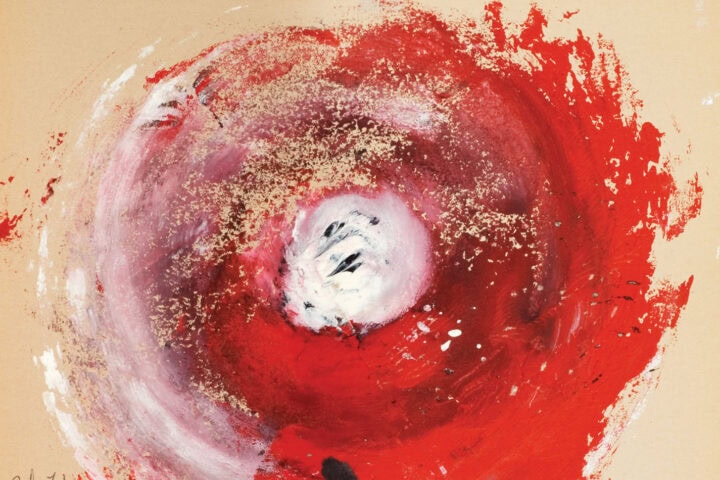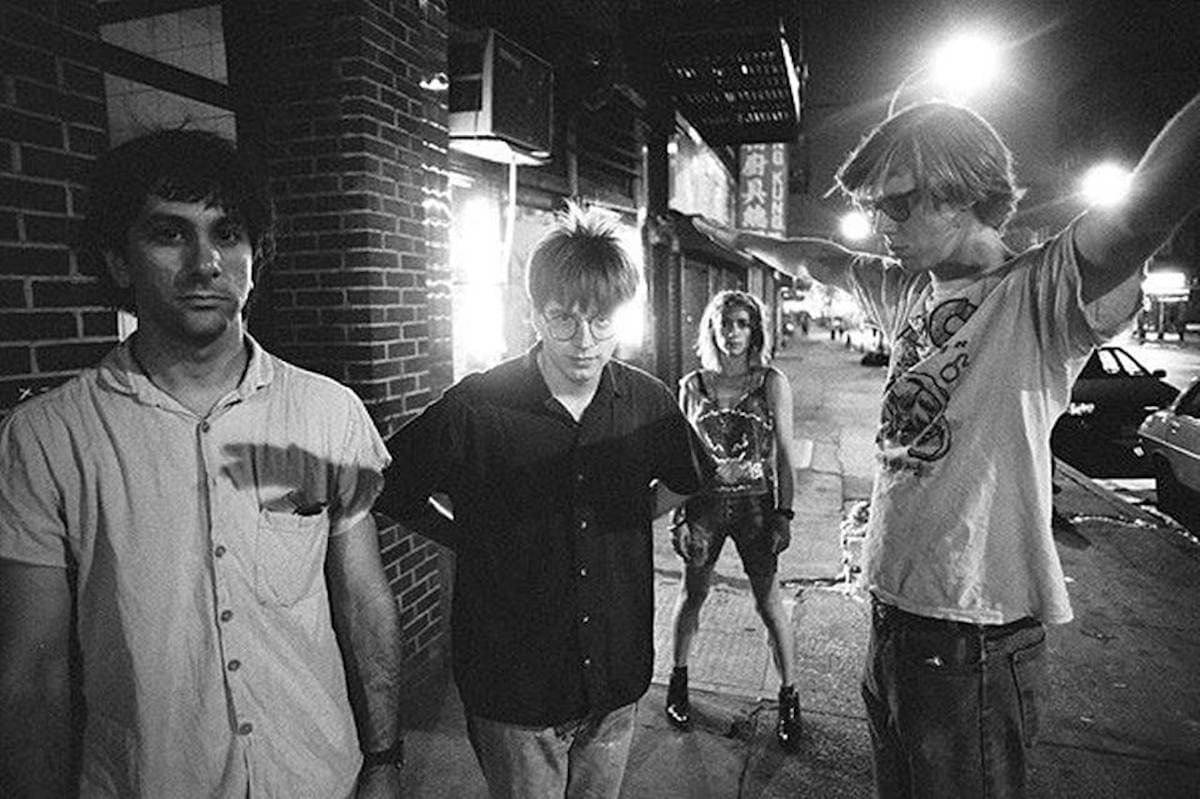
Having already proven their bona fides with both 1986’s EVOL and 1987’s Sister, Sonic Youth delivered their most cohesive, accessible album to date with their 1988 opus Daydream Nation. Originally inspired by the ferocity of hardcore punk, the cerebral art rock of acts like the Velvet Underground and Public Image Ltd., and the avant-garde compositions of Glenn Branca, the album saw the four New York bohos sweeten their no-wave edge with anthemic songwriting.
Thurston Moore and Lee Ranaldo’s detuned guitars strum plaintively and hypnotically as Daydream Nation slowly shakes itself awake on “Teen Age Riot.” Bassist-singer Kim Gordon channels the Stooges’s eerie chants on 1969’s “We Will Fall” and even cribs from its lyrics: “Spirit, desire/We will fall,” she mumbles before the song’s dual-guitar riff tears the track apart.
“Teen Age Riot” is an articulation of the alternative nation—which saw Dinosaur Jr.’s lead noisemaker, J Mascis, as its president—in song form. It’s both a rallying cry and a mild ribbing: “It takes a teenage riot to get me out of bed right now,” Moore sings. It’s also an immediate outlier in Sonic Youth’s body of work up to that point, making use of a pop structure that’s only subverted by the song’s moody intro and wordy lyrics.
Sonic Youth’s music channeled the paranoid, philosophical sci-fi of writers like Philip K. Dick and J.G. Ballard (specifically, the harsh post-punk of Sister was inspired by Dick’s life and work). The Reagan era was marked by trickle-down economics, the war on drugs, and the long shadow cast by Jerry Falwell’s Moral Majority, and the band used that dystopian nightmare to augment their own brand of punk-rock rebellion. But unlike the hardcore acts that inspired them, Sonic Youth’s educated middle-class backgrounds led them beyond the realm of throaty sloganeering and toward Beat poetry and pop art.

But even while infusing hardcore’s anti-commercial stance with book-readin’ snark—“Come on down to the store/You can buy some more and more and more and more,” Gordon purrs on “The Sprawl,” its title a reference to the work of cyberpunk pioneer William Gibson—Sonic Youth could nonetheless harness its id-driven thrash. “Silver Rocket” announces itself with a dizzy arpeggio that breaks into punk fury as Moore strips the Velvet Underground’s junkie anthem “Heroin” of its paradoxical allure by making use of disquieting imagery in the song’s verses: “Snake in it, jack into the wall…Gun your sled, close your peeping toms.”
The Ranaldo-led “Eric’s Trip” is another druggy number, draped in counterculture cool. “Hold these pages up to the light/See the jackknife inside of the dream,” he sings, taking inspiration from Eric Emerson’s LSD-fueled monologue in Andy Warhol’s 1966 film Chelsea Girls. Ranaldo’s shouty monotone lends the song an eerie edge, his surreal musings seemingly disembodied from the howling guitars and Steve Shelley’s pounding drums. “Hey Joni” repeats this dynamic while making allusions to Neuromancer, another Gibson cyberpunk tome: “In this broken town, can you still jack in and know what to do?”
Gordon, meanwhile, explores gender and power dynamics on “Kissability,” which is sung from the perspective of a film industry sleazebag: “You’re so soft, you make me hard/ I’ll put you in a movie, don’t you wanna?/You could be a star, you could go far.” On “‘Cross the Breeze,” Sonic Youth’s most cerebral member sheds her usual left-brain approach by utilizing religious symbolism alongside references to the Clash’s iconic “Should I Stay or Should I Go.”
In many ways, the band’s penchant for postmodern cultural omnivorousness anticipated modern tastes and attitudes. Like their prior albums, Daydream Nation is littered with cultural references: “Eliminator Jr.” combines the title of ZZ Top’s 1983 album with the tag Dinosaur Jr. had then-recently added to their name, while “The Sprawl” cribs from Denis Johnson’s 1986 novel The Stars at Noon. The highbrow and the hip mingle comfortably with populist entertainment and ripped-from-the-headlines tales about New York City’s crack epidemic and sensationalized murder cases, the band blending art and society’s spheres indiscriminately. Even their choice to record with producer Nick Sansano—who previously worked with the likes of Ice Cube, Run DMC, and Public Enemy—at Greene St. Recording transcended artistic divisions.
Though 1991 is widely considered to be the year punk broke, 1988 was the first time the American underground truly began to claw its way into the mainstream. Some of alternative rock’s biggest names released albums that would help them snag major label deals—and a semi-communal, though fraught, network of small-fry bands and labels run out of their owners’ garages was well on its way to becoming big business. But before the gold records and swanky dinners with record execs came critical legitimacy, and few bands or albums helped steer underground rock toward its cultural triumph more than Sonic Youth and Daydream Nation.
Since 2001, we've brought you uncompromising, candid takes on the world of film, music, television, video games, theater, and more. Independently owned and operated publications like Slant have been hit hard in recent years, but we’re committed to keeping our content free and accessible—meaning no paywalls or fees.
If you like what we do, please consider subscribing to our Patreon or making a donation.