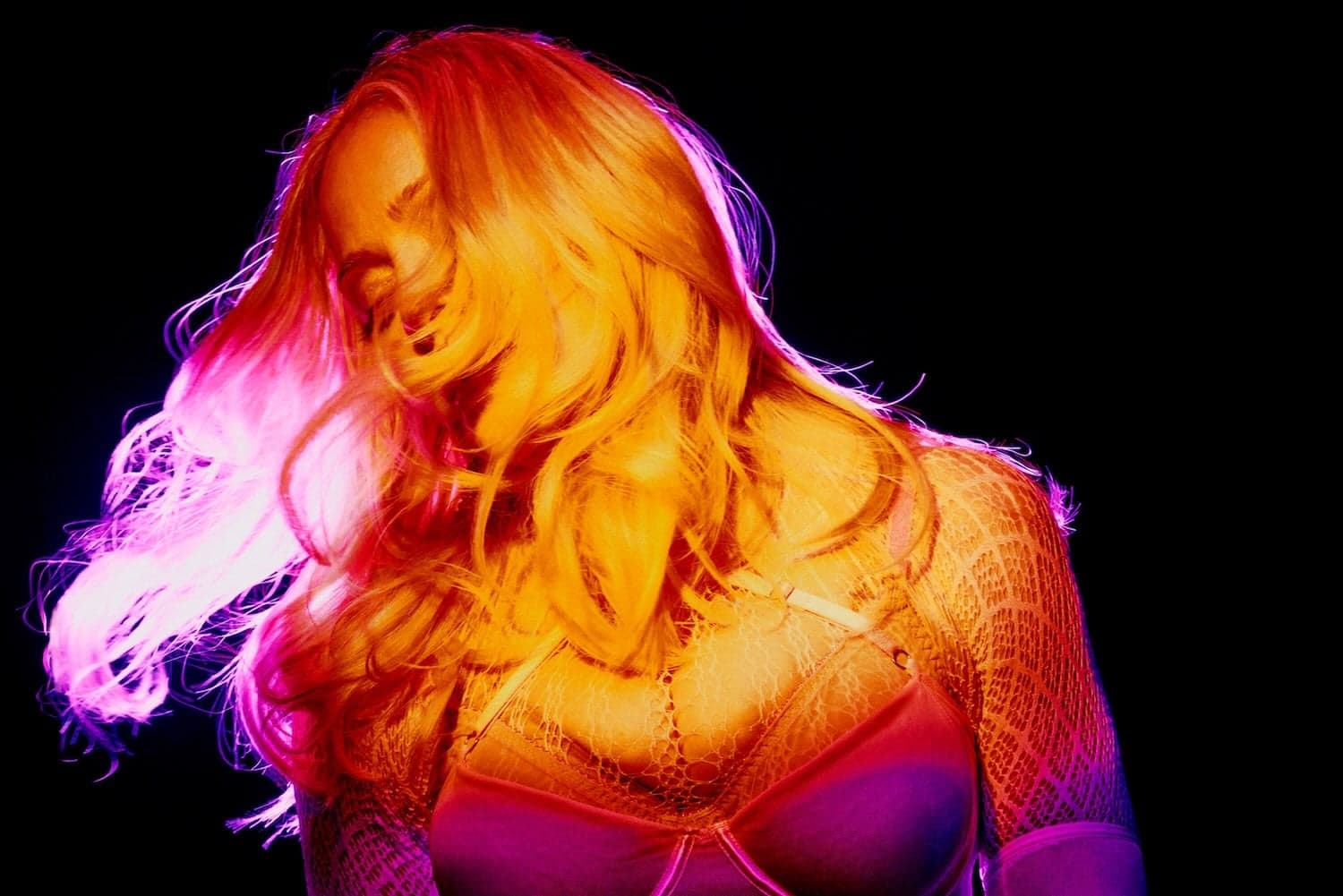
In her 1976 disco hit “Love Hangover,” Diana Ross purred that “if there’s a cure for this,” she doesn’t want it. Fifty years later, Madonna finally arrives at the same acquiescence. Just as the rest of the culture is finally waking up to the diminishing returns of IP and franchise dependency, the Queen of Pop goes and releases the first sequel in her nearly five-decade career.
By some miracle, Confessions II isn’t a self-congratulatory victory lap. It’s the most galvanizing, out-of-breath statement she’s made since 2005’s Confessions on a Dance Floor. And if it isn’t the most personal album of her career, it may be her most self-reflective. Certainly, it’s her most focused, cohesive effort in decades, an album that earns its nostalgia by prioritizing it.
Most of that is on Madonna. The rest is on producer Stuart Price. The continuous mix he stitches together here—climaxing in the wrung-out, after-hours comedown of the album’s final four tracks—has the same reset-and-rebirth drive of 1998’s Ray of Light, except gentler; this might be the most comforting night-lit listen in the singer’s entire discography.
Generally speaking, Madonna’s vinegar has always outpaced her sugar. Confessions II is the rare instance where the ratio tips, if only slightly, in sugar’s favor, and the surprise is that the lyrics hold up their end of the bargain. Even “Danceteria”—the album’s most shameless “I was there” roll call, which plays, structurally, like a valedictorian hijacking the mic at her own class reunion—works better in context than it has any right to.
Madonna is at her best when turned inward, and Confessions II is the album where that turn stops hiding in political drag and starts feeling personal, even poignant. In the past, her deployment of that lower, huskier register signified defiance, a claiming of the masculine performativity that Laurie Anderson once mocked as the synthesized “voice of authority.” Here, that same register reads as benevolence: a woman looking out at her own spiritual descendants on the dance floor and seeing nothing but the beauty of the rhythm they share.
The difference between Confessions II and its predecessor can best be described as the difference between “Vogue,” the sound of Madonna trying on a genre and turning it into couture, and “Deeper and Deeper,” which saw her losing control of the wheel—unsettled, unmoored and, in 1992, palpably terrified by it. By 2026, that same terror has metabolized into something closer to sanguine generosity, a sense of communion rather than crisis.
Taken together, these sister albums argue that house music was always Madonna’s true home address, and that everything leading up to and including 1989’s Like a Prayer was, in practice, a temporary detour built to shore up her pop credentials. It wasn’t until “Vogue” and 1992’s Erotica that she arrived at her actual musical mission. Confessions II, fittingly, imagines an alternate timeline in which “Deeper and Deeper” wasn’t just included on the Celebration compilation (in reality, it was gallingly omitted), but flat out opened disc one.
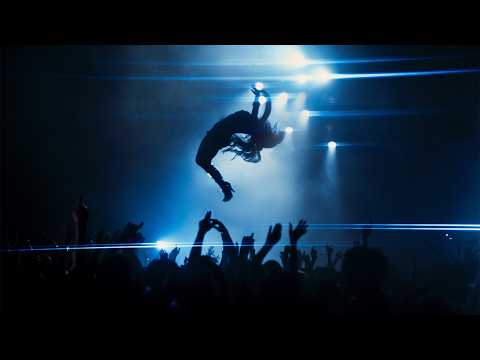
Shame, resentment, fury, and lust were the fuel of Erotica, so combustible that Madonna spent the better part of a decade backing away from what that album said with bold clarity about power, subjugation, sexual repression, the death drive, and the outer limits of hedonism. By the end of the ’90s, she emerged from that storm into Ray of Light, where self-reflection and self-regard finally interlocked like a spiritual call and response. Confessions II is the where those two lineages—the dark id and the transcendent omniscience—finally brush skin on the dance floor.
And yet depth isn’t actually this album’s ace in the hole. Its triumph is closer to the opposite: It may be Madonna’s shallowest masterpiece, or more precisely, her simplest. On 2000’s “Impressive Instant,” she summed up her whole aesthetic philosophy as “I like to singy, singy, singy.” Here, she arrives at the even more disarming corollary: She just wants to dancey, dancey, dancey. If Ray of Light was where Madonna discovered there was more to life than her own subjectivity, Confessions II is where she actually seems relieved about it.
Opener “I Feel So Free” makes the terms plain from the jump: “Sometimes I like to just hide in the shadows, create a new persona, a different identity, I can be whoever I wanna be.” It’s the admission of a woman who has trouble connecting one on one with people, and finds safety only once she’s surrounded by others who, like her, have agreed to surrender the self to the floor.
A small digression, because the moment demands one: In the aftermath of the Pulse nightclub shooting, the Madonna song I leaned on hardest wasn’t anything from her imperial phase—it was “Inside of Me,” a wistful, private eulogy for her mother tucked into 1994’s Bedtime Stories. Something about the amniotic hush of trip-hop maestro Nellee Hooper’s production and its guarded, unwitnessed grief—“When there’s no one watching me, I’m crying”—became permanently fused in my head with the LGBTQ community’s own battle cry in the days after. On “I Feel So Free,” that same imperative loses its politics and becomes something closer to biological fact, underpinned by the protozoan pulse of Lil Louis’s “French Kiss.”
RELATED STORY
Every Madonna Album Ranked
The album’s midsection makes its case for collectivity as a form of theology. “One Step Away” argues—over gently chugging basement rhythms, plaintive piano, and tropospheric synth washes that recall Mondo Grosso’s underrated 2017 gem “Labyrinth”—that the dance floor isn’t a place so much as a threshold, “a ritualistic space where movement replaces language,” and that freedom is never more than one step from wherever you’re standing.
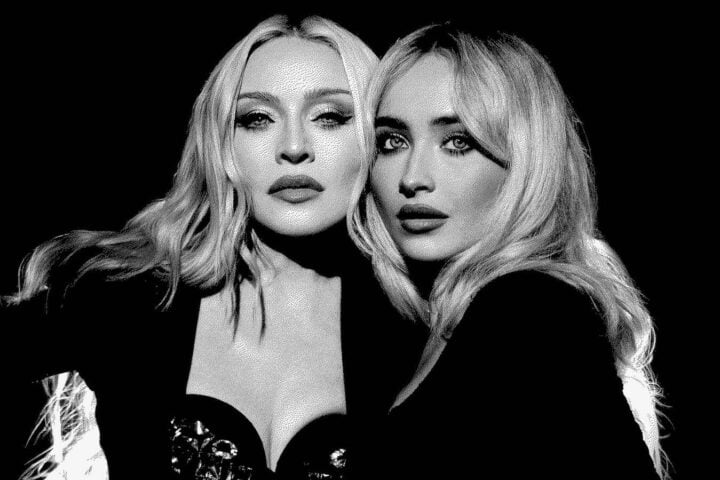
It’s an ethos that “Bring Your Love” puts into practice, handing the floor to one of Madonna’s most gifted acolytes, Sabrina Carpenter, for a straight-up house workout that functions less like a collab and more like a torch being passed. That segues directly into the show and tell of “Danceteria,” Madonna’s own origin story, reverse-engineering “Everybody” and a hat-check job at the titular club into a roll call—“There’s Fab Five Freddy and Basquiat, Keith Haring and Kenny Scharf…Nile Rodgers and David Byrne, B-52s had money to burn”—that echoes the Hollywood-idol namedrops that close out “Vogue.” Where that hit borrowed glamour from above, however, “Danceteria” claims kinship from alongside.
“Everything,” meanwhile, is Confession II’s one real screed, a swipe at a culture that would rather stay inside and scroll than come out and sweat: “No one wants to go outside/That’s not okay/It blows my mind/I don’t fuck with it.” But it doubles, more interestingly, as a reminder that the fountain of good times is never more necessary than when the world outside is at its worst: “Wherever there’s the greatest amount of darkness, that’s where you’ll find the greatest light.” As if to prove her point, the track segues into the album’s most baldly euphoric moment, the Kylie-esque filtered disco workout “Love Sensation.”
If Confession II’s front half is communion, then, its back half is reckoning. Goosed by Martin Garrix’s dry, baroque Eurythmics-adjacent synth strings, “Bizarre” is the closest thing here to a score being settled, with Madonna needling a Hollywood ex who wouldn’t share the red carpet: “I guess you’re threatened by me, you won’t admit it.” Elsewhere, “School” pushes the album’s microcosmic night at the club to its logical, faintly sacramental endpoint, the moment when hedonism obliviates the superego, and the truest consent, the one you grant only yourself, is decisively given: “Nobody knows all the rules.”
Then comes the crisis of conscience. A tribute to Madonna’s brother Christopher, who died of pancreatic cancer in 2024, years after publishing a bitter tell-all about their relationship, “Fragile” is the album’s eulogy, and its wound is real. “We shared a name, a home, we shared a fragile bond,” she sings, aware that she has the last word and choosing, for once, not to use it as a weapon: “I know you’re fragile, ‘cause you’ve been hurt, been let down.” It’s impossible to know what Christopher would have made of it, but its placement—dead center in the album’s back half, the hinge the whole second act turns on—strongly suggests how Madonna wants it to be read.
What follows is the comedown: “My Sins Are My Savior,” hazy and vaguely devotional in a way that recalls Alice Coltrane’s “Krishna Japayet,” is the album’s most nakedly confessional moment, filtered tellingly through someone else’s language, spoken in untranslated French by Belgian rapper Stromae. But it’s “The Test” that’s the album’s most quietly devastating gesture: a revisitation of “Little Star,” with the mic handed to a now-adult Lourdes Leon so that Madonna can attempt to make amends: “Little star, I tried to put you on a pedestal/You didn’t ask for all the flashing lights/I didn’t think of how it could disturb or how it hurt/I wish I knew the pain I’ve caused.” Where the Ray of Light song traded in platitudes, this one offers something closer to wounded, weary resignation. It doesn’t pass the test, exactly; it only admits there always is one. Time goes by, so quickly.
By the closing track, “L.E.S. Girl,” it’s morning again, another night spent lost in music, the rent no longer overdue but the Lower East Side still standing by to offer proof of life whenever you’re spent enough night fuel to need it. “Everything fades away,” Madonna sings, and for once, that sounds less like a confession than a permission slip.
Since 2001, we've brought you uncompromising, candid takes on the world of film, music, television, video games, theater, and more. Independently owned and operated publications like Slant have been hit hard in recent years, but we’re committed to keeping our content free and accessible—meaning no paywalls or fees.
If you like what we do, please consider subscribing to our Patreon or making a donation.