With Lords of the Fallen, we get a fresh spin on the Soulsborne formula that brings darkness to the light. All the familiar trappings are here, with players free to build a character as they please to tackle powerful foes and a trap-filled labyrinth of a realm. That massive region is Mournstead, and your character, a Dark Crusader, is one who “shuns the light in order to fight the darkness.” That’s a message that the game takes quite literally.
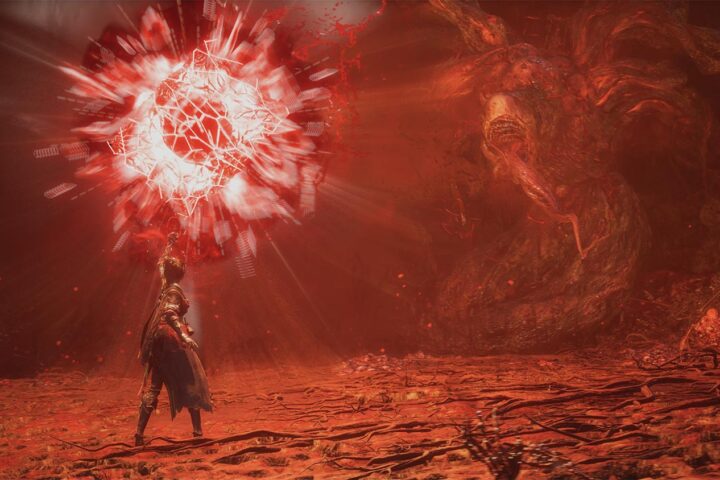
Throughout Lords of the Fallen, you’ll need to activate your lantern at times and sever ties with Axiom, the world of the living, and walk through Umbral, the land of the dead. You’ll likely do so, as I did, when looking to cross the perilous series of planks that scaffold Skyrest or when you’re stopped in your tracks by a squelching swamp through which Shuja tribesmen walk on stilts, flinging poison grenades. It’s in the alien realm of Umbral where the skeletal spines of giant creatures snake through the air—sometimes in a real twist on the meaning of “dead” ends. Scary stuff, but it’s a way forward at least, because as the swamps drain away, they give way to sunken caverns of eyes and outstretched arms. And just like that, everything old is new again.
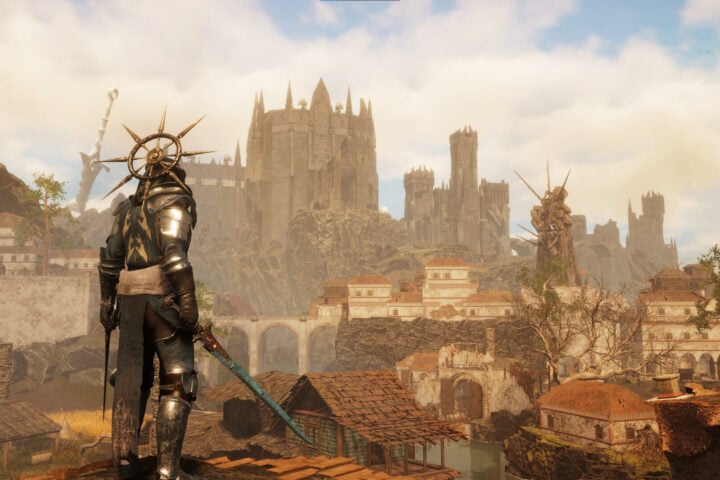
From a difficulty standpoint, Umbral is a stroke of accommodating genius. In sun-slicked Axiom, players are prone to play a bit looser, attempting to find shortcuts by recklessly leaping across ledges, or diving headlong into a pack of iron-muzzled beasts and their bow-wielding tamers. That’s because, unlike in Dark Souls, death is just the beginning in this Lords of the Fallen. Rather than immediately dropping all one’s vigor (currency) at your corpse and having to trudge back from your last Vestige checkpoint, you immediately carry on in Umbral.
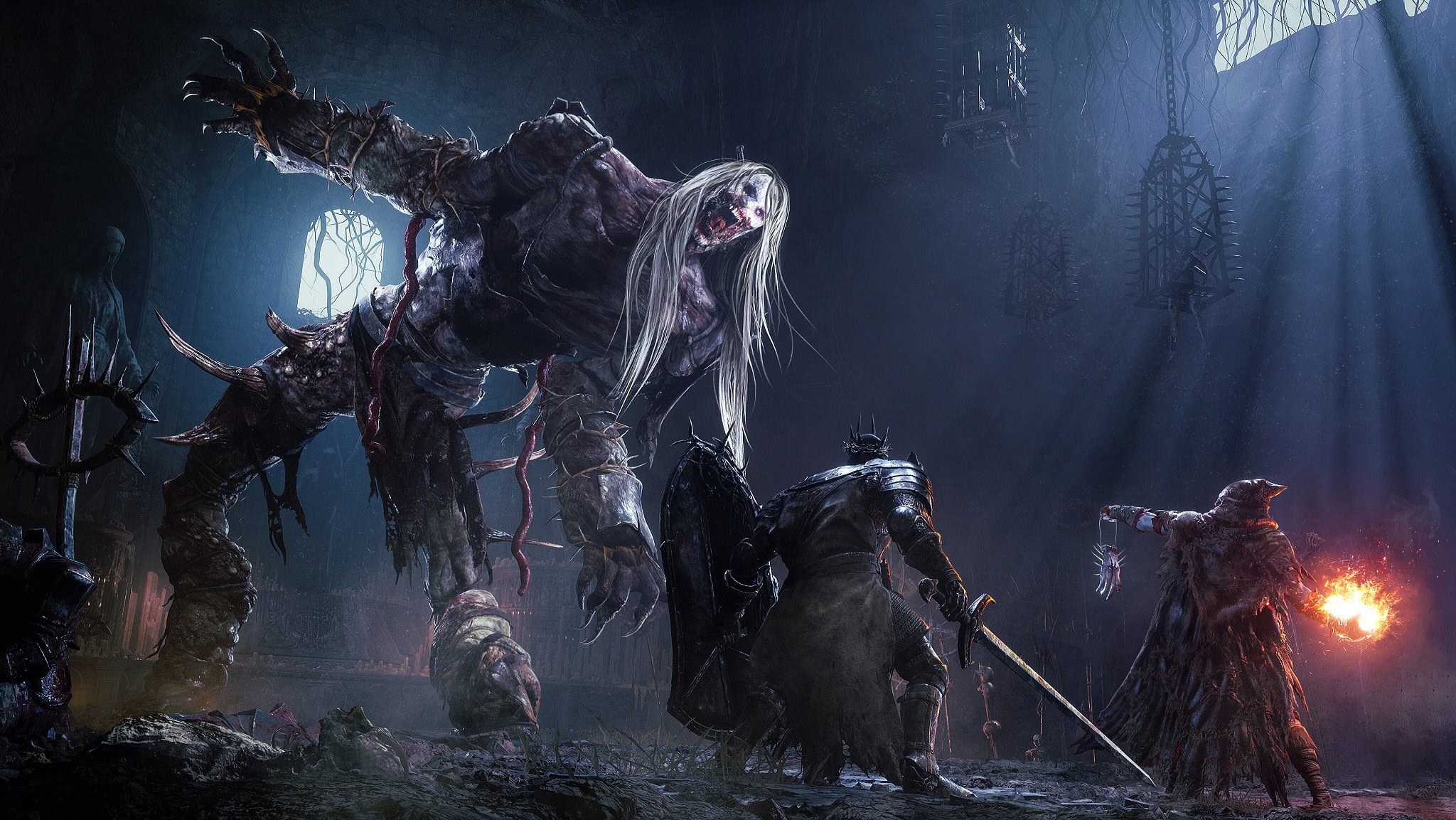
The atmosphere in this realm isn’t the only thing that’s foreboding, as an extra level of tension is derived from losing the safety cushion of your Axiom life and your healing being less effective—to say nothing of the creatures that constantly spawn and mercilessly hunt you, growing more monstrous and deadly the longer you linger in their midst. By contrast, Umbral’s punishing horrors also make Axiom a gentler experience, at least for as long as you’re able to stay there. In Axiom, too, it’s easier to appreciate the genre’s grim humor when you’re not immediately losing tens of minutes of progress to that shiny bauble that was actually a flesh-eating monster in disguise, though not that much easier, since you’ll now have to find a way out of Umbral.

Lords of the Fallen’s combat also benefits from this second dimension, as Umbral isn’t a parallel universe so much as one that invisibly overlaps with Axiom. Some foes are bolstered by parasites from afar, and to harm them, you’ll first have to gaze through the lantern and siphon them out of Umbral. Doing so isn’t without its risks, as enemies from both realms can attack you as you do so, and it can be very jarring to suddenly get pulled into Umbral, or pushed off a ledge by an invisible foe. The game successfully makes you paranoid, and rightfully so: With the exception of a few friendly NPCs that can occasionally be recruited to help with big boss fights, everything is out to get you. Outside of your home base, nowhere is safe—and even there, many of your allies hold you in ill regard as a heretic, at best a necessary evil.
Umbral isn’t just a gimmick that allows the game to differentiate itself from Dark Souls. The realm is the narrative heart of Lords of the Fallen, a constant reminder each time you fall from Axiom of the stakes should you fail to purify the five beacons that hold back the dread god Adyr. Instead of the clutter of bloodstain messages left by other players, there are elaborate Stigma statues that can be soulflayed in order to release the psychic memories—and warnings—left behind, a truism that some stories can only be fully told or understood in hindsight.
Umbral is a beautiful dark twisted fantasy, and then there’s all of Axiom to explore as well. The developers have made the most of these realms, layering distinct challenges atop one another. And the result is the best of both worlds: Axiom’s dense, gothic world (and its interconnected twin in Umbral) and a second life with which to better appreciate the masocore combat.
This game was reviewed with code provided by CI Games.
Since 2001, we've brought you uncompromising, candid takes on the world of film, music, television, video games, theater, and more. Independently owned and operated publications like Slant have been hit hard in recent years, but we’re committed to keeping our content free and accessible—meaning no paywalls or fees.
If you like what we do, please consider subscribing to our Patreon or making a donation.