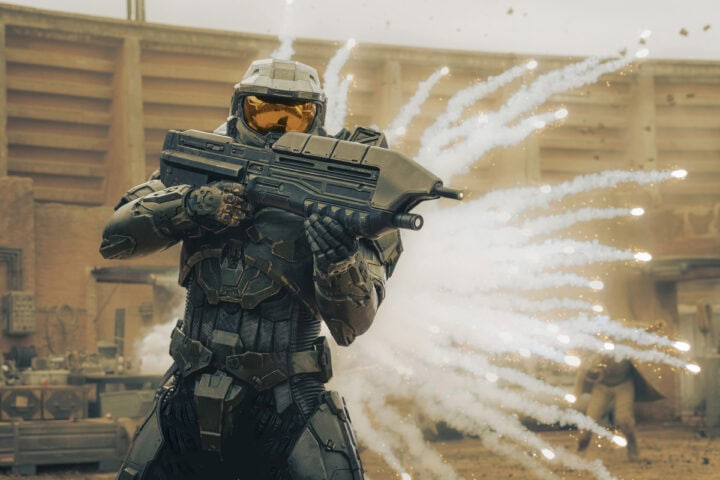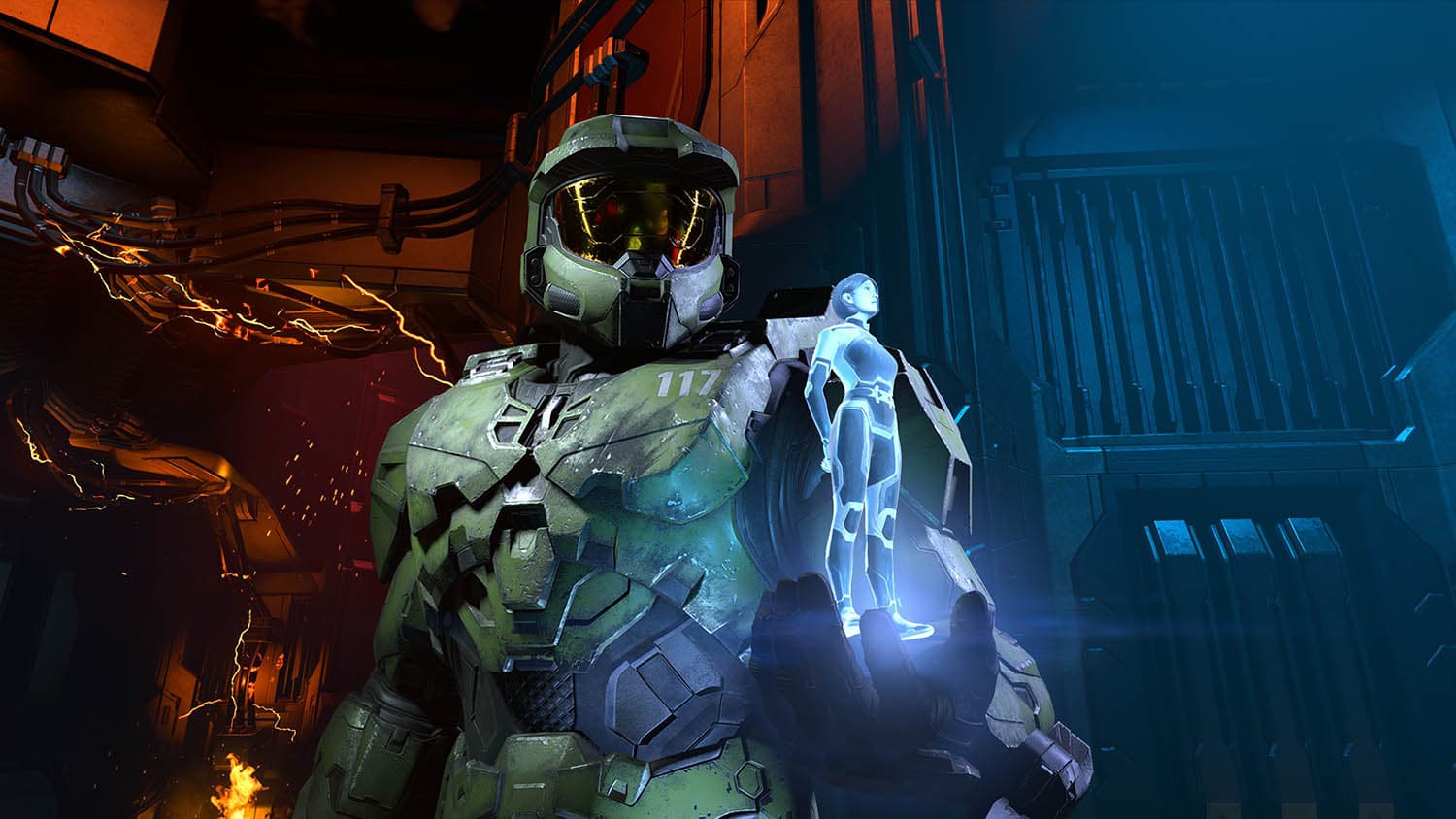
It may have taken 20 years, but we have at least reached a point where the descriptor “combat evolved” is accurate for a Halo game. Indeed, 343 Industries’s Halo: Infinite is the one of the most versatile, tactical, and breathlessly frenetic FPS titles out there. Even though the game features a rogue’s gallery of the same enemies that we’ve been gunning down for years in the Halo universe, there’s more thought and innovation required to figure out how to take them down, right down to the precise weapon that will get the job done.
Which makes it all the more disappointing that in almost every other aspect the game represents a major regression for the Halo series. It’s easy to want to compare it to Halo 3, another sequel in the series that was plagued by its own immense hype but also seemed too skittish to follow up on the ambitions of its predecessor. But the problem with Infinite is deeper and weirder than that, as it’s a game that’s actively trying to erase its predecessor.
From minute one, Infinite treats the events of Halo 5: Guardians like some fever dream that we only vaguely remember or somehow aren’t supposed to talk about. Halo 5 was a deeply flawed gaming experience, but it was certainly memorable. More specifically, it didn’t lack for propulsion in its narrative, right down to its barn-burner of an ending, where the newly resurrected and unshackled Cortana had managed to successfully convince every artificial intelligence in the galaxy to abandon their posts, kickstarting the technological singularity, and leaving humanity in the galactic Dark Ages. That’s a hell of a foundation to build a narrative on. So, naturally, Infinite opens cold on the complex, far-reaching consequences of…a skirmish between Master Chief and a heretofore unknown Brute general named Atriox.
The status quo of Infinite’s story changes three times before Master Chief even sets foot on solid ground, and the game is ruthless about burying the philosophical terror of the two prior titles in the series. In the end, the story just comes down to the Banished—a splinter faction of Covenant that still refuses to make nice with humanity—landing on a Halo Ring and trying to activate it without fully knowing the horrors that it would unleash, and it’s up to Master Chief and his trusty new A.I. companion to stop them. If that sounds like the developers at 343 Industries just went ahead and remade the original Halo, well, they basically did.
Even in its spruced-up Master Chief Collection form, the original Halo has aged like milk as far as gameplay goes, and all of Infinite’s mechanics and designs feel like answers to its problems, as well as advancements of its ideas. Halo always teased being an open world game, and Infinite finally bites the bullet and goes there, and successfully so. And it’s just open enough for its new Halo Ring to feel like a realistically occupied planet with a plethora of secrets, allies to save, and suit enhancements to aid you throughout the campaign. But the experience is never so crammed with timewasters that the main quest is buried in icon vomit on the map.
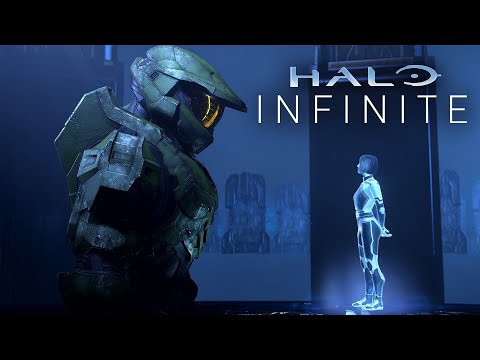
Here, if there’s something specific that Chief will need for the next challenge, you’re more than welcome to point to its icon on the map, and fight your ass off trying to get it, but ultimately, it’s unnecessary. The linchpin of it all is the Grappleshot, a hook that can not only shoot Chief up, around, and over the terrain faster than he can run, but also snatch weapons, items, explosives, and even reel himself into enemies. And he definitely needs to use his agility, because even though the roster of baddies are familiar, they’re stronger than ever.
Along with around a dozen new guns, each one is now classified as a certain type of energy, and you’ll need to constantly adjust strategy to make sure that you’re not waltzing into a firefight with a gun whose projectiles will bounce off an enemy shield like a NERF dart. It can be a little annoying to realize that your old faithful weapons from the series aren’t as effective—the Needler, in particular, has all the impact of a spitball now—but the newfound flexibility and variety means that the running and gunning never gets stale, especially late in the game.
As the foundational rebuild of how playing Halo will feel going forward, Infinite would be a triumph. But standing in the game’s way is the beautiful narrative complexity of the last two Halo titles, almost allegorically represented by Cortana. Through cutscenes, flashbacks, audio logs, and ethereal whispers in Chief’s head, Infinite constantly shows us glimpses of a Halo 6 that could and damn well should have been: the UNSC scrambling to figure out their approach to the singularity; working without A.I.; the ever-amoral Dr. Halsey’s cold-blooded plan to bring Cortana to heel; the rise of the Banished and how all the UNSC’s plans go to hell because of them; and Cortana’s own reckoning with the sheer enormity of galactic disarmament.
Infinite, sadly, starts where that story ends, with Chief being tossed into space by Atriox, a cliffhanger for a game that doesn’t actually exist. All that players get to experience is the dispassionate, shallow aftermath of a far more interesting tale, and the ugly, repulsive implications of it all. If Halo 4 was about watching a loved one deteriorate and Halo 5, on a very surface level, about companions who diametrically grow apart, Infinite is watching the male partner go through the ugly divorce and ultimately choosing a younger, submissive, bubblier, disposable A.I. wife who not coincidentally looks like his ex. This is far from hyperbole, as one of the more coldly reprehensible things that Chief does in this game involves his willingness to delete his new A.I. at the drop of a dime, despite her having done absolutely nothing but care about his mission and stated goals since being installed.
Infinite wants so badly to feel like a fresh start—to deliver onto players a familiar setting that they can revel in but with a host of new tools. But that fresh start comes at the expense of all the big, beautiful, and ambitious ways in which the last few titles in the series made us want to take part in the Covenant War. Halo 5’s Cortana did have a point, as the endless war between the Covenant and the UNSC was ripping the galaxy apart, and squandering the Master Chief’s soul in the process. Halo, as a series, seemed headed toward a grand moment of clarity, maybe even reckoning, on that front. But Infinite runs away from that moment, skipping over self-reflection and settling for the thrill of nostalgia. Which means that this game isn’t the brand new start that it could have been for the Master Chief but rather his midlife crisis.
This game was reviewed using a retail copy purchased by the reviewer.
Since 2001, we've brought you uncompromising, candid takes on the world of film, music, television, video games, theater, and more. Independently owned and operated publications like Slant have been hit hard in recent years, but we’re committed to keeping our content free and accessible—meaning no paywalls or fees.
If you like what we do, please consider subscribing to our Patreon or making a donation.