There’s a striking dissonance between the serene and realistic surface of Daniel Hoesel and Julia Niemann’s Veni Vidi Vici and the way it bludgeons its points home using the exaggerated methods of social critiques common to such genre pieces as Snowpiercer or Infinity Pool. How effective this will be depends in part on the viewer. Some will appreciate this class satire’s grim portrait of a venal polo-playing billionaire class who explain away their amoral behavior with self-aggrandizing business-speak. Others may thrill to the dark comedy of a serial killer operating so in the open that he’s practically begging to be caught. Either way, the message of Hoesel’s screenplay is blunt: Everyone not at society’s pinnacle is only prey.
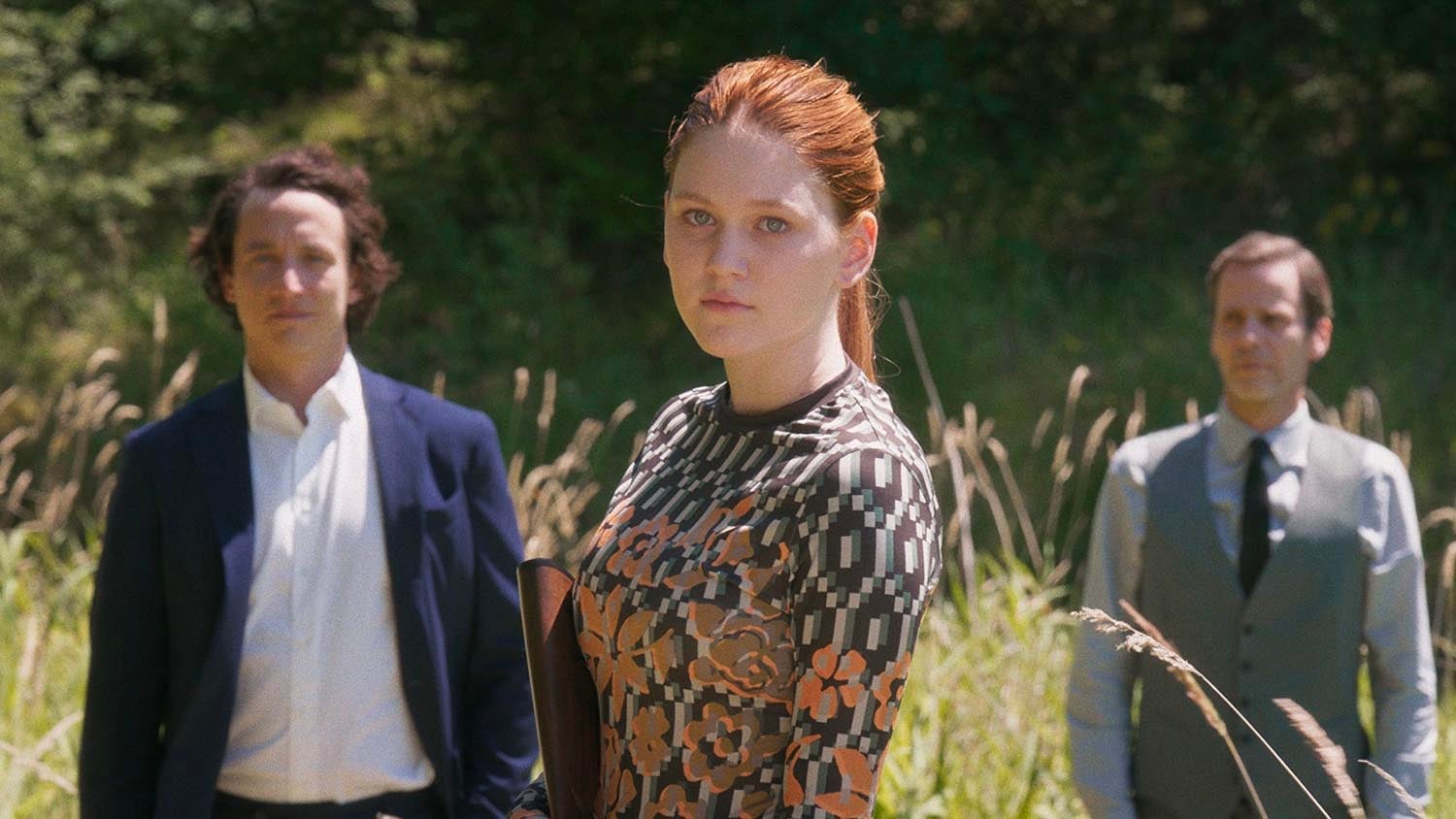
The film’s serial killer is Amon (Laurence Rupp), a chipper Austrian billionaire with a thing for picking off strangers (a bicyclist, a picnicking couple) with a sniper rifle. He pursues his targets carefully, preparing elaborate getaways with the help of his butler, Alfred (Markus Schleinzer). At the same time, Amon has the nonchalant manner of somebody to the manor born.
Amon believes that he should get away with murder, and yet he becomes increasingly distressed that nobody is catching him. With his chiseled body, swept-back hair, and air of blithe self-regard, he’s framed by the filmmakers as an echo of American Psycho’s Patrick Bateman, only with far greater wealth and even less self-awareness. The killings are shot at a medium distance, generally in bright daylight, without music, and sometimes with a discordant sense of black comedy. The effect is to de-sensationalize and flatten the acts so they seem like second nature.
Rather than making the hunt for Amon Veni Vidi Vici’s central drama, Hoesel and Niemann present the murder spree as simply another of Amon’s crimes. What we see of his work is the stuff of big-money realpolitik, cutting deals with a compliant government minister (Johanna Orsini-Rosenberg) to push aside regulations and allow the hostile takeover of a rival so Amon can build a new battery factory. Instead of making him monstrous in manner as well as deed, the film shows Amon in between rapacious deeds as a father so delighted with his family’s pampered life in their gleaming white mansion that he seems practically giddy.
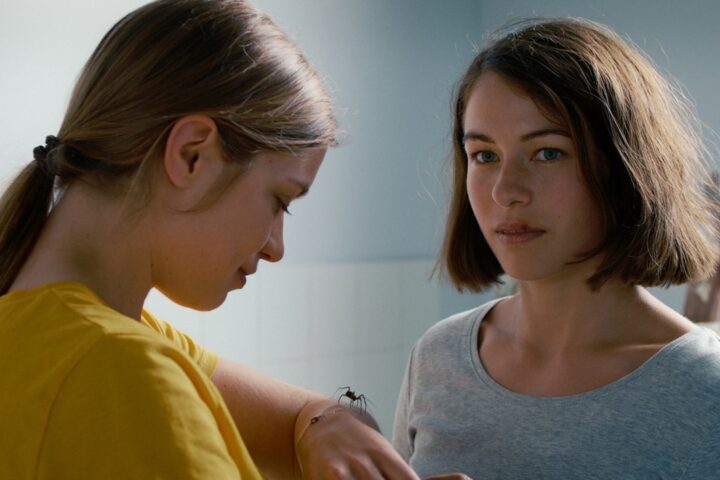
Amon is especially proud of his teenage daughter, Paula (Olivia Goschler). Her placid demeanor, detached perspective on the world around her, and preppie fashion sense hide a cold and predatory worldview. She delivers her thoughts with a flat adolescent certitude via a running narration that underlines her disregard for humanity. Amon covers his greed in disruptor buzzwords (“risk tolerance,” “creative destruction”) and ironically sobs when seeing a dead animal. But Paula seems to have distilled his euphemized cruelty to a more purified form.
Paula’s crimes are smaller at first, from cheating at polo to stealing from a convenience store. But well before her firearms fascination starts taking an unhealthy turn, she’s presented as the genial face of entitlement, shrugging off punishments as easily as Amon ignores the law. Her ruminations on what she believes is the kill-or-be-killed nature of life provide unsubtle but punchy digs that Veni Vidi Vici uses to equate its main target, extremist quasi-anarchic free-market capitalism, with spoiled children who don’t like to be told “no.”
Hoesel’s script draws the lines of conflict starkly, sometimes just by name-dropping. The film includes nods to writers and economists who championed the no-holds-barred capitalism that Amon represents (it opens with a quote from Ayn Rand’s The Fountainhead: “The point is, who will stop me?”), while Paula mocks a classmate as a useless drip because he “reads Piketty.”
While the filmmakers intend their film’s humor as a clenched-fist assault on runaway greed and systemic corruption, they have also threaded into their work a bleak assessment of the impact it or any works like it might have. Amon expresses dismay at one point when it looks like he might get away with his crimes: “Where’s the uprising? Why is nobody stopping me?” He might be a master of the universe, but he hasn’t yet figured out that the world is made for him.
Though sometimes far too impressed with itself, Veni Vidi Vici gains much of its strength from the almost unexpected way it shrugs at the world with wry weariness. The filmmakers have issued a call to action but do not for a second believe their audience will take them up on it.
Since 2001, we've brought you uncompromising, candid takes on the world of film, music, television, video games, theater, and more. Independently owned and operated publications like Slant have been hit hard in recent years, but we’re committed to keeping our content free and accessible—meaning no paywalls or fees.
If you like what we do, please consider subscribing to our Patreon or making a donation.