“Don’t be afraid of the dark. Be afraid of the silence,” reads the tagline for a popular paranormal investigation podcast that thirtysomething Evy (Nina Kiri) records in the wee hours of the night. For writer-director Ian Tuason, those words are a guiding principle across his feature-length directorial debut, Undertone.
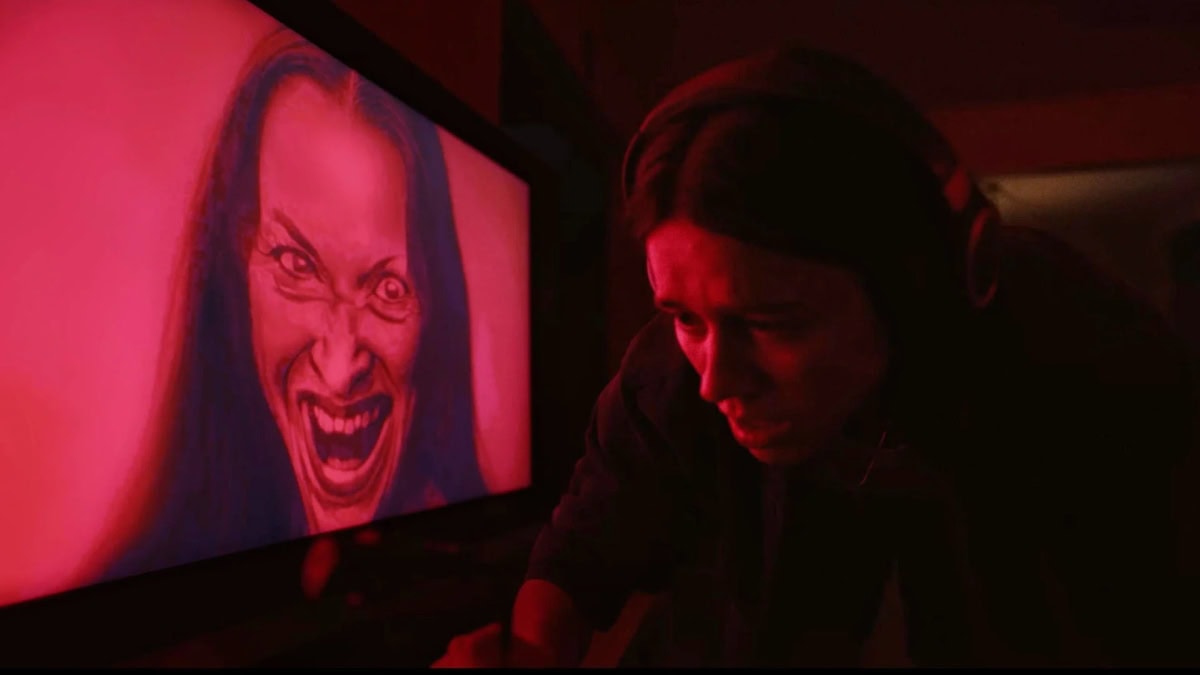
Tuason delights in deploying sound to eerily suggestive ends, which is apt given that it centers on Evy parsing through audio recordings made by a couple experiencing a haunting. We spend long stretches looking at Evy, alone at her desk during the podcast’s recording sessions with her noise-cancelling headphones on, hearing only whatever sound is transmitted to her from her computer, from music to the voice of her podcast partner, Justin (Adam DiMarco). In such moments, Undertone gets considerable mileage out of creating paranoia around the origins of the sounds and getting us to anticipate something emerging from the darkness behind Evy.
Between recording sessions, we catch glimpses of Evy’s day-to-day life, from assisting her ailing mother (Michèle Duquet) in a room upstairs to worrying that the boyfriend she doesn’t seem to particularly like might have gotten her pregnant. At first, these moments feel like they’re unnecessarily padding out the runtime, but as the details of the case come to parallel certain aspects of Evy’s personal life, the interstitial sequences take on a premonitory quality.
Evy and Justin learn that the demon Abyzou’s motivation in established folklore is to punish expecting parents, and as they listen to various nursery rhymes in reverse, searching for hidden messages, Undertone begins to flirt with the absurd. Justin, who’s seen as being more gullible than Evy, seems to immediately recognize coherent sentences hidden in these recordings, sometimes before even reversing them. Meanwhile, more obvious clues aren’t noticed by the characters until much later in the film. And though Evy’s skepticism seems to be Undertone’s way of acknowledging its own inherent ridiculousness, that skepticism eventually becomes a coping mechanism as she starts to take the hidden messages more seriously.
Undertone reaches a fever pitch when the camera, as if haunted, begins to move in unnerving synchronicity with the audio recordings. The tricks that Tuason plays on us are for the most part effective, but once Abyzou’s assault on Evy really kicks into high gear, the film starts to run out of steam. For one, the motivation behind Abyzou’s haunting, as it pertains to Evy’s experience, taps into themes of maternal anxiety and filial guilt but not in a provocative or substantial way.
Undertone climaxes with a kind of audiovisual collage—a sequence in which Evy’s ears are bombarded by audio aberrations, lights flicker and break, and prophetic crayon sketches appear on a wall—that’s jolting but more than a little familiar, leaving us with a sense that the film hasn’t cohered into anything more than the sum of its various scares. Like much of Undertone up to this point, the sequence is dread-inducing, but given how narratively-unfulfilling it is, it also leaves one with the impression that Tuason is bowing out before truly delivering the goods.
Since 2001, we've brought you uncompromising, candid takes on the world of film, music, television, video games, theater, and more. Independently owned and operated publications like Slant have been hit hard in recent years, but we’re committed to keeping our content free and accessible—meaning no paywalls or fees.
If you like what we do, please consider subscribing to our Patreon or making a donation.