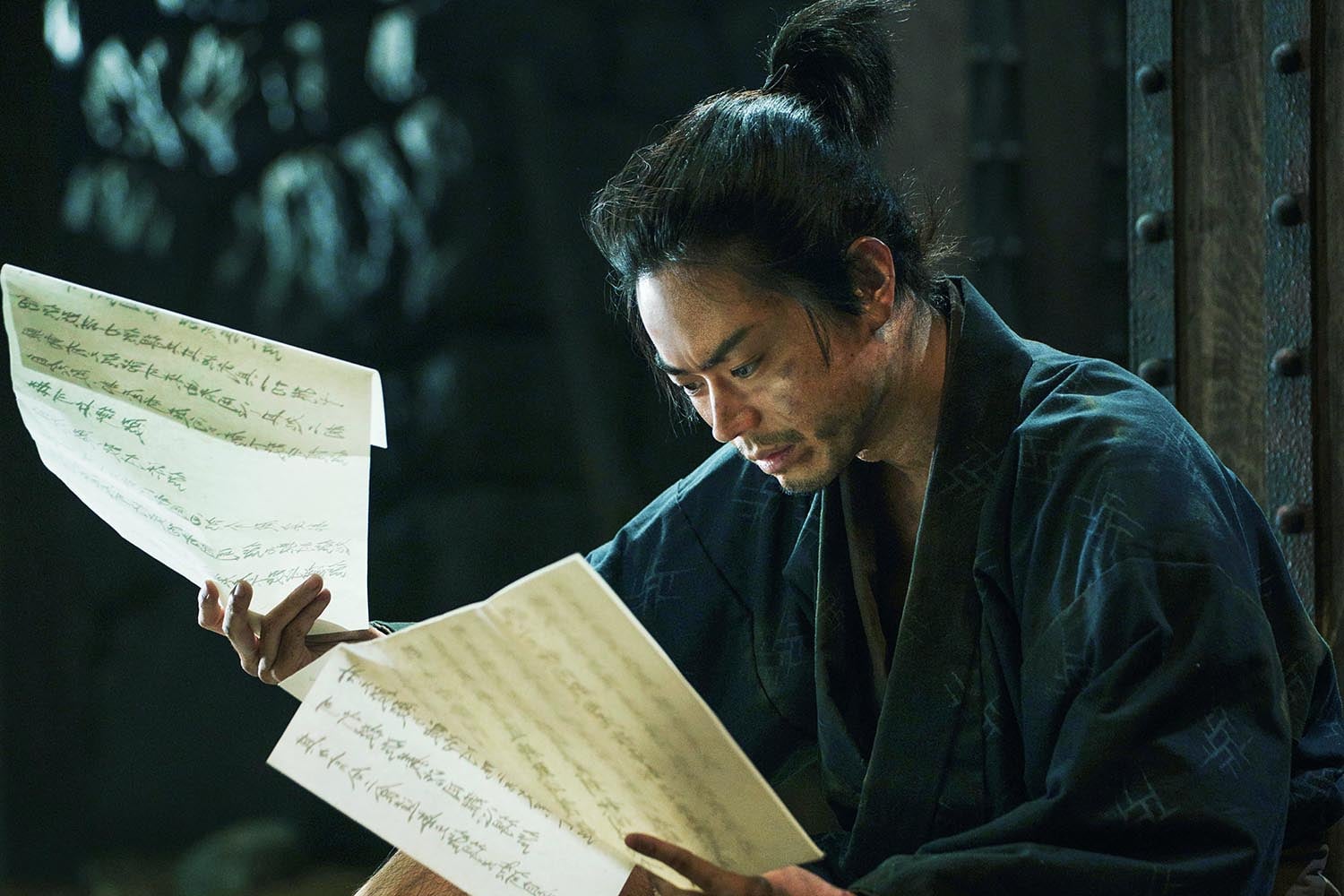
Kurosawa Kiyoshi’s The Samurai and the Prisoner marks the first historical film from the Japanese auteur. The filmmaker, best known for his contemporary-set horror films, might seem like an unconventional choice to bring Yonezawa Honobu’s award-winning novel to the screen. Yet the adaptation might make another famous director with whom Kurosawa shares a surname proud, namely for the way he balances a classical filmmaking style with a contemporary sensibility within the traditional framework of a jidaigeki period drama.
During Japan’s Warring States era in the late 16th-century, Lord Araki Murashige (Motoki Masahiro) attempts to stave off a powerful enemy at the gates of his mountain fortress, the vicious Oda Nobunaga (Shingo Bando). But a mounting pile of unexplained deaths inside his own walls begins to test the resolve of Murashige’s leadership style, which draws strength from character and conscience over brash displays of bellicosity.
Murashige’s unflappably logical outlook finds a natural visual expression in the crisp, clear compositions Kurosawa crafts with cinematographer Sasaki Yasuyuki. The artists always stake a perfect middle ground to position the camera in relation to the characters and the location: not too close to get wrapped up in their emotion, not too far to feel clinically removed. The Samurai and the Prisoner offers a master class in framing and blocking, with Kurosawa continually finding new ways to render the story’s self-contained setting as a source of rich visual pleasure.
This measured style assumes a different form when it comes to the action and violence. (After all, there’s a professional warrior mentioned in the title.) Kurosawa shows the murders in Murashige’s midst, as well as the occasional skirmishes with his rival clan, using a more oblique approach. He emphasizes the human toll left in the aftermath of any clash of wills over dwelling in the actual bloodshed. And when showing the battle itself is unavoidable, the camera is positioned from such a distance that the combat registers as more conceptual than corporeal.
Kurosawa’s narrative storytelling, though, never quite matches the fluidity of his immaculate visual formalism. Each chapter in The Samurai and the Prisoner encompasses a single season and follows a predictable pattern of plotting. A death provides the inciting incident, and Murashige attempts to divine who in his ranks might ultimately be responsible for the casualty. The satisfaction of each resolution lies less in learning the source and rationale for treachery but in seeing the soundness of Murashige’s pragmatic governance reaffirmed.
Which is to say, The Samurai and the Prisoner’s structure is schematic, with the pile-up of these incidents making it seem like you’re watching a compressed miniseries. But it’s to Kurosawa’s credit that he knows exactly when to place the defining sequence of every season: the showdown between Murashige and the titular traitor locked up underneath the castle, Kuroda Kanbei (Suda Masaki). The sage samurai takes the unusual step of imprisoning rather than executing the strategist suspected of treacherous action, though the decision isn’t entirely out of a benevolent sense of forgiveness. Despite unease about his ultimate alliance, Murashige respects Kanbei’s acumen and insight into the dark side of humanity and continues consulting with him.
Suda’s wily performance provides a compelling contrast to the upright rectitude with which Motoki imbues Murashige. Like Hannibal Lecter calmly drawing Clarice Starling out of her naivete in The Silence of the Lambs, so, too, does the prisoner tantalizingly probe the limits of the samurai’s goodness. The ego of Murashige might enable him to hold a tentative peace among his men, but he needs to engage with the id of Kanbei and incorporate those learnings to see the full picture of what’s unfolding within the walls. These subterranean meetings of the minds provide a surge of electricity into the oft-staid proceedings just when a spark is needed.
Since 2001, we've brought you uncompromising, candid takes on the world of film, music, television, video games, theater, and more. Independently owned and operated publications like Slant have been hit hard in recent years, but we’re committed to keeping our content free and accessible—meaning no paywalls or fees.
If you like what we do, please consider subscribing to our Patreon or making a donation.