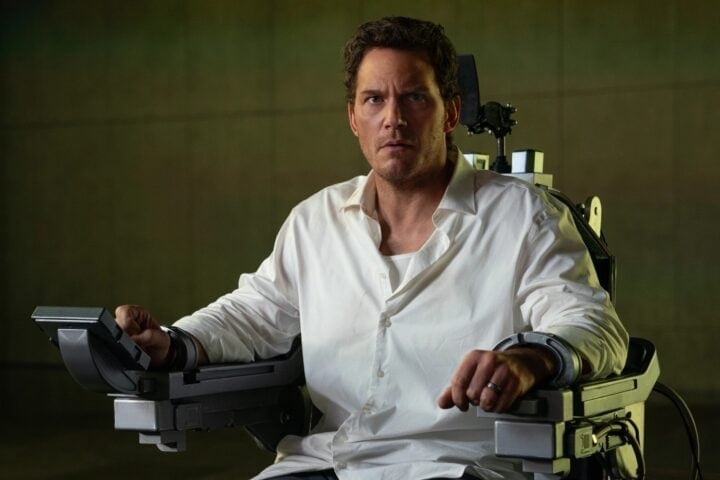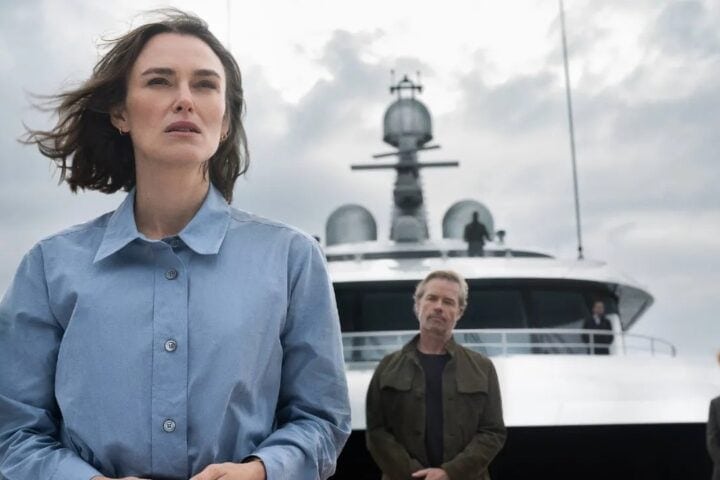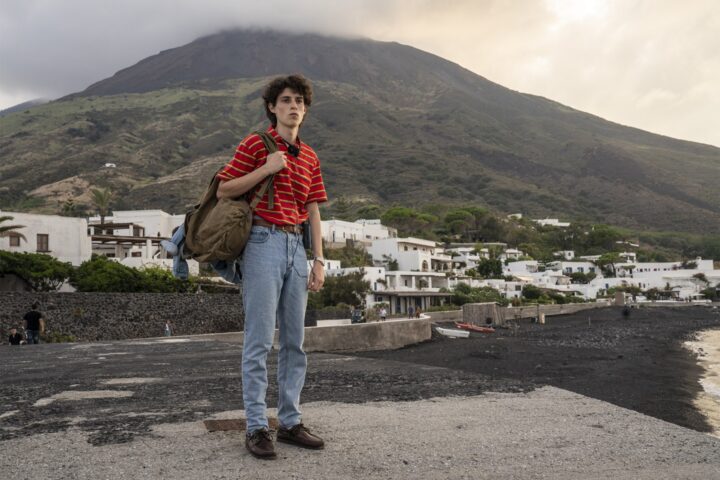
A kind of tragicomic reimagining of The Sacrifice for those who think that our foremost global crisis is people’s willingness to adhere to government safety measures, writer-director Camille Griffin’s Silent Night concerns a group of friends awaiting the apocalypse in the British countryside. But where Andrei Tarkovsky’s film captures the oppressive burden borne by citizens factually subject to the whims of superpowers, Griffin’s feature-length directorial debut misplaces the root of our current existential dilemma and then covers it with a forced mélange of tepid droll comedy and clunky melodrama.
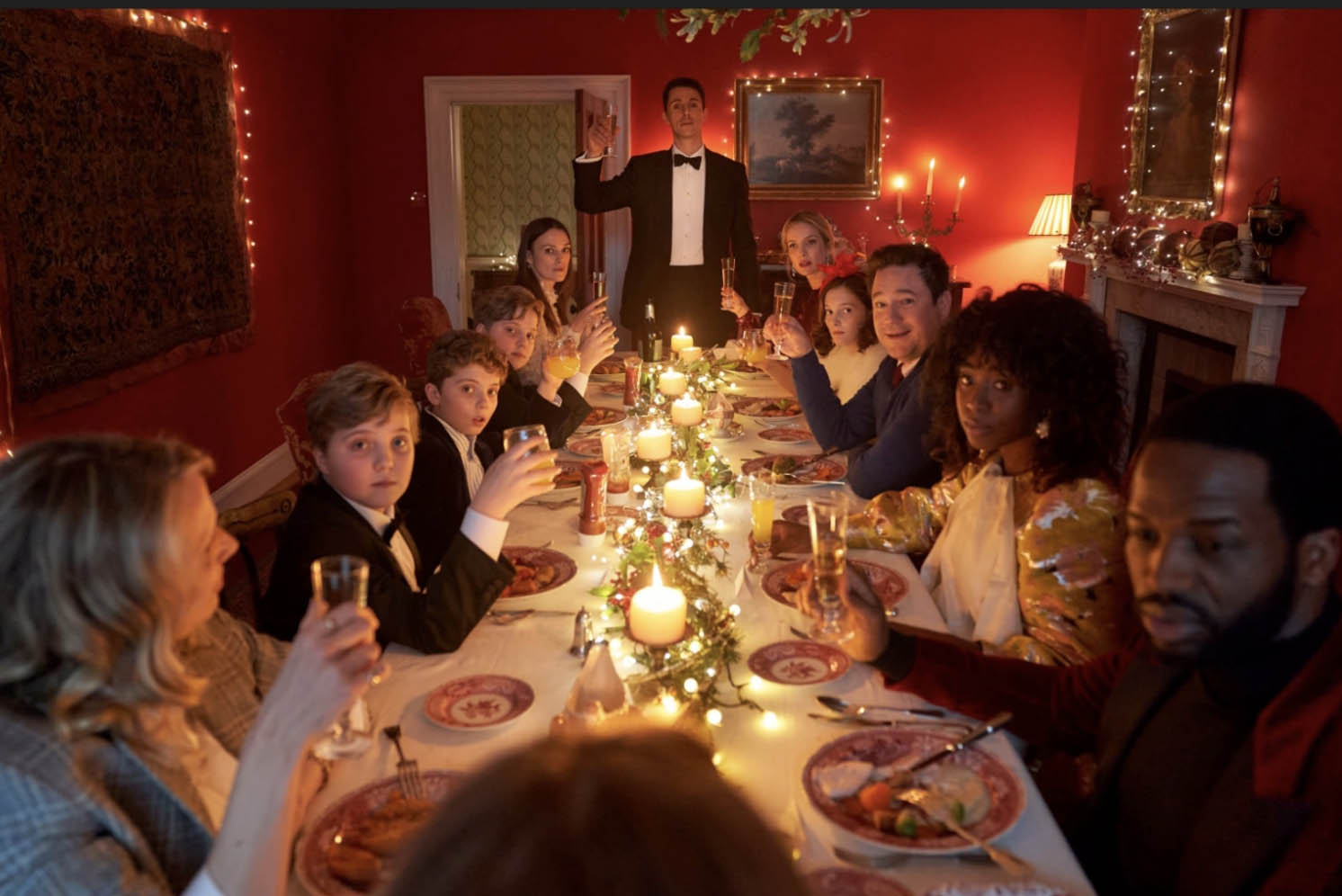
Throughout Silent Night’s first act, Griffin keeps us guessing as to what exactly is going on. We join Nell (Keira Knightley) and her husband, Simon (Matthew Goode), as they’re preparing for the traditional Christmas gathering of her closest friends at her mother’s spacious, isolated country house. Couple by couple, the friends arrive, each listening to the same obnoxious Michael Bublé song, “The Christmas Sweater,” as they drive up. There’s a promisingly dark tinge to the otherwise anodyne exposition, as the volume of the song is increased to nigh-unbearable levels on the soundtrack, while in Nell’s kitchen, her preteen son, Art (Roman Griffin Davis), cuts his hand chopping vegetables and bleeds all over the carrots.
The opening sequence’s minor intrigue and shades of dark comedy are squandered on a story more invested in a dubious critique of its subjects’ willingness to go along with the program than in exploring the absurdity of death’s certainty. Because the film dances around its central crisis for its first half-hour—letting vague discussion of a “pact” between friends and allusions to a worldwide crisis slip into dialogue pending a big reveal over the dinner table—revealing the precise nature of what’s going on would be a spoiler. Suffice it to say, it’s the sort of sketchily drawn end-of-world scenario that practically begs to be read as an allegory for real-world events, and the friends have all decided to take a medical course of action that seems inadvisable in its consequences. Why? Because the government has told them to, of course.
The explanation of the crisis to which the characters are (over)reacting invokes environmental degradation, though it’s easier to take the ecological credentials of M. Night Shyamalan’s ham-handed parable The Happening seriously than Griffin’s even hollower gestures in the same direction. Climate change may be the MacGuffin, but it’s not the real target; the emphasis is instead laid on how mistaken and excessive the official reaction to the crisis is. Take the scene in which Art expresses doubt about the soundness of the adults’ plan, and is condescendingly reassured by James (Sopé Dìrísu), who tells him that “those who know best”—namely, “the government, and scientists”—have figured out the solution. The foul-mouthed but innocent Art wants to know, though, if the experts are wrong this time—setting the film up for a climax that reads even more anti-science today than it would have, say, three years ago.

Needless to say, the crisis in the public’s trust of science had already begun before Covid, though largely among the same crowd who would later refuse to get shots just because “those who know best” urged them to. And one gets the sense pretty quickly that Art, untainted by the advice of experts, may be onto something, at least as far as the plot of the film goes. According to the logic of the simplistic form of melodrama that Silent Night emulates, the most sympathetic characters—Art’s point of view is backed up by James’s younger girlfriend, Sophie (Lily Rose Depp)—can be expected to be proven right. Proverbs about the mouths of babes notwithstanding, though, promulgating anti-expertise logic through the mouth of a frightened child isn’t quite the rhetorical win that Griffin appears to think it is.
Neither, for that matter, does Silent Night pull off its attempted takedown of the British yuppie set. The one-dimensional posh Brits that comprise Nell’s friend group barely even reach the heights of caricature, and their bargain-basement Ab Fab dynamic as they hash out their mutual resentments over drinks is rendered less bearable by the sneaking suspicion that it, like Art’s innocent questioning of medical expertise, serves rhetorical ends that ultimately have little to do with class critique. To wit, the decadence and blithe racism of Sandra (Annabelle Wallis) and the callous narcissism of Bella (Lucy Punch) end up being associated with their willingness to follow the herd into government-mandated oblivion. Familiar sardonic jokes about the vapid minds of the aristocracy end up serving merely as setups to lessons about state dissimulation that simply scan as wrongheaded.
The most distressing elements of Silent Night’s conceit and tone are concentrated in the character of Sophie, the one American among the crowd. It turns out that she has personal grounds for not wanting to partake in the madness that the other friends have agreed to, as she’s pregnant. Like Art, Sophie is positioned as one of the innocents—that is, those who are still unjaded by either their sexual hang-ups or their burden of medical knowledge, and Griffin’s script saddles Depp with an incongruous sentimental characterization. It’s tempting to feel sorry for the actress as she’s forced to tremble and shout, “I don’t want to kill my baby!”
Given that controlling our present-day global pandemic has over the last year become a matter of immunizing the young, Silent Night’s focus on the danger posed to children by dangerous government policy carried out by their parents can hardly help but sound like the ramblings of today’s anti-vaxxers. In the end, Silent Night skirts any specific issue by being applicable to any situation in which individuals are worried that their government might be poisoning them, literally or metaphorically. The irony, without a doubt, is that anyone truly worried about the mass distribution of poison should probably avoid Griffin’s film in the first place.
Since 2001, we've brought you uncompromising, candid takes on the world of film, music, television, video games, theater, and more. Independently owned and operated publications like Slant have been hit hard in recent years, but we’re committed to keeping our content free and accessible—meaning no paywalls or fees.
If you like what we do, please consider subscribing to our Patreon or making a donation.