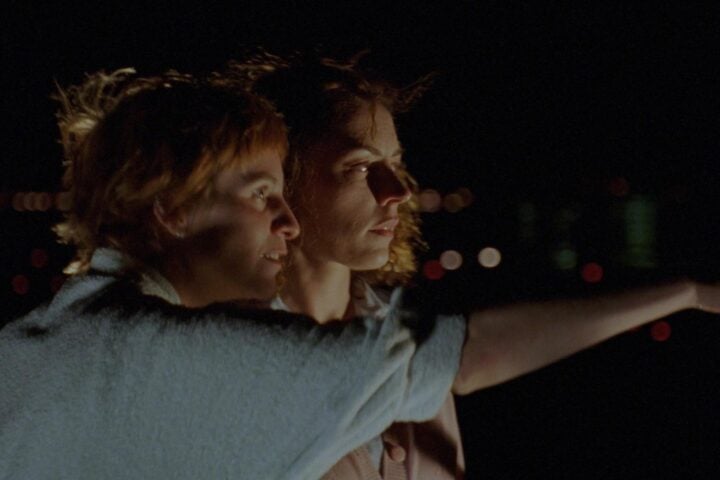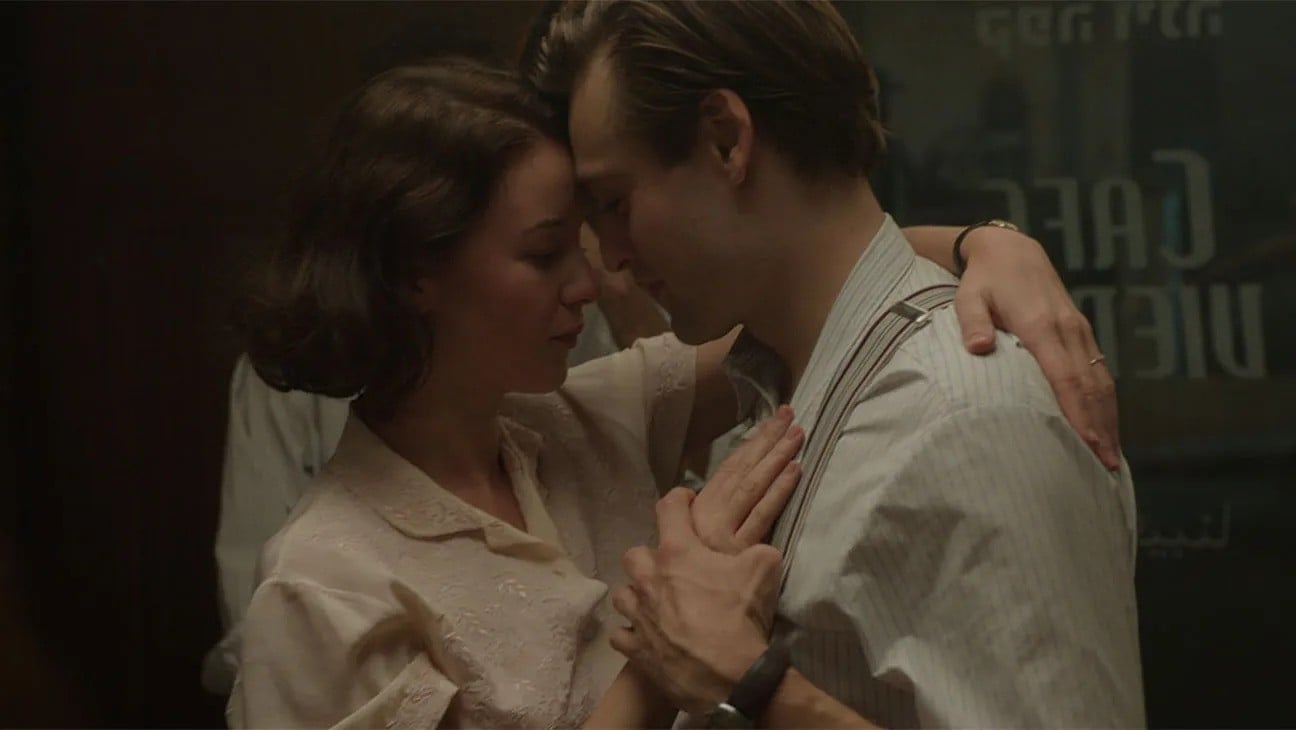
Spanning a tumultuous period of the late 1930s and early ‘40s in the British-administered Palestinian territories that would soon be recognized as the state of Israel, Michael Winterbottom’s Shoshana sheds light on a historical narrative that, despite the contemporary political relevance of its setting, remains relatively obscure. The eponymous character (Irina Starshenbaum) is an office clerk and journalist in Tel Aviv who shares the utopian outlook of her influential father Ber Borochov, co-founder of the socialist Labor Zionism movement. After falling for Tom Wilkin (Douglas Booth), a local British policeman tasked with defending the region from the more violent Zionist faction Lehi and from Arab militias, Shoshana finds her personal feelings and ideological convictions coming into conflict.
The broad sweep of the narrative covers early Jewish settlement of the region, the establishment of the first kibbutzim, terror attacks and reprisals, state violence, and the outbreak of the Second World War in Europe. Newsreel footage is occasionally used to illustrate the story’s multifaceted geopolitical background, while Shoshana herself also delivers sporadic voiceover narration. Though perhaps necessary to provide context in a coherent way, the excess of functional exposition tends to dissipate the tension that’s allowed to build in more low-key or intimate scenes, as does the uneven pacing caused by a few major time jumps.
This disconnect between the film’s overarching political developments and the more human aspects is also evident in the relationship between Shoshana and Tom. As much screen time as it’s afforded, their courtship is never really able to take on any life of its own, with their every conversation and even the odd sex scene doubling as a way for Winterbottom and co-writers Laurence and Coriat Paul Viragh to push Shoshana’s unwieldy plot forward a little more.
Of course, a cross-cultural romance in such a charged environment could never be entirely immune to outside pressures, which is likely what the filmmakers are suggesting here, but the rote dialogue gives little sense of what’s driving these characters on a deeper emotional level. It’s a shame that we can’t know more about them beyond their narrative function, because some underdeveloped thematic strands are potentially fascinating, particularly the precarity of Shoshana’s status as a sexually liberated Jewish woman in this early-20th-century milieu, facing disapproval from multiple parties for her choice to date a foreign occupier.
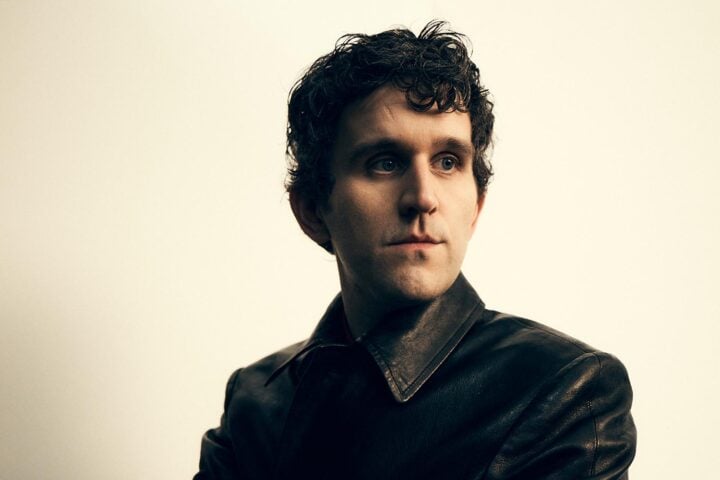
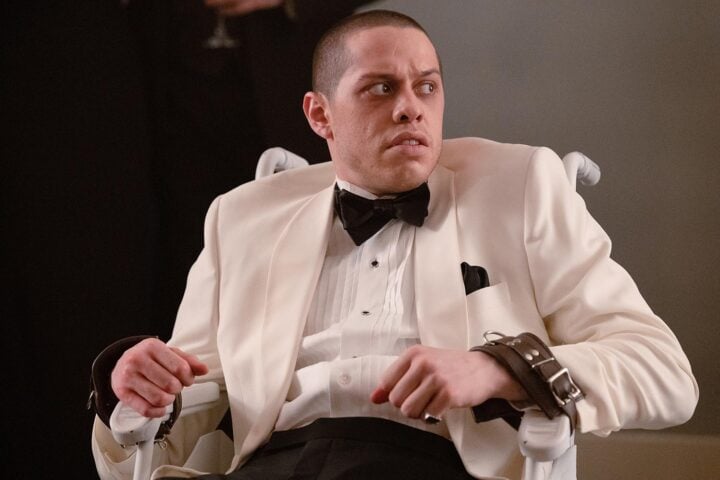
It’s possible that a kind of objective moral ambiguity was the goal here, but given the sensitive nature of the material, it’s difficult to shake the feeling that the film’s vagueness is the calculated strategy of those unwilling to take a side. If Shoshana does communicate a political stance, it’s against the colonial ambitions of Great Britain, whose meddling seems to have thwarted any potential for peaceful Arab-Jewish co-habitation. This aspect of the story is represented primarily through the figure of Geoffrey Morton (Harry Melling), Wilkin’s self-important, uncompromising colleague. A respected war hero who downplays his coolness under fire by explaining that “the Arabs are bad shots”, he has a cruel streak and a proclivity for extra-judicial killings that increasingly sabotage the stability of the region.
The idea that British imperialism laid the groundwork and set the precedent for a century of brutal conflict in the Middle East is a difficult one to dispute. But the film’s concluding message that violence can only beget more violence feels like a retreat into easy platitude—a shying away from facts on the ground that, up to that point, have been presented with diligence.
Winterbottom’s studiously evenhanded account of how a more noble form of Zionism tragically lost its way seems, at best, somewhat futile after two years of its escalating atrocities being livestreamed 24/7. It certainly makes for a less urgent or compassionate piece of filmmaking than the director’s prior feature, the 2022 documentary Eleven Days in May, a somber memorial to the victims of an earlier Israeli bombing campaign in Gaza. But what’s perhaps more regrettable here is that he appears to have had so little creative ambition for Shoshana, which serves primarily as an efficient, workmanlike history lesson.
Since 2001, we've brought you uncompromising, candid takes on the world of film, music, television, video games, theater, and more. Independently owned and operated publications like Slant have been hit hard in recent years, but we’re committed to keeping our content free and accessible—meaning no paywalls or fees.
If you like what we do, please consider subscribing to our Patreon or making a donation.