The war-ravaged slice of Syria depicted in Sabaya is a land of ever-brewing enmities. Hogir Hirori’s poignant documentary focuses on the region’s most horribly persecuted group, the Yazidi, a Kurdish minority whose non-Islamic religion was abhorred by ISIS, known in the region as Daesh. “Sabaya” is Daesh’s term for sex slave, which is what many Yazidi women and girls were forced to become after the Islamist fanatics seized them.
Early in Hirori’s documentary, a radio voice announces that Daesh has been defeated, which places the action in 2019. With most of the fighting over, a volunteer group called the Yazidi Home Center sets out to identify and rescue women who are still being held by their Daesh captors or the men’s families. A pair of volunteers from the center, Mahmud and Ziyad, pursue tips and search door to door in northeastern Syria. They also send female agents into the teeming Al-Hol camp, which holds both refugees and prisoners of the anti-Daesh Syrian Democratic Forces. The determined investigators are shadowed by the equally resolute Hirori, who was born in Iraqi Kurdistan in 1980 and moved to Sweden in 1999.
Sabaya is Hirori’s third documentary about the consequences of Daesh’s assault on Kurdistan, following The Girl Who Saved My Life and The Deminer (co-directed with Shinwar Kamal). It’s an episodic film in the cinema verité mode, with just a few facts about the larger context presented in on-screen text, and if its terseness could make it too cryptic for some viewers, that in no way blunts the impact of the most visceral or tender moments.

MTV Documentary Films bills Sabaya as a “docu-thriller,” and it does have tense moments, if not the shapely narrative or multiple camera positions, worthy of an action movie. The astonishingly calm Mahmud and Ziyad smoke cigarettes, stick pistols in their waistbands, and scrutinize images of missing women on the screens of cellphones that frequently lose their signals. Nighttime raids can lead to gunfire and high-speed chases, all viewed subjectively through Hogir’s eye-level handheld camera. The effect is tightly circumscribed and absorbing.
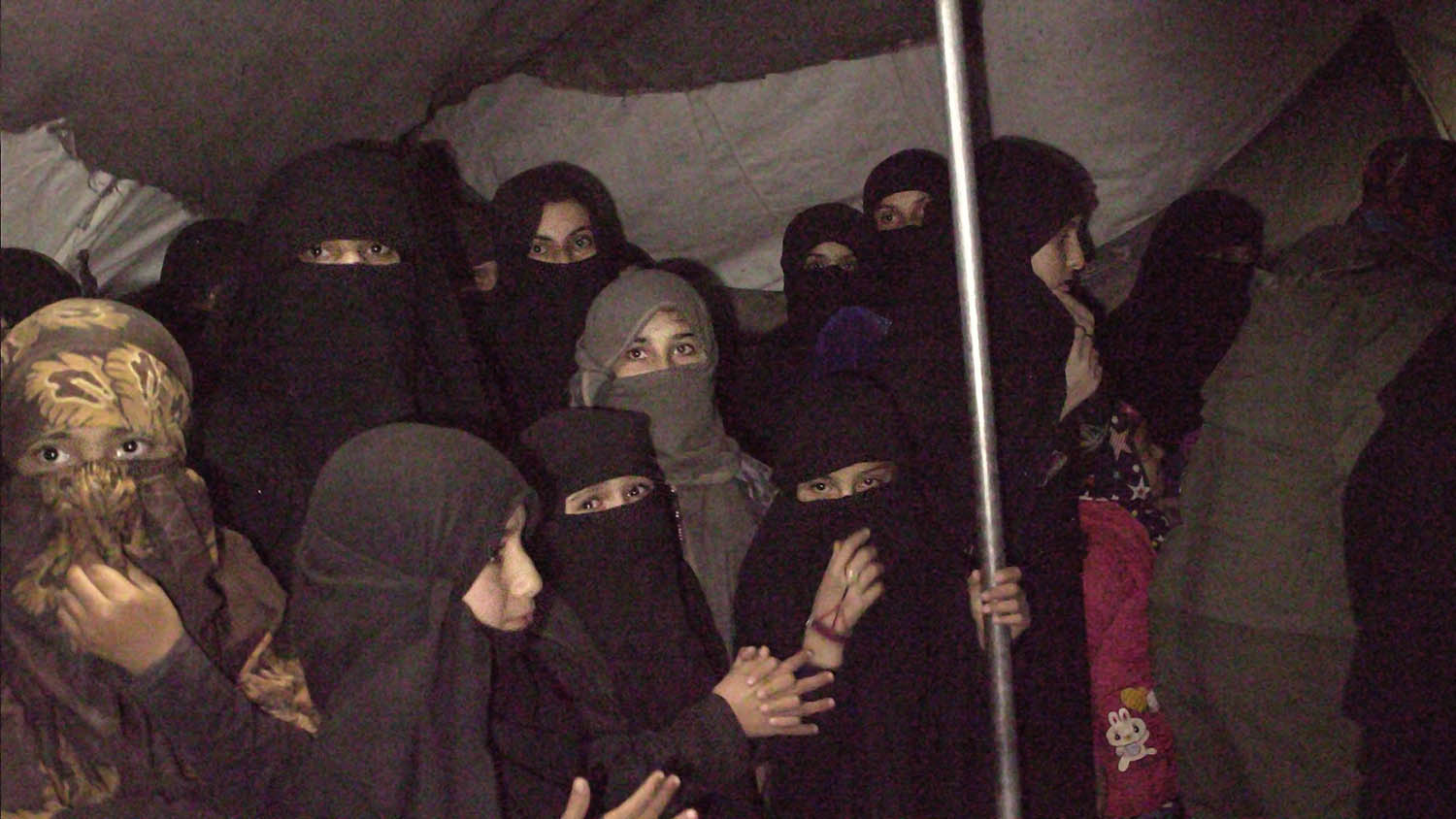
Twice, a mini-camera inside a niqab (the eye-slitted hood worn by women in the strictest Islamic societies) offers the limited viewpoint of a female volunteer from the Yazidi Home Center who’s about to infiltrate the Al-Hol camp. But there’s no footage of the camp’s interior from this perspective, presumably because it was deemed too dangerous for female volunteers to take cameras inside. In the end, Sabaya goes only where Hogir can.
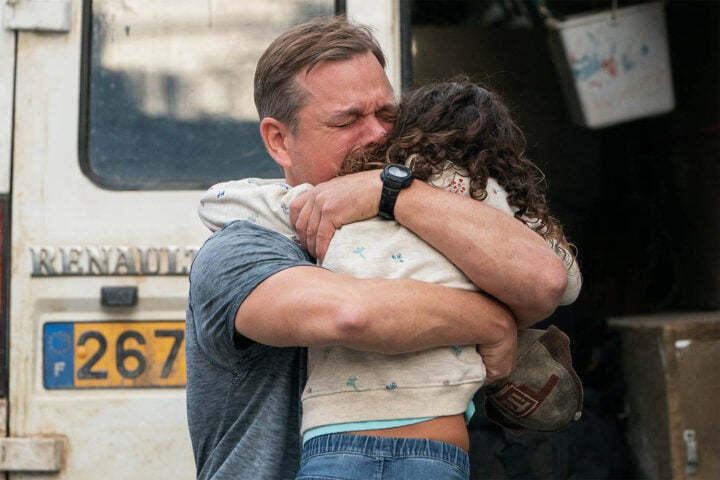
We do see the results of the infiltrators’ forays: newly rescued Yazidis, including a seven-year-old who spent six years as a captive. She will be repatriated to Kurdistan, whose language she doesn’t know. That’s far from the most wrenching dilemma for survivors. More than 50 Yazidi women gave birth to babies fathered by Daesh rapists, and must come to accept that those children aren’t welcome in Sinjar, their native province. Another emotional blow to the women who will travel back to Sinjar is that they’ll be returning to a place where an estimated 5,000 fellow Yazidis were slaughtered by Daesh in 2014. Sabaya has no answers for the survivors, but Hirori’s documentary powerfully conveys the mixed emotions of the women and girls who’ve been rescued from their abductors but not from the trauma they inflicted.
While scenes of raids, chases, and counterattacks energize the documentary, its heart is in the scenes of the work done by Mahmud’s wife and mother, Siham and Zahra. They welcome the liberated women and girls, listen to their stories of hateful abuse, and perform such symbolic cleansing acts as burning their shapeless black burqas. “I hate this world,” says one former Daesh slave. “Soon you will hear I committed suicide.” It’s a tribute to the Yazidi Home Center team that we never hear that. Daesh’s crimes can’t be undone, but Sabaya does demonstrate, quietly but unforgettably, how a few brutalized Yazidi women can slowly come back to life.
Since 2001, we've brought you uncompromising, candid takes on the world of film, music, television, video games, theater, and more. Independently owned and operated publications like Slant have been hit hard in recent years, but we’re committed to keeping our content free and accessible—meaning no paywalls or fees.
If you like what we do, please consider subscribing to our Patreon or making a donation.