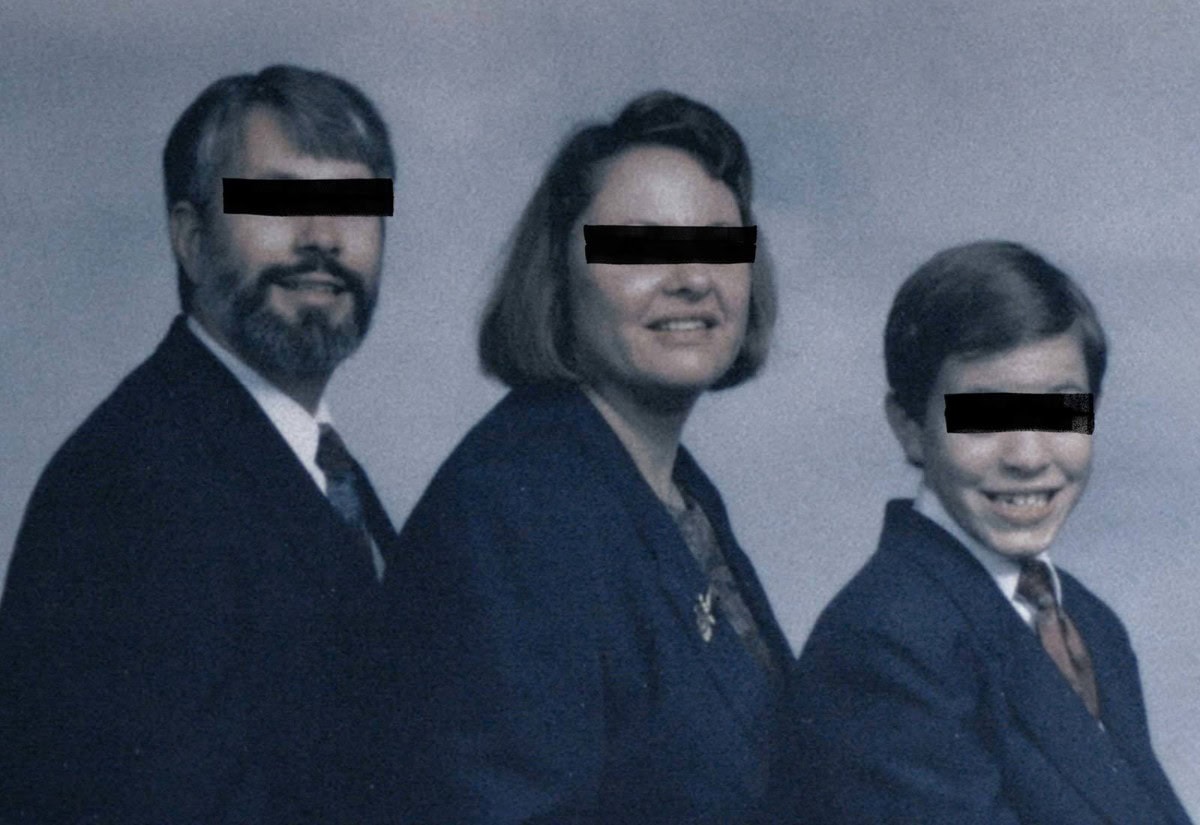
Sonia Kennebeck’s murky, labyrinthine documentary Enemies of the State would seem to be another entry in the tradition of heroic whistleblower narratives popularized by filmmakers like Laura Poitras (Citizenfour) in the early 2010s. Its story is centered around Matt DeHart, a former Indiana Air National Guard drone team member and professed Anonymous- and WikiLeaks-affiliated hacktivist who claims to have been interrogated and tortured by the F.B.I. because of classified government documents in his possession.
Parts of what Matt and his fiercely protective parents—Leann, a former Army linguist, and Paul, a retired U.S. Air Force major who worked in the National Security Agency—say resonate with what we know about the U.S.’s War on Terror-era zealous pursuit of leakers who find evidence of official malfeasance. But while Kennebeck isn’t hostile to her subject, she’s also not naïve about the particulars of his story that don’t exactly line up.
Kennebeck scrambles the timeline of events from the start of Enemies of the State in a seeming attempt to mirror the lack of clarity in Matt’s story. (Needless to say, the F.B.I. refused to cooperate in the making of the film.) Her approach also works to echo the jumpy and incensed manner in which things are related by Matt’s parents, who both present themselves as sober-minded patriots who have been awakened to the surveillance state’s perfidy.
Their voices initially drive the film, relating in dramatic terms how their son, after he was hounded by law enforcement agents who raided their home in Newburgh, Indiana, hid out in Mexico before seeking asylum at the Russian and Venezuelan embassies in Washington, D.C. and then in Canada (where he spent two years under house arrest), all unsuccessfully. (Matt wasn’t interviewed for the film, though he can be heard in dramatic recreations of various court proceedings where actors mouth recordings of the original audio.)

A few factors potentially complicate the arc presented by Matt’s parents. For one, we’re never shown the material that Matt had that the F.B.I. was supposedly interested in. As related by Matt, while administering a server for WikiLeaks, he saw anonymously submitted files that made him nervous. According to Leann, the only person in the film who claims to have seen the files, they alleged that the C.I.A. caused the anthrax attacks of 2001. More surprisingly, that Matt’s 2010 arrest doesn’t appear to have been because of espionage but rather a charge of soliciting child pornography from teenage boys in Tennessee.
Enemies of the State doesn’t come down on one side or other of this aspect of the story, bringing on a detective and assistant U.S. attorney to deliver a sober rundown of the case while DeHart’s parents decry the charges and insinuate that they could be trumped up by the government. As far as the filmmakers can determine in a case muddied by the conspiracy-minded DeHarts (we see them nervously watching helicopters and peering out of windows looking for signs of surveillance) and a largely silent federal government, Matt was in fact detained and interrogated, possibly about something connected to his WikiLeaks work. A federal judge released him from pre-trial detention because she thought the government’s evidence was thin. But his claims of torture are difficult to substantiate.
Kennebeck’s approach to this years-long legal odyssey is fascinatingly nuanced and complex. She doesn’t present the DeHarts as definitively one thing or another, but rather as people lost in the hall of mirrors that many such surveillance-state stories end up resembling. Enemies of the State certainly suggests that the parents’ conspiratorial thinking could have been counterproductive—one of Matt’s lawyers tried to keep them out of the picture—but doesn’t eliminate the potential for truth in some of what they say.
Enemies of the State leans overall in a direction that’s more thoughtful and less interested in straight advocacy than other hacker-versus-government stories, highlighting some interviewees who appear broadly sympathetic to the case—such as a Canadian journalist who profiled Matt and a Montreal professor who studies Anonymous—but also make a strong argument for keeping an open mind as new information arrives. In a genre filled with filmmakers and subject making absolutist claims, such a concession to the fungible nature of presented reality comes across not as indecisive but courageous.
Since 2001, we've brought you uncompromising, candid takes on the world of film, music, television, video games, theater, and more. Independently owned and operated publications like Slant have been hit hard in recent years, but we’re committed to keeping our content free and accessible—meaning no paywalls or fees.
If you like what we do, please consider subscribing to our Patreon or making a donation.