Were it not for a text crawl identifying the drab, undistinguished setting of Ognjen Glavonic’s The Load as Yugoslavia at the outset of NATO intervention in the Kosovo War, it would be difficult to know where we are. The war is glimpsed only in the margins, heard in the distant rattle of automatic gunfire or seen in flashes of missiles cutting through clouds like heat lightning. Indeed, even the plot is vague and amorphous, though the subject can be easily gleaned by those familiar with Depth Two, Glavonic’s documentary about bodies being transported across Yugoslavia to mass graves during the war.
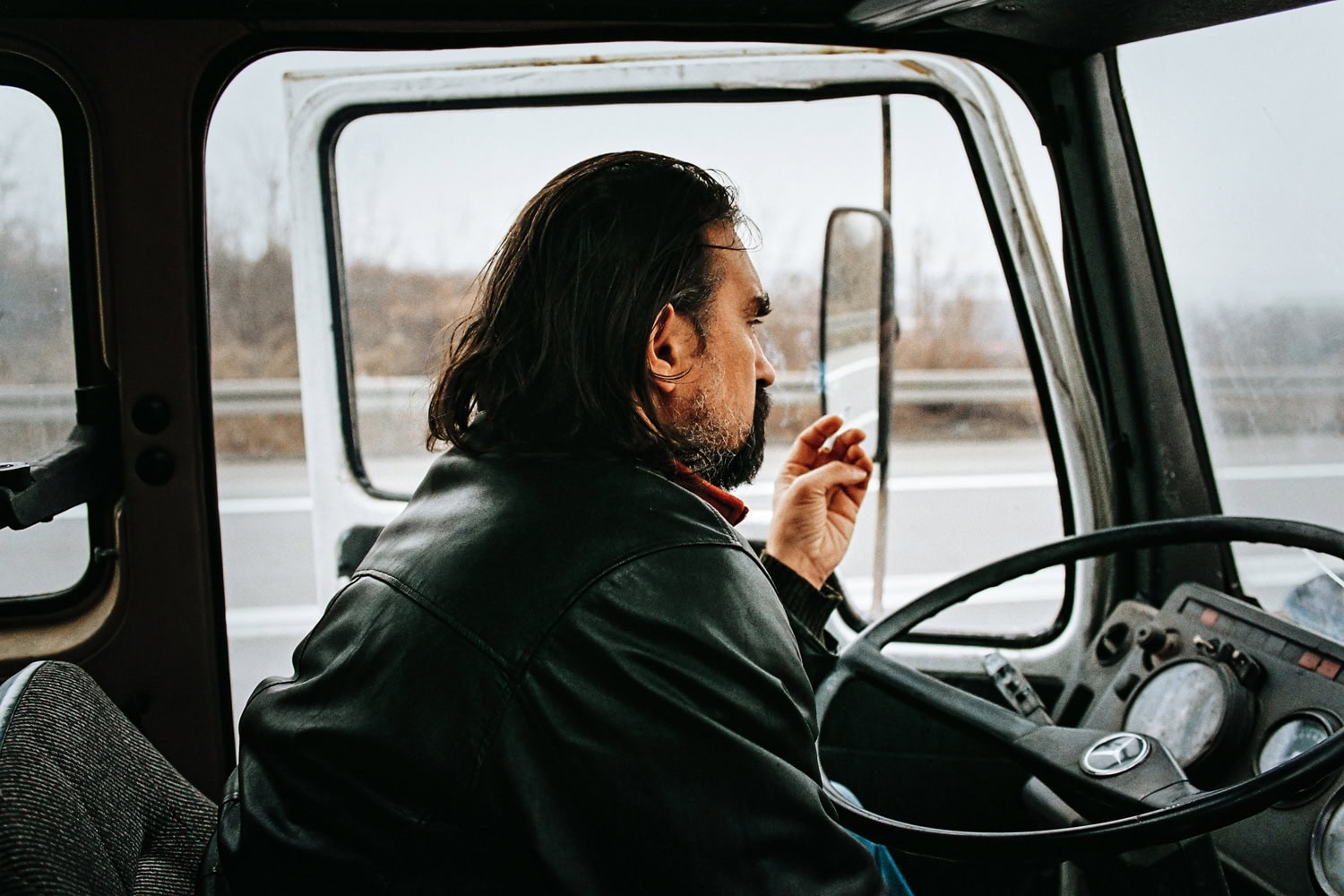
The film centers on one of the drivers tasked with toting bodies across the country to a waiting grave in Belgrade. Of course, Vlada (Leon Lucev) has no idea what he’s carrying when hired by some suspicious men to drive from Kosovo to Belgrade with strict instructions to not look in the cargo bed. This doesn’t seem to stoke Vlada’s curiosity, though he’s scarcely unique in his aversion to courting trouble. When Vlada pulls over early in his journey to ask a group of men for directions, we see the general attitude of people living under wartime; other people are as circumspect as Vlada, and in general most of them tend to avoid direct eye contact. One gets the sense that this is a nation of people who’ve learned to mind their business at all costs, and even those who tell Vlada the way to Belgrade do so as if trying to say as little as possible.
Only Paja (Pavle Cemerikic), who asks for a ride to Belgrade is remotely personable, though Vlada initially turns him down before reconsidering and giving the young man a ride. Why Vlada does so is a mystery, as he clearly doesn’t desire much companionship, though the silence left between the two makes it all the more striking when the sound of something falling (or moving) can be heard from the truck bed, prompting both men to reflexively glance back at the cargo they cannot see, only to look forward again and drop the matter.
Glavonic favors these long stretches of uncomfortable silence as Vlada trudges across the countryside, only revealing the character’s depths in flashes. He keeps a decrepit, barely functioning lighter for sentimental value and showing his first emotion in the film when he freaks out after someone steals it after he stops his truck in order to call his sick wife. The handheld camera, relatively sedate up to this point in The Load except for the expected wobbles here and there, suddenly moves in animated fashion as it follows Vlada as he chases the thief, often circling around him to catch glimpses of the thief ducking detection.
It’s the film’s sole moment of true action, the one instance where Vlada shows enough emotional investment in something to drop his mask of dispassion. The brief foot chase is a stylistic outlier in a film that otherwise hews closely to the established art-house tropes of contemporary Eastern European cinema. People are ashen and drab, and buildings sport pale mold on dull concrete walls. Chromatically, The Load makes Saving Private Ryan look like The Band Wagon. Yet Glavonic still manages to convey the devastation and numbness that results from atrocity without resorting to exploitation. Trauma is approached obliquely, more a subliminal fact of life than a single psychological rupture to be confronted and mended.
Vlada tries in the end to give some voice to his disgust and horror, dispiritedly comparing this “video game war” to his father’s prouder service in WWII, but it’s Paja who most directly contends with the present-day conflict. Intent on reaching the West, Paja at one point gets a glimpse of the escalating war when he hears a battle in the distance and sees the aerial dancing of tracer rounds fired from anti-aircraft cannons. Though far removed from the action, the young man is overwhelmed by the hopelessness of it all and, confronted with a reminder of the omnipresent carnage rending his country apart, can only collapse into a swing in a children’s playground, immobile from the shock of being unable to outrun his despair.
Since 2001, we've brought you uncompromising, candid takes on the world of film, music, television, video games, theater, and more. Independently owned and operated publications like Slant have been hit hard in recent years, but we’re committed to keeping our content free and accessible—meaning no paywalls or fees.
If you like what we do, please consider subscribing to our Patreon or making a donation.