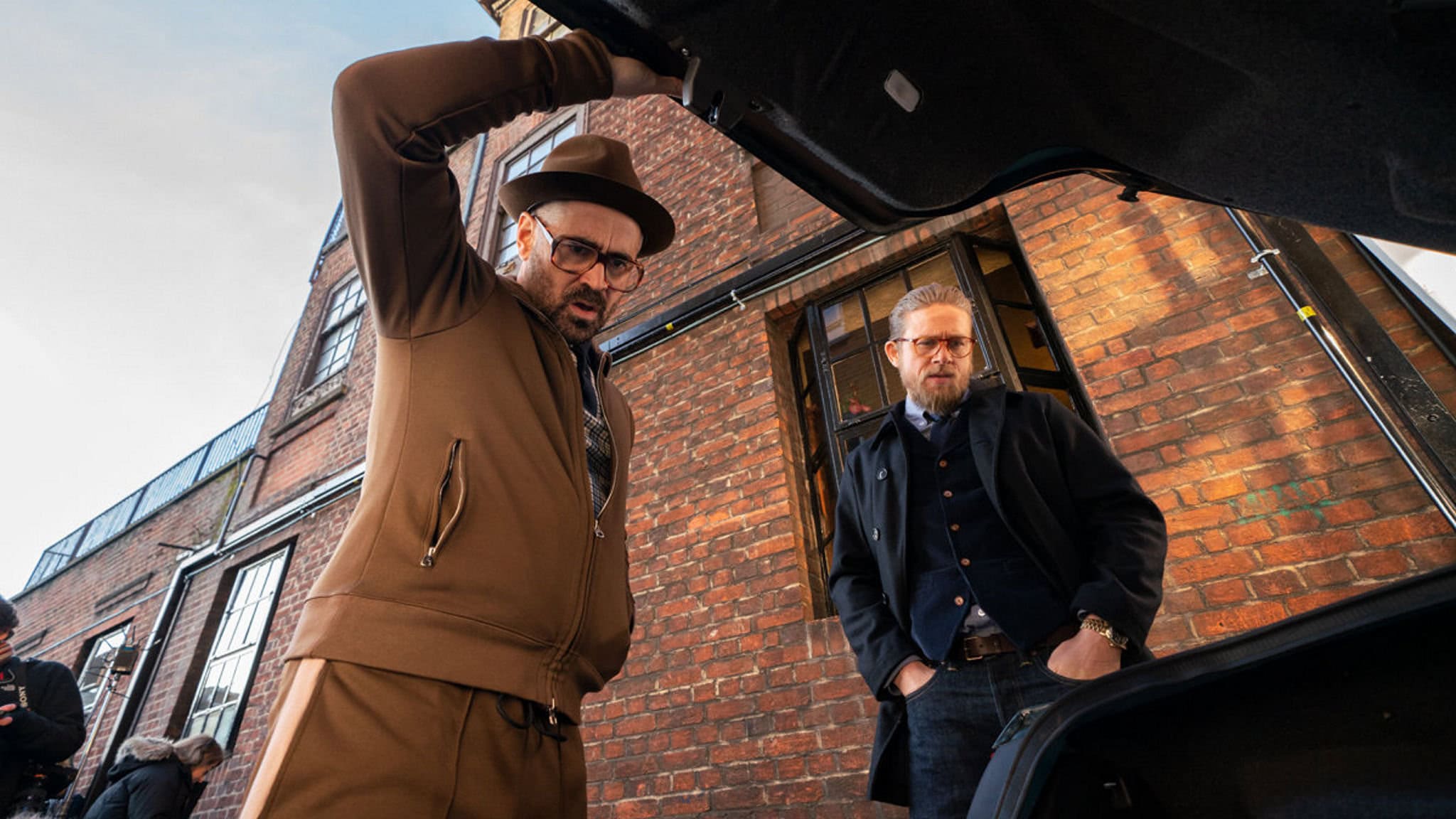
Guy Ritchie’s The Gentlemen begins like a bad joke: Matthew McConaughey walks into a pub, asks for a pint and a pickled egg, and gets shot in the head. Leaving behind the VFX clutter that marked disasters like King Arthur and Aladdin, Ritchie returns to the guns ‘n’ geezers terrain that made his name, surveying the land before him with his old Tarantino-lite tricks. Hence, the film flashes back and forward from that opening, as Fletcher (Hugh Grant), a private eye for a tabloid paper, shows up at the mansion owned by wealthy geezer Raymond (Charlie Hunnam, sporting the least convincing English accent you’ve ever heard from an English actor), demanding 20 million quid or he’ll release the dirt he has on him and his employer, Mickey Pearson (McConaughey), the kingpin of a weed empire.
As Fletcher narrates his findings, which, of course, he’s translated into a screenplay, Ritchie takes a tour through the British crime underworld. Pearson seeks to sell his empire and sparks a power play between a lispy-because-he’s-gay countryman buyer, Matthew Berger (Jeremy Strong), and a Chinese gangster, Dry-Eye (Henry Golding). All the while, Ritchie essentially celebrates the gentrification that’s gripped London in the 10 years since the release of his RocknRolla. Fully transformed into a pan-national corporate space, the London of this film is practically a match for Ritchie’s filmmaking: a characterless mockery of its former glories, smooth and bland and just a bit more monied than before.
The matter of gentrification comes up a lot in The Gentlemen, through references to the posh parts of Croydon, the miserable London suburb where Stormzy started out, and to the rich kids taking over the city’s council flats. A trip inside for Raymond, who “just hates them junkies,” has him rescue a heroin-addled pop star, Laura Pressfield (Eliot Sumner), who can’t wait to spit at her sex-worker dealer. Working-class people tend to arrive armed with machetes and looking to rob you, or they’re a Russian oligarch faking their class credentials. It’s a bleak view of modern Britain, but perhaps that’s what makes this the first film of the Boris Johnson era.
The notion of a gentleman isn’t really discussed here, but if its obscene focus on signifiers of wealth and self-aggrandizing monologues are to be taken at face value, then the film sees a gentleman as both homoerotic and homophobic. Here, nothing is worse than getting dirt on another man’s £500 suit. Pearson’s heroism is a form of class betrayal, as he left his American trailer park for greener pastures to sell drugs to keep landed gentry in their rightful position. He’s some kind of weird reverse Robin Hood: a flat cap-wearing, happily married guy peddling something that isn’t really hurting anyone. Meanwhile, the Chinese slaves working in an underground hydroponics lab are rushed past in tracking shots so swift that you may wonder if Ritchie is wilfully sweeping them under the rug, or if he hasn’t noticed their personhood.
It’s only the rich who matter to this film where leaking roofs and a looming inheritance tax are focal points. Absent are the aspirational scallywags of Lock, Stock, and Two Smoking Barrels. In their place are aristocrats, the real victims of a changing society, and a true gent like Pearson whose imperative it is to save them. Ritchie doesn’t see anyone but the GQ types as people, as evinced by the amount of cheap ethnic humor—Dry-Eye is described as having a “ricence to kill”—and Pearson’s wife, Rosalind (Michelle Dockery), running a garage of female mechanics who we never see working but always need to leave for their spin class. Rosalind only seems to exist so that she can be rescued from a rape attempt, which is delivered as a crass ticking clock, complete with a shot of Loubitan-donned feet being kicked apart.
This would all seem self-evidently critical of power and privilege, but Ritchie is too busy trying to sew a twisty caper and fit in multiple trunk shots to interrogate his characters. A bestiality subplot with echoes of David Cameron is groan-inducingly stale, while a shoehorned reference to Brexit plays to exactly nobody. And the smug self-awareness doesn’t stop there. One scene has the gall to draw attention to its ripping off of The Conversation, then explain that film, only to then say that it’s a shit film anyway. A climactic scene taking place in the Miramax office reminds the viewer that, yes, this is a Miramax film, and everything that implies. All this, and not even a glimpse of Vinnie Jones. If this is Ritchie returning to more personal projects, then here’s hoping he gets back on the Disney IP train as soon as possible.
Since 2001, we've brought you uncompromising, candid takes on the world of film, music, television, video games, theater, and more. Independently owned and operated publications like Slant have been hit hard in recent years, but we’re committed to keeping our content free and accessible—meaning no paywalls or fees.
If you like what we do, please consider subscribing to our Patreon or making a donation.