Caleb Michael Johnson’s The Carnivores may inspire fear that it will be another earnest indie with inchoate atmosphere, half-digested symbols, and a wandering plot meant to express a familiar strain of American ennui. Many moments are pointedly self-contained or contradictory of events that transpired in other scenes, fostering an “and then this happened” tempo that’s initially tedious. The film’s use of slow-motion also feels arbitrary at times, while certain close-ups, like an early shot of a woman fingering packaged meat in a grocery store, are both disquieting and, at first glance, weird for their own sake. For a spell, The Carnivores feels less like a collection of tics that an artist had to get out of his system, but the film gradually coheres, revealing these various devices to have a governing emotional point.
Johnson’s aesthetic is an expression of alienation, but the filmmaker is willing to do more than tread the surface of this state of mind. The disconnection between scenes captures the sense of repetition and hopelessness felt by a thirtysomething couple that appears to be close to hitting a proverbial iceberg, frustrated with one another’s aloofness while each respectively slides into potential mental illness. Alice (Tallie Medel), the person fingering the steak in one of the film’s opening scenes, is a bank teller living with her partner, Bret (Lindsay Burdge), a postal worker whose love for her dog, Harvie, crosses into obsession. After the prologue, which primarily evokes Alice’s disorientation, Johnson springs a series of devastatingly casual anecdotes that show just how far Harvie has served to splinter Alice and Bret.
There’s a tense and wonderful scene in which Bret almost gets into a fight with a barely seen man (Frank Mosley) who objects to Harvie wandering around a neighborhood without a leash and nearly steals the dog in the process. Alice clearly resents the real estate that Harvie occupies in Bret’s mind, saying that he should be on a leash, while Bret insists that he needs to be able to act like a dog and wander around. This moment is so subtle and well-acted, so rich in emotional baggage, that one doesn’t know until much later that it holds the key to The Carnivores. To Alice, Harvie is like a child from a prior relationship who’s constantly disrupting the possibilities for the new relationship to take hold. And, indeed, Bret’s attachment to Harvie feels alarmingly neurotic, though Johnson and Burge never parody the character. They take Bret’s love for Harvie seriously, implicitly revealing it to be rooted in familial agony.
The Carnivores is mostly told from Alice’s perspective, and she’s even more troubled than Bret. Her propensity for sleepwalking and insomnia contextualizes, without overexplaining, the film’s dreamy and fragmented structure and soft, intimate, largely nocturnal-feeling imagery. Her yearning for meat scans as an act of rebellion against her and Bret’s vegetarianism, and, astoundingly, a rechanneled urge to hurt Harvie, who’s sick and draining the couple’s income with vet bills. A dog’s death is often sprung in cinema as an easy shock effect, but here that potentiality is utilized to suggest the deeply submerged, unmooring thoughts that can arise as a lover succumbs to embitterment in the wake of a failing relationship. In this context, the sexualized close-ups of meat attain a disturbing psychological undertow.
The film often suggests what might happen if Nathan Silver adapted a story by Raymond Carver. It evinces Carver’s understanding of how menace can spring from random and seemingly banal places, especially for damaged psyches, as well as Silver’s compassion, which only deepens the film’s free-floating anxiety. These characters aren’t solely here to affirm Johnson’s various themes, and as a result, their humanity gets under your skin.
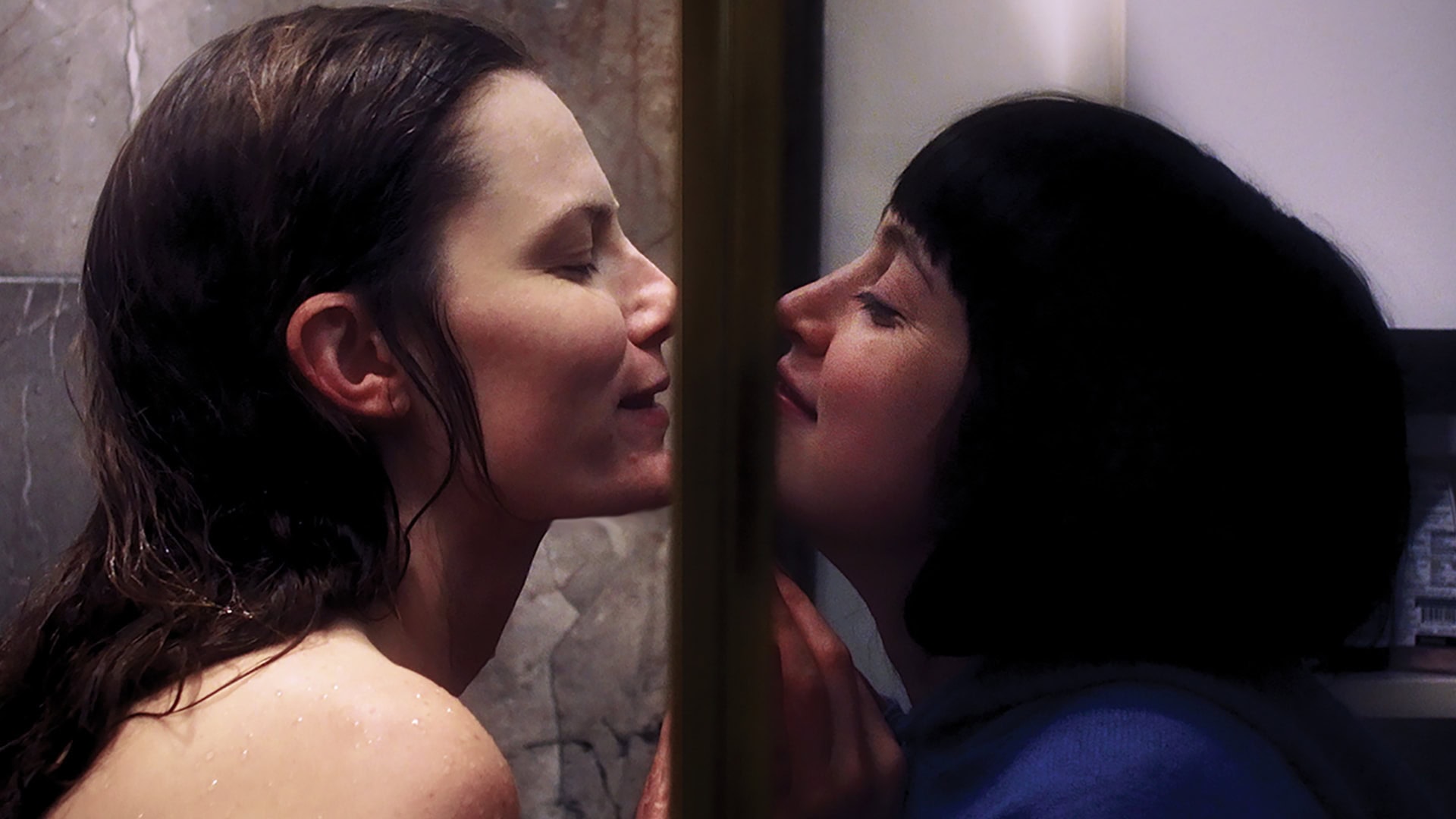
The Carnivores ultimately relates a modern kind of remarriage narrative, composed of joltingly random yet logical interludes and laced with the dread that springs from a relationship’s collapse. Alice and Bret love one another, but they can barely speak and Bret has lost interest in sex, which leads to a sequence of ecstatically lonely eroticism: a presumable dream or fantasy in which Bret is in the shower and Alice is right outside the shower’s glass door, and they passionately kiss their respective side of the door. The imagery likens them to a couple visiting in prison, desperate to touch one another. In a sense, they are, though Johnson, in one final, sweeping, gloriously poetic act of mercy, grants them a reprieve.
Since 2001, we've brought you uncompromising, candid takes on the world of film, music, television, video games, theater, and more. Independently owned and operated publications like Slant have been hit hard in recent years, but we’re committed to keeping our content free and accessible—meaning no paywalls or fees.
If you like what we do, please consider subscribing to our Patreon or making a donation.