Seoul in the early 1990s, as captured by Kim Bora’s House of Hummingbird, is in rapid flux, though it may as well be deathly still to its teenage protagonist. Eun-hee (Park Ji-hoo) is a modest student from a modest family living in a modest apartment in an enormous tower block. At home, her parents barely pay attention to her as they zone out, exhausted after work. Eun-hee’s semi-delinquent older sister, Su-hee (Park Soo-yeon), and brother, Dae-hoon (Son Sng-yeon), also work, and at night the family counts its earnings in the living room. They aren’t poor, per se, but it’s obvious that they can’t afford to miss more than one paycheck. And with her passable grades and lack of motivation, Eun-hee seems destined to join her sister as a dropout struggling to make ends meet while living at home.
Across Kim’s semi-autobiographical film, the pressures of money and education that seep into this family’s household reflect the rapid economic growth of a nation. And these pressures lead to Eun-hee feeling torn between her parents’ general emotional neglect and their desire to see her do well enough to support them. But in spite of how withdrawn and insecure she is, barely speaking either at home or at school, the teenager at least attempts to follow a path toward normalcy. She practices kissing with a male friend, goes to raves and karaoke, and even shoplifts from a local store in her efforts to feel something as life starts to accelerate toward adulthood. And amid these latchkey-kid adventures are scenes of domestic strife, her parents breaking out of their zombified state only to brutally fight with each other.
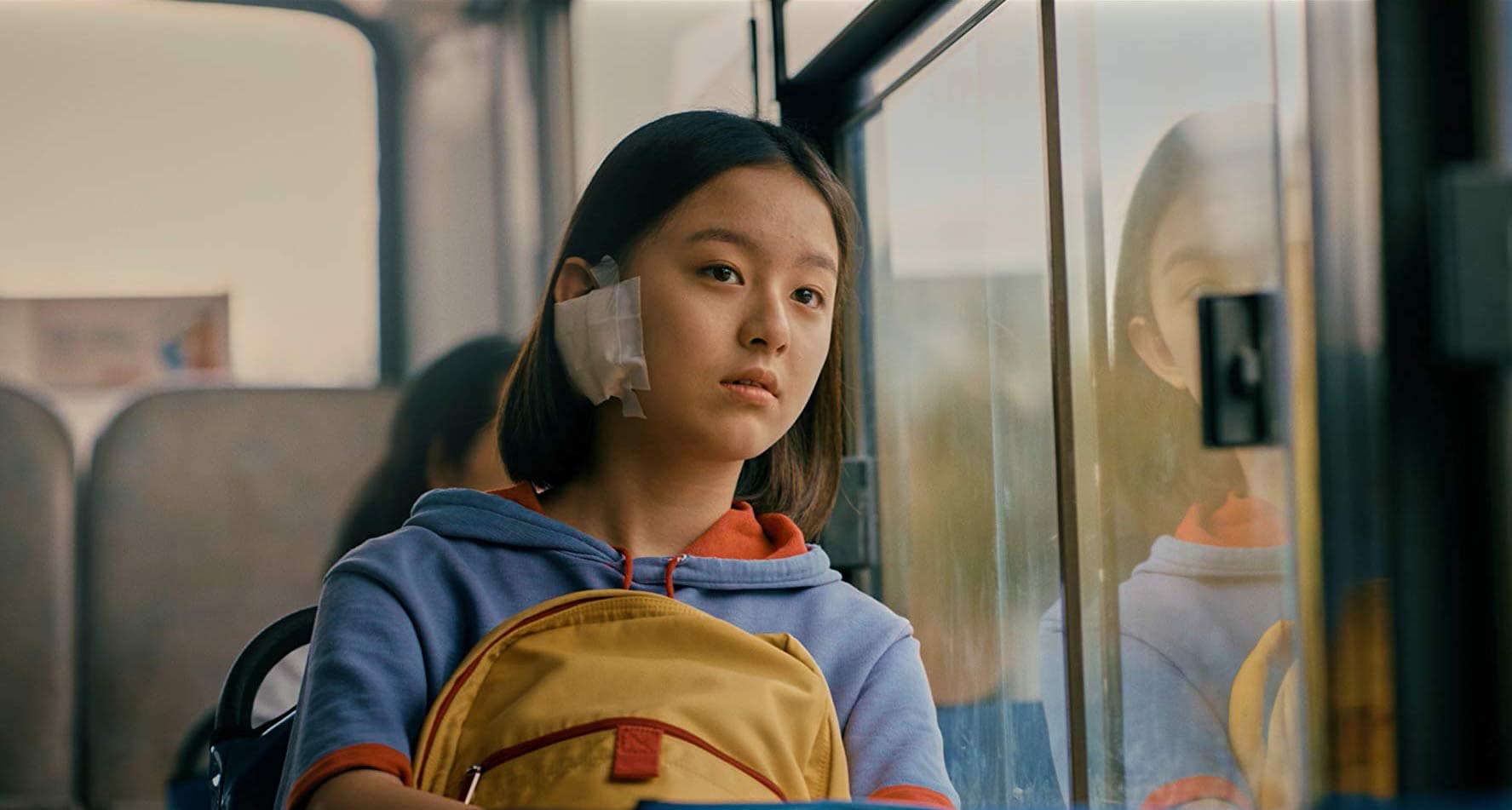
The film is most notable for the gulfs of narrative dead space around these expressions of self-actualization and fear, and the ways in which Park stresses her character’s relationship to the world. A recurring subplot involves the lump that forms under one of the girl’s ears and the surgery that she fears could leave her face paralyzed, even though it looks as if she already is, what with her dead-eyed stare and generally slack features. There are bleak, violent moments in House of Hummingbird, but it’s never more intense than when it’s focused on Eun-hee’s anomie and finding parallels between her numbness and Korea’s dehumanizing expansion.
For all of the friendships and halting relationships that Eun-hee experiences over the course of the film, her most important bond is with a remedial Chinese professor, Young-ji (Kim Sae-byuk), who tutors her. Where the girl’s principal teachers are gruff and demanding toward her, Young-ji exudes warmth and patience, less interested in preparing Eun-hee for her exams than in helping her to truly understand what she’s being taught. In the process, the young professor develops a clear affection for Eun-hee, calmly and successfully breaking through the girl’s barriers. And with its focus on such quiet, tender interactions, House of Hummingbird readily ducks the clichés of so many classroom films that are meant to be inspiring to audiences.
Throughout, Kim favors long shots that situate Eun-hee within brightly lit but starkly blocked frames, surrounding her with ample negative space that highlights her isolation, even when she’s interacting with others. And all around the teen, developing high-rises loom large over pockets of verdant parks and buildings marked by classical Korean architecture. With its contextualizing historical events, like the death of North Korean leader Kim Il-sung and the collapse of Seoul’s Seongsu Bridge, the film sometimes strays into Forrest Gump terrain, adding a sweeping sense of importance to an otherwise quotidian story only peripherally shaped by such external factors. But Kim always brings things back to the silent, ever-longing Eun-hee’s attempts to get a handle on who she is and what she thinks life can offer. Whether she will figure it out in time to change with her homeland, only time will tell.
Since 2001, we've brought you uncompromising, candid takes on the world of film, music, television, video games, theater, and more. Independently owned and operated publications like Slant have been hit hard in recent years, but we’re committed to keeping our content free and accessible—meaning no paywalls or fees.
If you like what we do, please consider subscribing to our Patreon or making a donation.