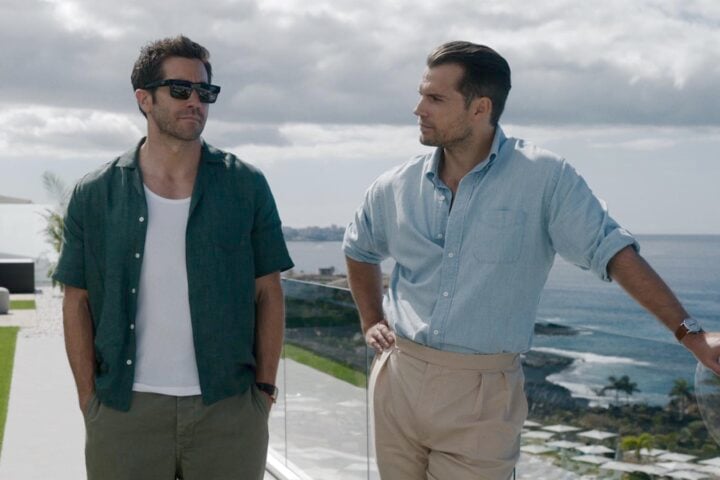
Much like the universe, the Fast & Furious series is in a constant state of expansion. Its narrative trajectory has traced the improbable transformation of talented thieves who steal wholesale goods into international agents capable of foiling geopolitical terrorist threats. Perhaps it was only a matter of time before this franchise got so big that it would produce spinoffs, and Hobbs & Shaw breaks away from “la familia” to follow the exploits of two of the series’s former antagonists turned unlikely heroes: Diplomatic Security Service hulk Luke Hobbs (Dwayne Johnson) and rogue spy Deckard Shaw (Jason Statham).
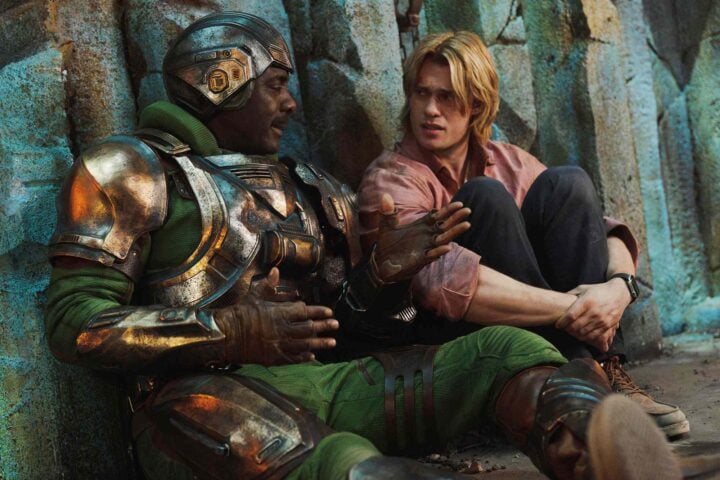
Hobbs and Shaw, who earned a grudging respect for one another by the end of The Fate of the Furious, team up again to protect Shaw’s sister, Hattie (Vanessa Kirby), an MI6 agent who’s trying to stop a bio-engineered supervirus from falling into the hands of a multinational tech company that wishes to eradicate most of humanity and repopulate the planet with mechanically enhanced superhumans. This tech-eugenicist outlook is personified by the corporation’s chief foot soldier: Brixton Lore (Idris Elba), whose electronically upgraded eyes, super strength, and bulletproofing make him, in his own words, a “black Superman.”
The virus is a McGuffin that keeps David Leitch’s Hobbs & Shaw moving, but the film is by and large less interested in its apocalyptic stakes than its leads, particularly Johnson, whose charismatic, boastful persona is hardwired into everything from the tempo of the film’s dialogue to its extravagant action. As much as the absurdity of the Fast & Furious series has remained grounded in the chummy relationship between its stars, so, too, does the quick-witted chemistry shared by Johnson and Statham anchor their characters’ adventures.
Hobbs and Shaw’s conversations suggest nothing less than wrestling promos, as both men are prone to launching into competing monologues in order to affirm their masculine supremacy. Yet even as the bulk of Hobbs’s dialogue in the film consists of nonstop insults, Johnson’s charming personality consistently shines through. For one, Hobbs is apt to goofily pause a rant in order to wink at or compliment a stranger, moments that add a disarming affability to the looming brute. Set against Shaw’s withering sarcasm, Hobbs is downright loveable.
The action, too, is the most extreme encapsulation yet of Johnson’s bombastic blockbuster work. Hobbs levels far taller men with a single blow, steamrolls crowds of soldiers, and, at one point, drags a flying helicopter by a chain with his bare hands. Per the dictates of most modern tentpoles, Leitch often falls back on filming action in chaotically edited close-ups, but he remains shrewdly conscious of the contrast in Hobbs and Shaw’s respective fighting styles. The film’s camera weaves and ducks in sync with Shaw’s expertly fluid martial arts capabilities in close-quarters combat, but it stands back to take in all of Hobbs as he swings a giant fist at some unlucky mercenary, rocking slightly to emphasize the force of a blow’s impact.
Leitch also proves capable as a big-picture action coordinator, mounting a handful of impressively scaled set pieces that combine hand-to-hand combat, gunfights and vehicular chases within the same sequence. Every time one of these scenes seems to be reaching its breaking point, it only shifts into a higher gear, as when Lore’s storming of a C.I.A. site to abduct Hattie leads to an intense street fight. It’s then that the sequence abruptly morphs into a thrilling chase scene as Shaw drives a McLaren with hair-trigger timing while Lore follows in a state-of-the-art, Transformer-like motorcycle that can bend and fold while in motion.
As much as Hobbs & Shaw revels in its leads playing off of each other in a vast action sandbox, the film demonstrates the same earnest emphasis on family as the other titles in the Fast & Furious universe. Shaw and Hattie, estranged by years of misunderstanding, must repair their relationship even as they focus on preventing the virus from spreading. Meanwhile, Hobbs must deal with his own strained family bonds in a final act that sees him returning to the relatives he abandoned in Samoa in order to enlist their help in fighting Lore.
That the film’s speculative fiction about manufacturing genocide to force a proprietary human evolution resolves to the importance of family works to neatly illustrate the franchise’s humble emotional stakes, and it’s precisely this focus on the ties that bind that continues to make these films so endearing. Where its predecessors celebrated the families we make for ourselves, Hobbs & Shaw argues for the need to preserve and maintain the families into which we’re born, an interesting tweak on the series’s ostensibly cemented formula.
Since 2001, we've brought you uncompromising, candid takes on the world of film, music, television, video games, theater, and more. Independently owned and operated publications like Slant have been hit hard in recent years, but we’re committed to keeping our content free and accessible—meaning no paywalls or fees.
If you like what we do, please consider subscribing to our Patreon or making a donation.