It’s not difficult to imagine a version of Damiano and Fabio D’Innocenzo’s Bad Tales without voiceover narration. Critical doctrine would recommend it, as the result would be a shorter, punchier film. And yet, without that added layer of complexity imparted by the voiceover, Bad Tales might be mistaken for just another coming-of-age film, and the queasy atmosphere it thrives on would dissipate. The D’Innocenzo brothers’ second feature joins the sparse ranks of films which, like Alain Resnais’s Last Year at Marienbad and, more recently, Christian Petzold’s Transit, employ voiceover not to condescend to their audiences by explaining their images but as a form of counterpoint. The disjunct between word and image troubles the state of credulous absorption that most media aim to put us in.
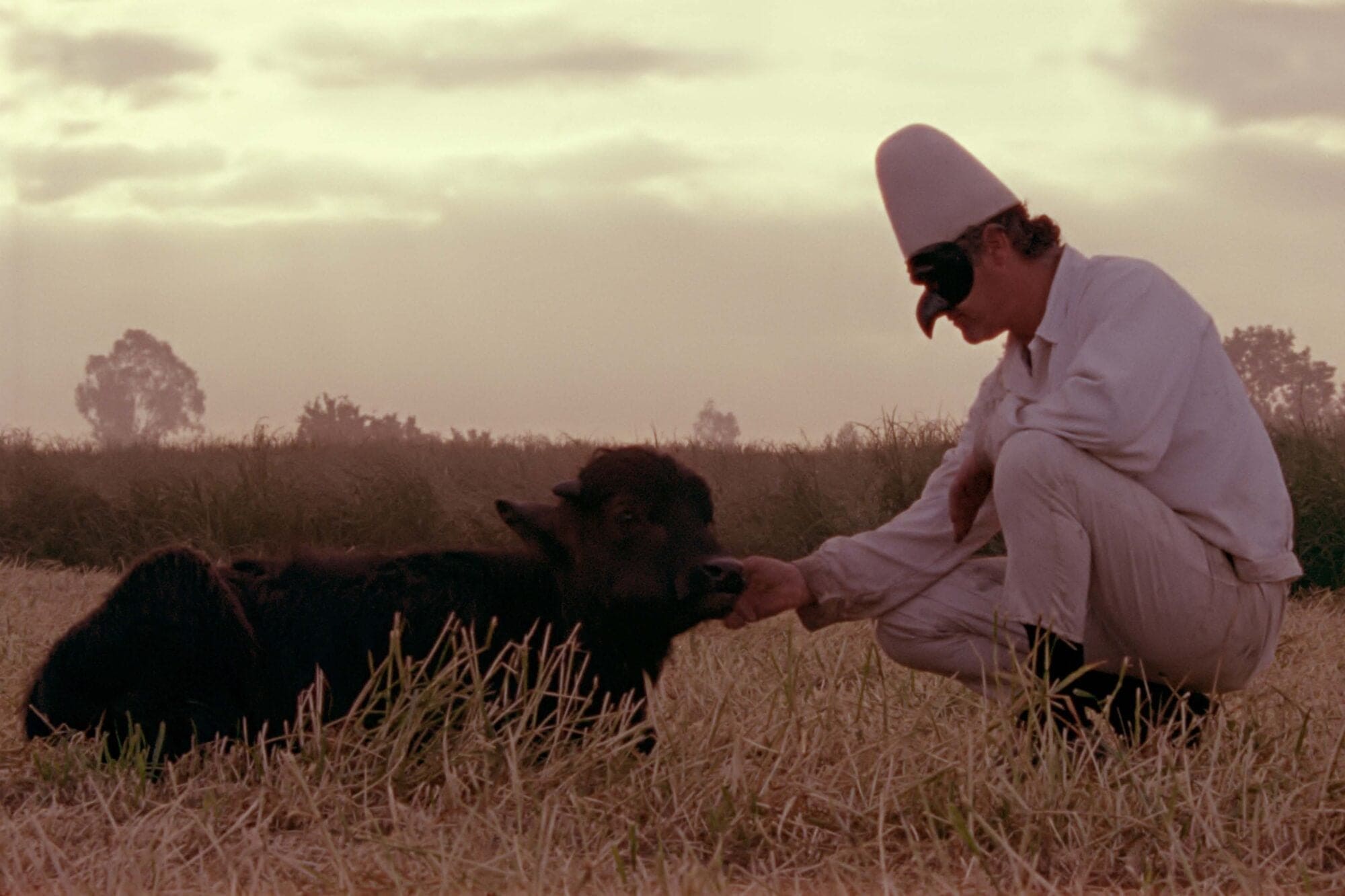
Bad Tales opens with a disorienting montage. As snatches of Roman suburbia cross the screen, a male narrator (Max Tortora) tells how, “in the paper bin, along with some TV guides,” he found a little girl’s diary, written in green ink with a “dreamy” hand. As opposed to the diary or the speaker, we see a girl behind a screen making shadow puppets, then ants dragging a seed. “It wasn’t the story that struck me,” the narrator admits, “but the mysterious reticence it conveyed, as if some things had been left out, yet were oppressively present.”
On screen, raindrops pepper the greenish surface of a swimming pool. “In the trivial man I easily identify with, the trivial facts evoked a newfound intensity far beyond the quality of the lines.” We glimpse a still life of half-eaten bread crusts, a cigarette lighter, bottlecap, and fan cord. “She just stopped writing, without warning, and without saying she was done. Did she find a better diary, a better life?” Someone smokes out of the window of a car covered with tarp. “I kept the diary and continued writing it. Because I liked that life. What follows was inspired by a true story. The true story was inspired by a lie. The lie is rather uninspired.”

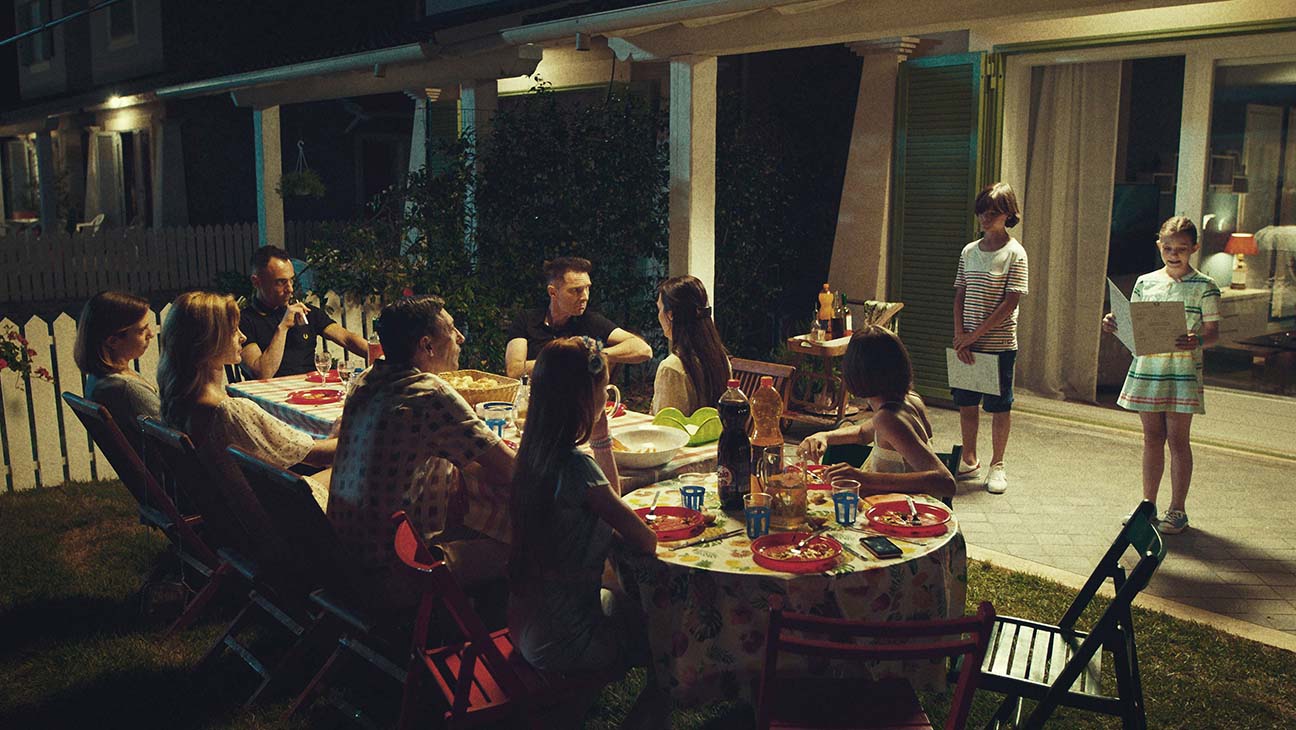
After this novelistic preface, the story meanders from one loose episode to another. At a careful remove, it follows several middle- and working-class suburban families, none of them quite central, as children come to terms with the demands of adulthood and their parents oscillate between neglect and abuse. Much is implied, but never directly shown, “as if some things had been left out, yet were oppressively present.” Periodically, the narrator returns to offer commentary. His voice seems to belong to a particular child at first, but then it crops up again when the story has turned its focus on a different child, and so on.
Having little choice, the children absorb the misogyny of their fathers, or go numb in the face of their cruelty, while their mothers sit by, inert. The film as a whole is swamped in miasmatic greenish hues (recalling the diary’s green ink), at once menacing and nostalgic. Except that it’s a specious nostalgia. This is no period drama, as the action takes clearly place in the present, with modern cellphones and kitchen appliances. Scenes that should evoke the “rambling innocence” of childhood, as the narrator puts it, are made threatening by a soundtrack that features music from Italian composer Egisto Macchi’s Città Notte and is dominated by atonal creaks and clicks, zoological moans and hoots. In Bad Tales, impending adulthood isn’t treated as a loss of innocence, but something more akin to congenital illness. These children seem doomed to compulsively reenact of the previous generations’ abuses.
As Bad Tales progresses, the use of voiceover becomes less and less frequent, until it’s all but forgotten. All at once, the story swerves into thriller territory—a pivot so drastic that it would strain credibility had the voiceovers not laid the groundwork for it, indicating a seam, perhaps, between the diarist and the narrator, who’s decided to keep adding to, or even overwrite, her story. Viewers are encouraged to test the images against the narration and vice versa, to wonder whose story they’re actually absorbing, and to reflect on the stories they themselves might be playing out over and over, whether consciously or not, in their own lives. Narration, as the D’Innocenzo brothers remind us, isn’t only a diversion but a form of authority—of power—and when authority is least conspicuous, it’s often at its most insidious.
Since 2001, we've brought you uncompromising, candid takes on the world of film, music, television, video games, theater, and more. Independently owned and operated publications like Slant have been hit hard in recent years, but we’re committed to keeping our content free and accessible—meaning no paywalls or fees.
If you like what we do, please consider subscribing to our Patreon or making a donation.