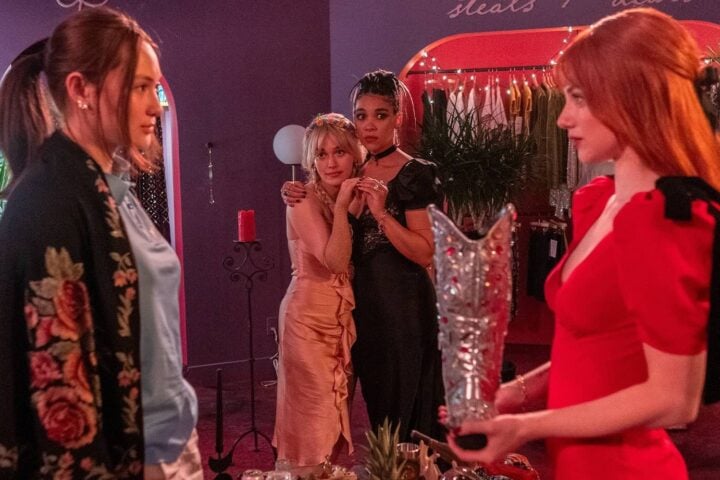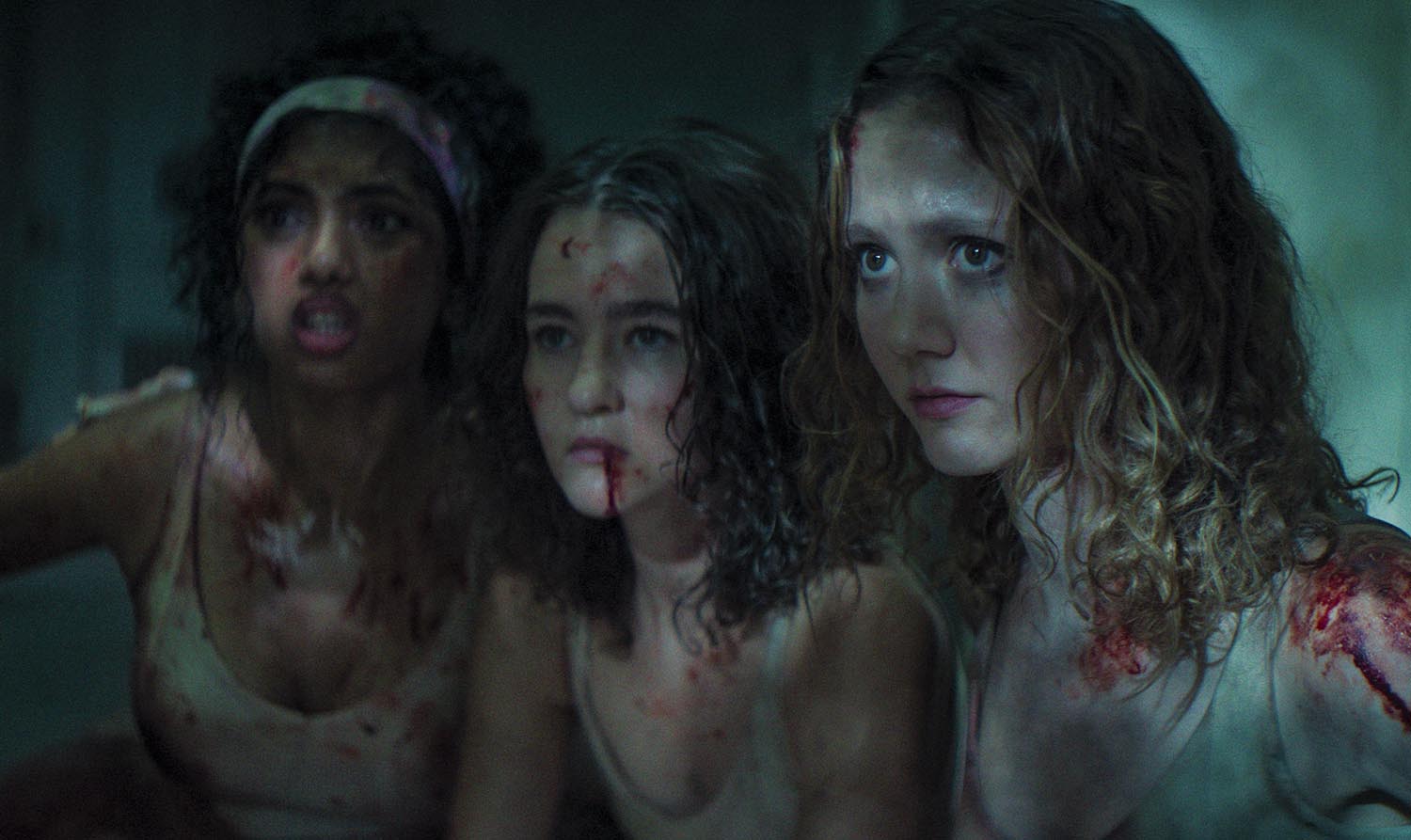
It’s hard to overstate how much Vicky Jewson’s Pretty Lethal feels like a spin-off of the John Wick franchise. And it’s not just the basic premise of deadly ballerinas fighting besuited Eastern European gangsters. It’s everything from the tonal mixture of violence and vaudeville comedy to the film’s visual aesthetic—all neon lights, deep shadows, and grimy green buildings. It even repeats oddly specific incidents, like a dancer turned criminal matriarch branding someone with a hot poker. Fortunately, because it isn’t actually an exercise in IP extension, Pretty Lethal doesn’t have to waste time on the lore-padding and fan service that’s consumed the actual John Wick spinoffs. It just gets to be a lean, mean action movie.
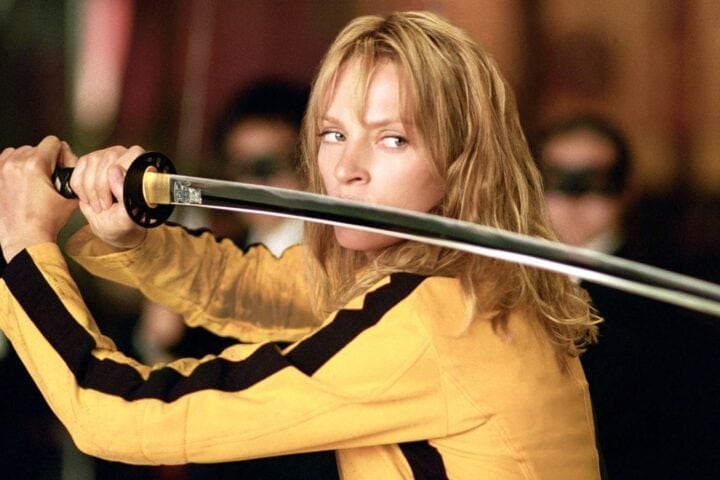
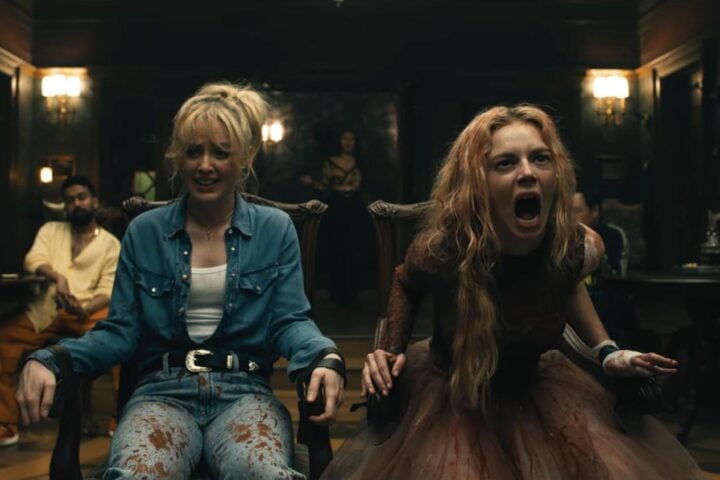
In Pretty Lethal, a troupe of young ballerinas find themselves stranded at a remote Hungarian hotel after their bus breaks down. The place is run by a formidable-seeming woman named Devora Kasimer (Uma Thurman) and is patronized almost exclusively by shady characters in sharp suits. Things seem iffy from the start and, by the time the titles hit the screen around the 15-minute mark, the girls have found themselves in a full-blown fight for their lives that will see them putting their dance skills to grisly new use.
Each of the main cast members is given a single characteristic to play: Bones (Maddie Ziegler) is a working-class interloper in the elitist world of ballet; Princess (Lana Condor) is the polar opposite of what her name implies; while Grace (Avantika) is hyper-religious. Though Ziegler is stuck delivering self-serious sermons about teamwork and how tough ballerinas really are, Condor hilariously dials her character’s mean-girl shtick up to 11. Thurman similarly excels as the film’s villain, chewing up the scenery through an accent straight out of an ’80s Bond movie.
Pretty Lethal is at its best when the talking stops. Jewson understands that dance and fight sequences alike are about capturing the movement of bodies, which is something that many fast-cutting modern action films lose sight of. In the film’s slower scenes, the camera holds still so that we can notice things moving in the background, like security gates quietly closing or characters slinking into new hiding places. Then, when the blows start to fly, it maintains that poise so that we can feel the full, deadly force of every razor-tipped fouetté. Pretty Lethal simply has a lot of ideas about how ballet moves might be used to inflict grievous bodily harm.
While its repertoire of deadly dances seems inexhaustible, the film as a whole does lose some steam in its final act. After delivering a dazzling group fight scene that seems like it should be the grand finale, Pretty Lethal sticks around a while longer so that Devora can monologue about her tragic past while an endless sea of armed men continues flooding into the hotel. It’s like a misguided attempt to supersize Raymond Chandler’s maxim about saving a flagging story by having a guy come charging through the door with a gun in his hand. Ultimately, though, Pretty Lethal is built just like its heroes. It’s lightweight, perhaps even concerningly so, but it’s feisty and glorious in motion, even if it doesn’t quite stick the landing.
Since 2001, we've brought you uncompromising, candid takes on the world of film, music, television, video games, theater, and more. Independently owned and operated publications like Slant have been hit hard in recent years, but we’re committed to keeping our content free and accessible—meaning no paywalls or fees.
If you like what we do, please consider subscribing to our Patreon or making a donation.