David Yates’s Pain Hustlers puffs itself up as a dynamic epic about the American dream but ends up glorifying some truly grotesque characters. Wells Tower’s script pulls loosely from Evan Hughes’s book about how executives at pharmaceutical company Insys Therapeutics were convicted in 2019 of conspiring to bribe doctors to overprescribe the fentanyl spray Subsys. The story has every ingredient for gripping melodrama: greed, timeliness, money, drugs, death, betrayal, and an Icarus-like fall. Thomas Jennings’s Frontline episode “Opioids, Inc.” and the second part of Alex Gibney’s The Crime of the Century have already turned the sordid tale into powerful, infuriating nonfiction. But in the course of fictionalizing the Insys story, Yates and Tower lose sight of what made it compelling to begin with.
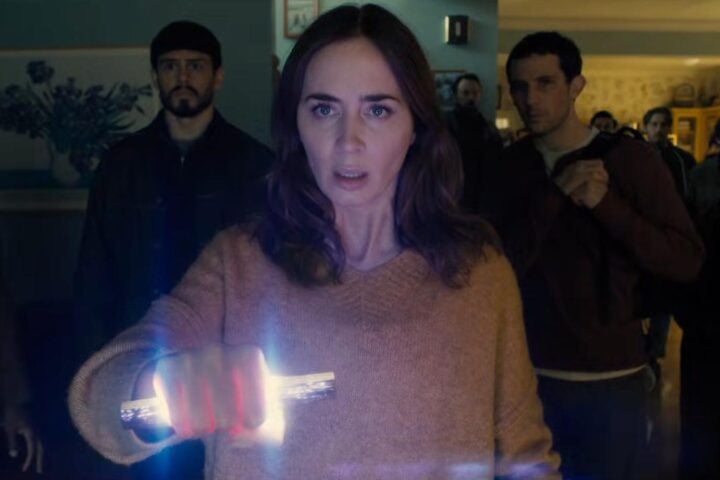
Though ostensibly about the 2010s’ epidemic of synthetic opioid overdoses, Pain Hustlers really hangs its story on the oh-so American grit and determination of one Liza Drake (Emily Blunt). She’s introduced as a hard-luck single mother circling the post-Great Recession economic drain in a grotty corner of Florida. Liza, who works listlessly at a strip club, lives in her sister’s garage with her plucky teenage daughter (Chloe Coleman) and daffily hippie-ish mother (Catherine O’Hara). A chance meeting with Pete (Chris Evans), a shark-like salesman for a pharmaceutical company loosely based on Insys, turns into a job opportunity after he identifies her as an ideal “PHD”—poor, hungry, desperate—who he believes will do anything to make a dollar.
Liza’s journey from bottom-scraping poverty to fantastical wealth is charted by Pain Hustlers with a giddy fascination. In seemingly no time, and with no explanation for why she never harnessed her staggering gift for sales, she’s shifted from sweatpants to fitted suits and is living in a CSI: Miami-grade condo with a Gulf view. Countless films have depicted a criminal’s meteoric rise with similar breathlessness to convey the addictive rush of illicit success. But while directors like Martin Scorsese have charted the stages of that ascent with careful attention to detail in such films as The Wolf of Wall Street, Yates and Tower make Pain Hustlers too much about Liza herself rather than the amoral machine of which she’s become a part.

Throughout, we see Liza do everything in her power to convince doctors to prescribe her company’s fentanyl for cancer pain. This is presented largely as good old-fashioned American ingenuity, with her and Pete scheming how to entice doctors without the bigger pharmaceutical companies’ lavish budgets. The excitement the film tries to generate for their venture is disturbingly glib, with the price tag of addiction and death practically treated as an afterthought.
In some of the film’s most hypocritical moments, we see Liza and Pete presented in a clearly positive light as they bully their company’s compliance officer (Jay Duplass) for being a square after he raises concerns about bribery. After that, Liza’s sudden turn to being shocked, yes, shocked to discover that the product she’s selling has consequences feels far too little too late.
Pain Hustlers passes itself off as a high-octane, ripped-from-the-headlines melodrama about Very Serious Topics. But really it’s an underdog story in which we’re encouraged to root for a morally indistinct opioid-slinging pharma company because it’s represented here by a couple of attractive movie stars. Evans’s winkingly villainous charm is cynically used by Yates to dodge Pete’s soullessness, while Blunt’s take on Liza is all furrowed-brow intensity but emotionally narrow, further limiting the believability of a fentanyl sales rep with a heart of gold who’s so virtuous that her greed is passed off as a need to pay for her epileptic daughter’s medical care.
Since 2001, we've brought you uncompromising, candid takes on the world of film, music, television, video games, theater, and more. Independently owned and operated publications like Slant have been hit hard in recent years, but we’re committed to keeping our content free and accessible—meaning no paywalls or fees.
If you like what we do, please consider subscribing to our Patreon or making a donation.