Matsunaga Daishi’s Egoist is a love duet full of intimate gestures. “I hated my hometown so much, I fled it, at 18, for Tokyo,” confesses Kosuke (Suzuki Ryohei), in voiceover. “For me, clothes are armor.” Though the gay fashion magazine editor, who lost his mother at age 14, seems much more at home in the more socially liberal Tokyo, he still hides behind his sharp style and his money. That is, until he meets Ryuta (Miyazawa Hio), a fitness trainer to whom he feels an immediate bond. And through these two young men from decidedly different backgrounds, Matsunaga’s film considers how class, capitalism, and core wounds collide, infect, and also inspire the heart’s most tender desires.
It isn’t long after Kosuke starts training with Ryuta that the two become romantically linked. Theirs is a carnal connection that deepens and complicates as they learn more about each other. In some ways, their connection seems motivated by the distinct ways in which they’re different—except, that is, when they’re having sex. Based on Takayama Makoto’s novel of the same name, Egoist is welcomingly frank in depicting queer love, and some of the film’s most ecstatic scenes simply show Kosuke and Ryuta closely and physically entwined. Their sex and body language sometimes demonstrate better than their exchange of words just how in sync they are.
In other scenes, it can feel like Matsunaga and co-writer Kyōko Inukai are too eager to accentuate the way in which these two character are polar opposites, but that process also interestingly challenges our understanding of the film’s very title, and eventually points to pricklier considerations of expressions of love. As Kosuke digs deeper and deeper into his pockets to help pay for his lover’s expenses, we’re left wondering if his actions are selfless and pure or driven by his own ego, or if love can ever be expressed without selfish gain.
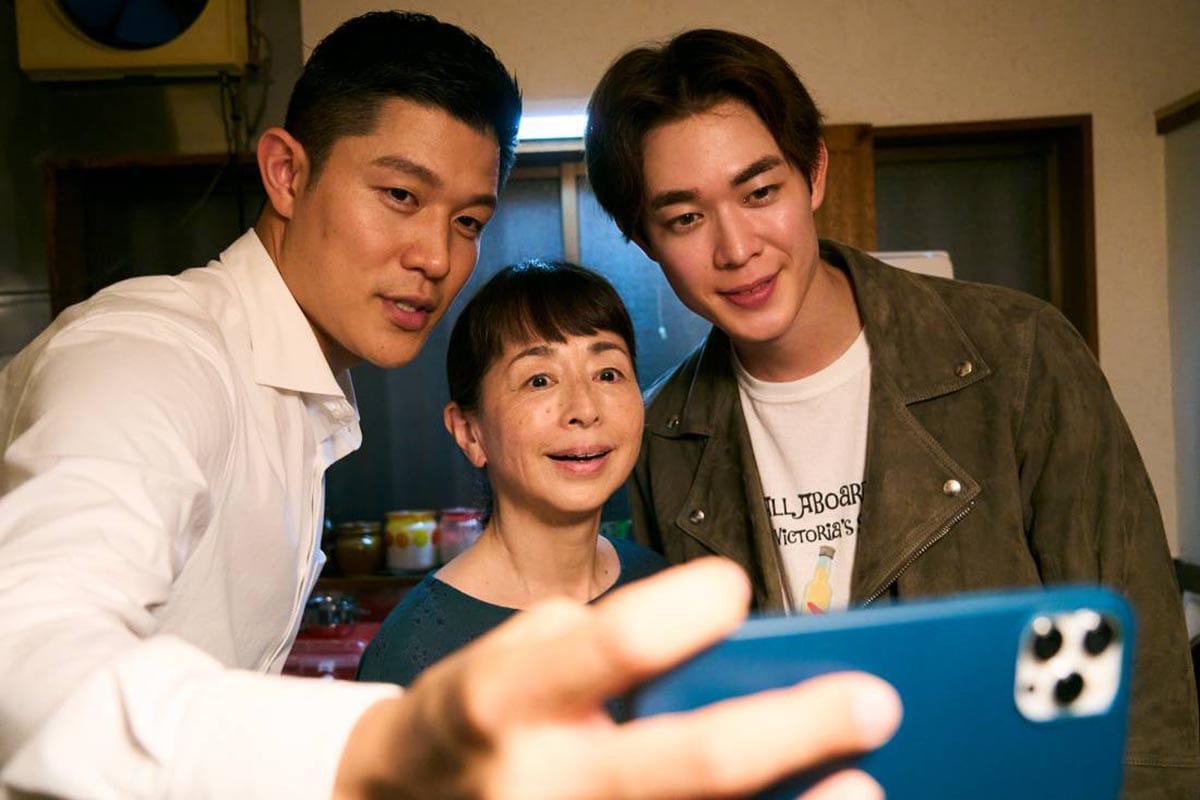
Complicating matters is that Kosuke’s financial support of Ryuta becomes more involved when Kosuke is introduced to Ryuta’s mother, Taeko (Agawa Sawako), as Ryuta’s “boss.” Kosuke and Taeko immediately take to each other, and the three form something of a makeshift family, a warm dynamic that’s nonetheless predicated on the mutual withholding of information, from Ryuta’s secret about himself and how he makes money, to Taeko and her son downplaying the severity of what ails her. And as Matsunaga’s film moves into its final third, the narrative focus shifts from Kosuke and Ryuta to Kosuke and Taeko, and in a way that contributes to the script’s thematic commitment to the relationship between ego and love.
With the film’s late emotional twists and turns, and under less careful hands, Egoist might’ve been sensational and maudlin. But as the characters grapple with tragedy, the film’s handheld camera always moves reactively and intently, feeling as if it’s providing intimate glimpses into the lives of these individuals and assuring that the story feels grounded and alive.
Though Egoist can sometimes feel overly tidy, there’s something refreshing about its straightforward approach. Consistent with its style, which is so free of ornament, it pursues its themes with a welcome directness. It understands how love and relationships are self-serving and that, perhaps, being present with each other is the strongest love there is.
Since 2001, we've brought you uncompromising, candid takes on the world of film, music, television, video games, theater, and more. Independently owned and operated publications like Slant have been hit hard in recent years, but we’re committed to keeping our content free and accessible—meaning no paywalls or fees.
If you like what we do, please consider subscribing to our Patreon or making a donation.