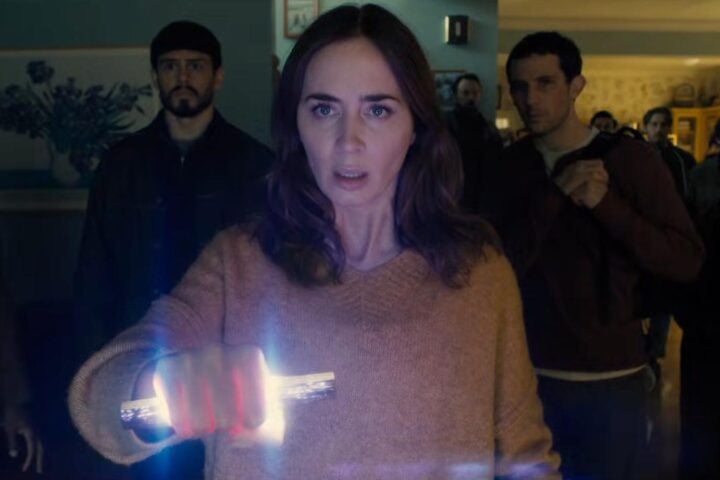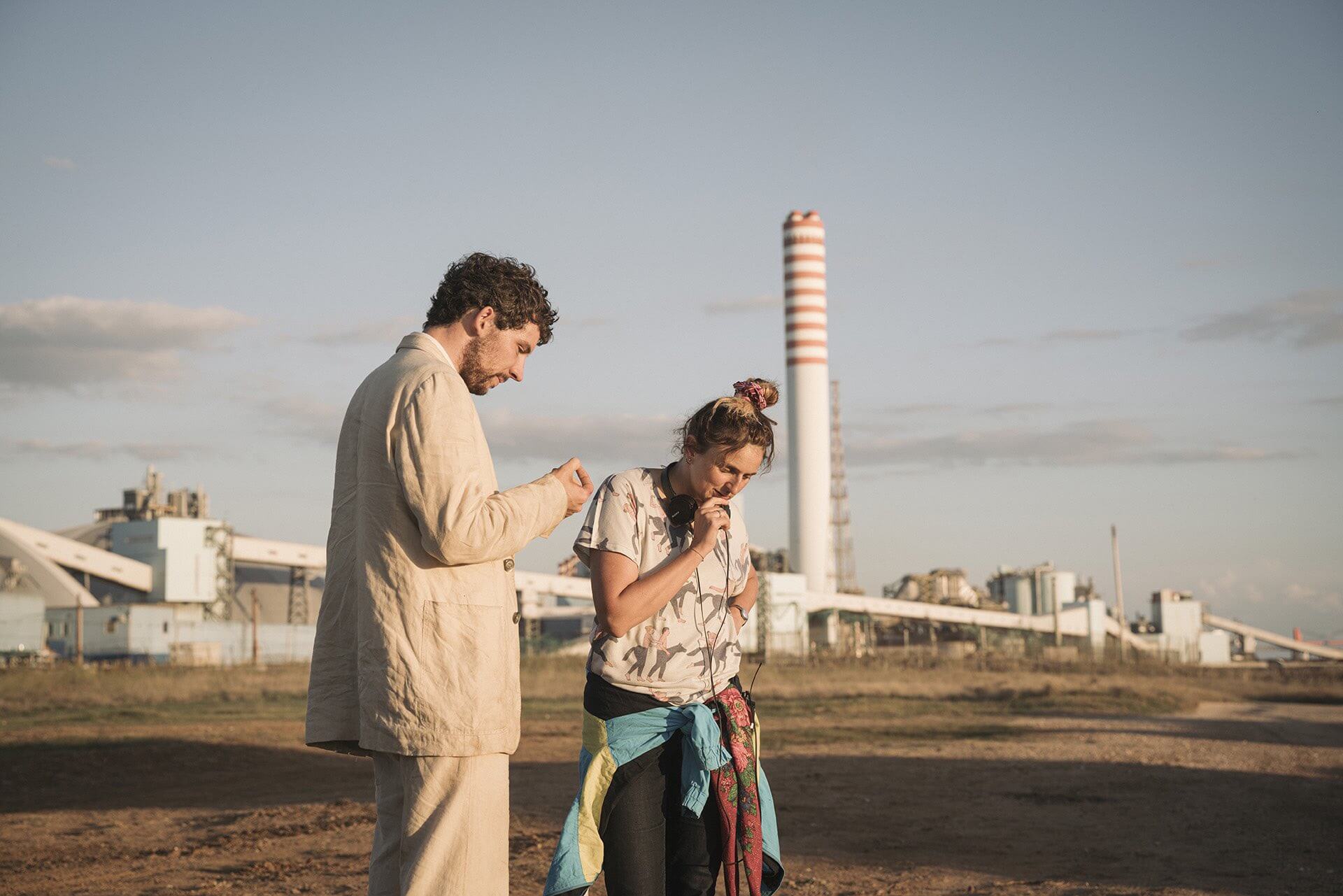
In ancient times, the Etruscan civilization built elaborate underground tombs not to please human eyes but those of the spirit world. A similar spirit of feeling unbound from the pressures of the present-day animates Italian filmmaker Alice Rohrwacher’s La Chimera, a 1980s-set adventure following a roving group of tomb raiders who attempt to excavate and pillage these secret sanctuaries. The director has always depicted time as layered rather than strictly linear. The present exists not ahead the past but on top of it, and the moments she depicts will one day be history for another era. This vision lends the sensation that she, like the ancient culture she depicts, is communicating with something beyond our perception.
Rohrwacher finds a perfect partner in her search for the sublime with Josh O’Connor. The English actor provides a human incarnation of the director’s restless attempt to collapse the contradictions of time. O’Connor’s character in La Chimera, Arthur, despite coming from outside the community, becomes the de facto ringleader of the tomb raiders because of his ability to detect the hidden bounties beneath their feet. It’s an Englishman who’s far from home, not the locals, who possesses an intuitive understanding of a people who would store their treasures for a purpose beyond mere conspicuous consumption.
The soulful La Chimera shifts into a somber mode as it progresses, revealing Arthur’s interest to be less in reaping the riches of his discoveries. Rather, his transience speaks to a need to recover and reconcile time itself. As Arthur struggles to shake the memory of a past love (Yile Yara Vianello’s Beniamina) and show up for a current one (Carol Duarte’s aptly named Italia), his wistful wandering epitomizes the central conflict of Rohrwacher’s body of work at large. What a people lives for is reflected in what they leave behind when they pass.
I spoke with Rohrwacher and O’Connor prior to the American opening of La Chimera. Our conversation covered how their collaboration threaded the delicate needle of Arthur’s ethereal nature, what the character shares with the protagonist of Rohrwacher’s Happy as Lazzaro, and how an ancient Etruscan idea about birds shaped one of the central visual motifs. But first, I had to ask about a co-star who wasn’t present for our interview—but whose presence seemed to confirm that a sense of fate not unlike the one driving Arthur was guiding the film itself.
When I think of a partnership like yours, I think about the one that also made your collaborator, Isabella Rossellini, who plays Beniamina’s mother, Flora. Is it just a happy coincidence that the product of Italian director Roberto Rossellini and a non-Italian star Ingrid Bergman happened to be in La Chimera?
Alice Rohrwacher: Well, it could be a coincidence or a sign of destiny. It was clear when they [Isabella and Josh] arrived to the project. The way Josh arrived was also a sign of destiny: He came to me thanks to a letter that he wrote to me after he saw my other movie Happy as Lazzaro. Well, I met Isabella after I’d been wanting to work with her for a very long time. I’m a great admirer of her parents, of course, and never would I have imagined that I would end up loving their daughter even more than I already loved them. I’m very grateful that both of these incredible people, Josh and Isabella, decided to participate in this adventure.
I’m sure you’re aware of the cosmic parallel that Ingrid Bergman wrote Roberto Rossellini a letter and the same way that Josh did.
AR: Of course, I immediately thought about that letter! In terms of Josh and I, I don’t think we will end up getting married…but we will get married professionally!
I also thought of a more recent example of such a partnership, the Dardenne brothers bringing Marion Cotillard to Belgium for Two Days, One Night, and their description that she had to “become banal” to work in the film. Arthur is an outsider by nature, but what did it look like to make this character feel natural?
Josh O’Connor: The one difficulty was that everyone who Alice surrounds herself to work with are amazing people who are all incredibly nice, kind, and fun. So it’s very difficult to resist fitting in. They make you feel like you fit in very quickly. I think, inevitably, it was all about how does Arthur feel like an outsider. There’s the obvious one, which is that he’s not local and an Englishman. But I also think that there’s this sense—and we’ve talked about it before—of someone who’s in between worlds. I had to check in on that because very early on, Alice and I had a conversation where I was like, “Arthur’s an angel! Or, Arthur’s a ghost, he’s this spiritual creature.” And Alice was like, “No, he’s human. He’s a real person.”
But we both agree that he’s sort of stuck, and he doesn’t know where he belongs. Just that element of it covers him, I think, in some ways. He’s ultimately an outsider because he doesn’t exist, truly, in our world. He’s got one foot in another place at any given time. That does the trick, really, that sold that element of him very well.
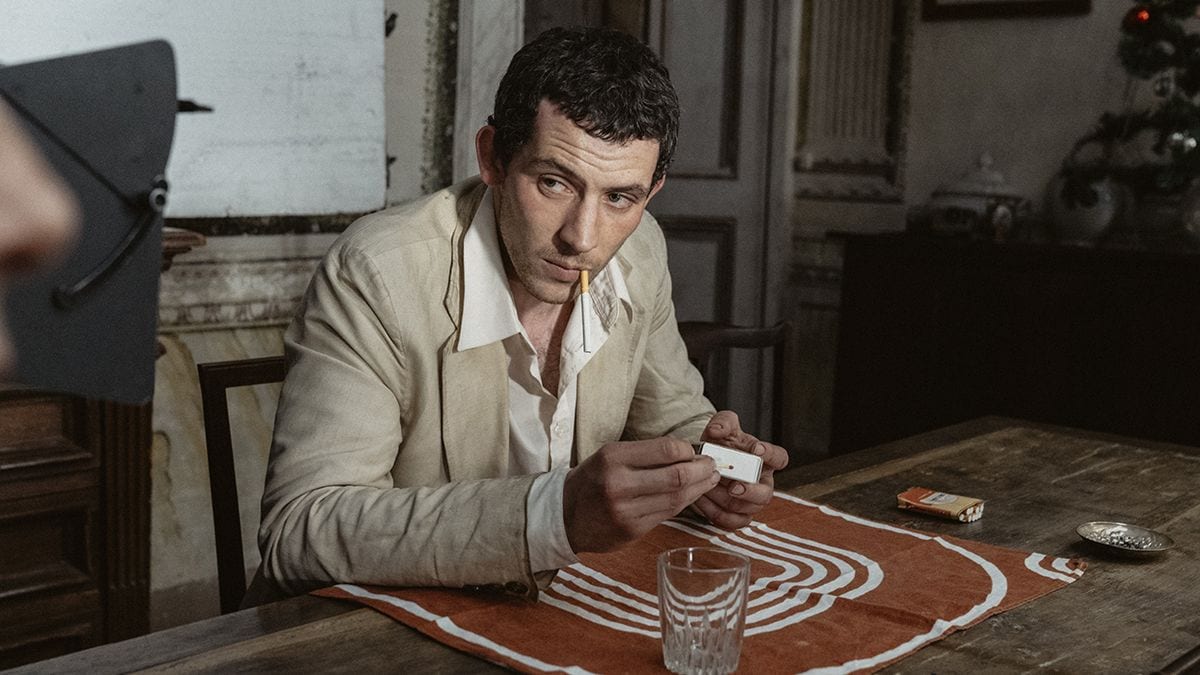
How did you each conceive of the “hero’s journey” Arthur undergoes? Do you see it as a continuation of something like Happy as Lazzaro that exists outside the standard beats of departure, change, and arrival?
AR: These characters can be very different, but they’re alike in that they’re very mysterious. They’re both characters that the viewer cannot really identify with—one of them because he’s always present, and the other because he’s always absent. Arthur is always somewhere else. Italia tries to keep him there. She asks him, “Where are you?” But he’s always somewhere else. And therefore, they’re the opposite of each other. But, to some extent, opposites are extremes that end up connecting. Their value, though, is that they allow the viewer to be faced with the evolution of a destiny flowing. Therefore, the viewer cannot identify with them, but what they can do is feel compassion for them. Compassion is what I would like to generate in the viewer.
The link between human and animal realms is an integral part of Alice’s films, and here, the editing implies Arthur shares a relationship with the birds. What does that connection mean to each of you, and how do you go about forming that?
JO: It was funny, when we were making the movie, a lot of the time I would go walking away. We were in these beautiful locations that, for Alice and a lot of the crew and the actors who are non-professionals, a lot of them live in. For them, these are just the lands they work on and where they live. For me, I was part actor, part tourist. I would go off walking when they’d be setting up a shot, and I’d be off in the woods and had to be dragged back. But it was partly that I was interested in this element that Arthur is led by his nose. He’s led by something like a feeling, which is one of the aspects of Arthur I really relate to. There’s an intrigue in everything.
In some ways, animals, and in this case birds, feel closer to Arthur than humans in the sense that there’s an instinctiveness in them. They’re not led by intense thought or planning. They’re just led by their instincts, and I think that’s Arthur. I always felt that, but Alice, I know, has a great relationship with birds. Anytime I was doing any acting or performing anything, Alice would go around shooting with this little Super 8 camera. If a bird went past, I knew the camera was off of me and onto the bird. [laughs] She was really more interested in the birds than me!
AR: For the Etruscans, the priest was the person who was able to identify the future by watching the flight of birds. So I started filming them at first without rhyme or reason, but then, I understood that these birds knew Arthur’s destiny. They followed him throughout the shooting because they were able to tell us what his destiny would be. So that’s why it’s a crescendo of birds—[why] there are more and more birds. And, at the end, we see them up close looking at him when he’s going down for the last excavation. I liked the idea that such an air-bound, winged animal could be connected to a world that’s so dark and below ground. This contrast seemed very beautiful to me. But it’s the Etruscans who did that. It’s not my own idea.
Another striking repeated image in the film is when Arthur serves as dowser, and Hélène Louvart’s camera tilts above him to present the world upside-down. Beyond the technical elements of this shot, how do you each approach these moments that present the character on such a threshold of revelation?
AR: I was very worried about the scene in which Arthur is supposed to feel the emptiness below with this little wooden stick. You have this stick, a large field, and a young English boy who’s holding the stick and an Italian crew all around just staring at him. So it seemed like something that could very easily turn into a ridiculous moment. But, of course, Josh was like a magician. He had gotten together with a water diviner earlier, and this person had explained to him how water divining works. And so when he took this wooden stick in his hand, he did it in such a pure, simple way without exaggerating anything. His careful, attentive way of holding this stick in his hands was as if it was an antenna, and all he needed to do was pay attention to what he could perceive all around. And all of us—not just the actors, but also the entire crew—our jaws dropped. We thought that he could truly perceive the emptiness below.
And so, with Hélène Louvart, we tried to find a way to accompany this inner movement that he was going through. To some extent, the psychological dimension of the character at that point is told by the camera, not just by the actor, with this flipping of the camera. That tells the viewer it’s the moment in which he no longer knows where he is: with the living or in the beyond.
JO: I just remember that Alice and I went for a walk before we were going to shoot the first time I was going to feel what was beyond. We didn’t want to talk about what it is because talking about it can sometimes be less helpful, and you sort of need to embody it. But we talked about it a bit, and we both said, “Yeah, I think it’s a bit like this, and it’s a bit like that.” And you really just have to do it. I think it’s all about really, truly feeling like you’re not in this world and you’re not in the other. But I think, in the end, Hélène and Alice’s discovery of this flipping the world is what I felt like in my stomach. It’s this feeling of collapse, being overwhelmed, and folding [in].
Translation assistance by Lilia Pinot Blouin
Since 2001, we've brought you uncompromising, candid takes on the world of film, music, television, video games, theater, and more. Independently owned and operated publications like Slant have been hit hard in recent years, but we’re committed to keeping our content free and accessible—meaning no paywalls or fees.
If you like what we do, please consider subscribing to our Patreon or making a donation.