It’s easy to forget that there was a Production Code in Hollywood as early as 1930, its ideological germination roughly parallel to the all-systems-go industrialization of the American movie itself, beginning at least as far back as the 1910s. The censorship process, at the behest of the Hays Office, formed a perfect bottleneck as all scripts had to pass across a single desk, and its binding power was nothing compared to the draw of lurid content.
Today, the term “pre-Code” suggests sassy, sexy, snappy films where men and women make the most of each other’s loose morals, workplace improprieties were encouraged, and criminal activities were cast in the same “rogue hero” light as those of rugged cowboys or intrepid explorers. Much as we go on about freedom of expression and its symbiotic relationship with obscenity, profanity, nudity, and depicting the seamier side of life, very little of pre-Code’s relative broad-mindedness had a whole hell of a lot to do with individual artistic expression. Dime-novel debauchery was one of the American cinema’s primary selling points, alongside star power, sync sound, and air conditioning. Sin! Booty-shaking! Sexy lingerie! Gambling! Home-wrecking dames! Gents who won’t take no for an answer! These comprised the early talkie’s version of 3D, IMAX, and CGI. And make no mistake, it was business, not personal.
So, too, was the decision to crack down on the same lurid content. When the Catholic Church put its boot down, Hollywood exes were gripped by the fear that America’s largest religious body would renounce the sinful medium altogether. The name of the game was gaining traction with the common man during hard times, and they weren’t the only game in town. Regardless of whether or not they were really able to make good on their threat, it came down to one question: Who had the deepest pockets? The answer: The Catholic moviegoer.
After the blind eye of Will H. Hays and his successors made way for Joseph Breen in 1934, the American movie was bound and gagged by the Vichy government of self-censorship, with Hollywood making itself happily prostrate before the maybe-loaded gun of the church’s wholesale boycott. Subsequent to this, the upholding of traditional (white, heteronormative, capitalist, Christian) values was less a sales feature of the movies than Hollywood’s cross to bear. Consequently, movies began to be distinguished by greater expense, length, and spectacle, as well as color cinematography, the Academy Awards, and the further ascension of movie stars into the realm of myth. When God closes a cash register, he opens a vault.
The Criterion Channel’s “Pre-Code Paramount” series inscribes the period under the ineffectual Hays Office. The program represents a Whitman’s sampler of delectable displays of lust, drunkenness, wanton criminality, marital infidelity, bed-hopping, and more. It was a time when even a bad Vitaphone movie has razzmatazz. Jaime N. Christley
Below are some of our favorite films in the Criterion Channel series.
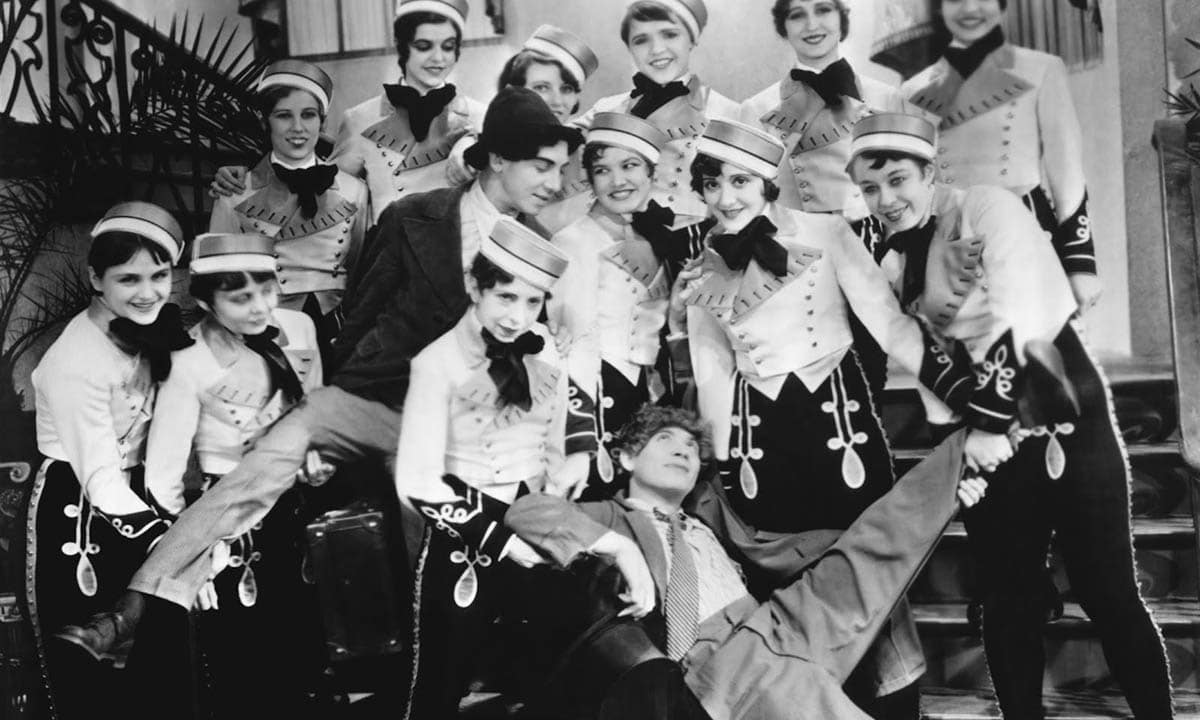
The Cocoanuts (Robert Florey and Joseph Santley, 1929)
In The Cocoanuts, Mr. Hammer (Groucho Marx) runs a high-class hotel with sub-human working conditions. When the staff pleads for their long overdue pay, Hammer assures them to “forget about money, because you won’t get it anyway.” The filmmakers essentially plopped the camera in one spot and let Groucho do the talking. Naturally, the scene disappoints if one anticipates something close to Abel Gance’s level of formal ingenuity. But when did Gance’s ’20s films display anything that moved as quickly as the rapid-fire verbal wordplay of the Marx Brothers? It all boils down to reasoning as movement, and Groucho, especially, is consistently at the mercy of trying to figure out just what the hell everyone else is up to. Clayton Dillard
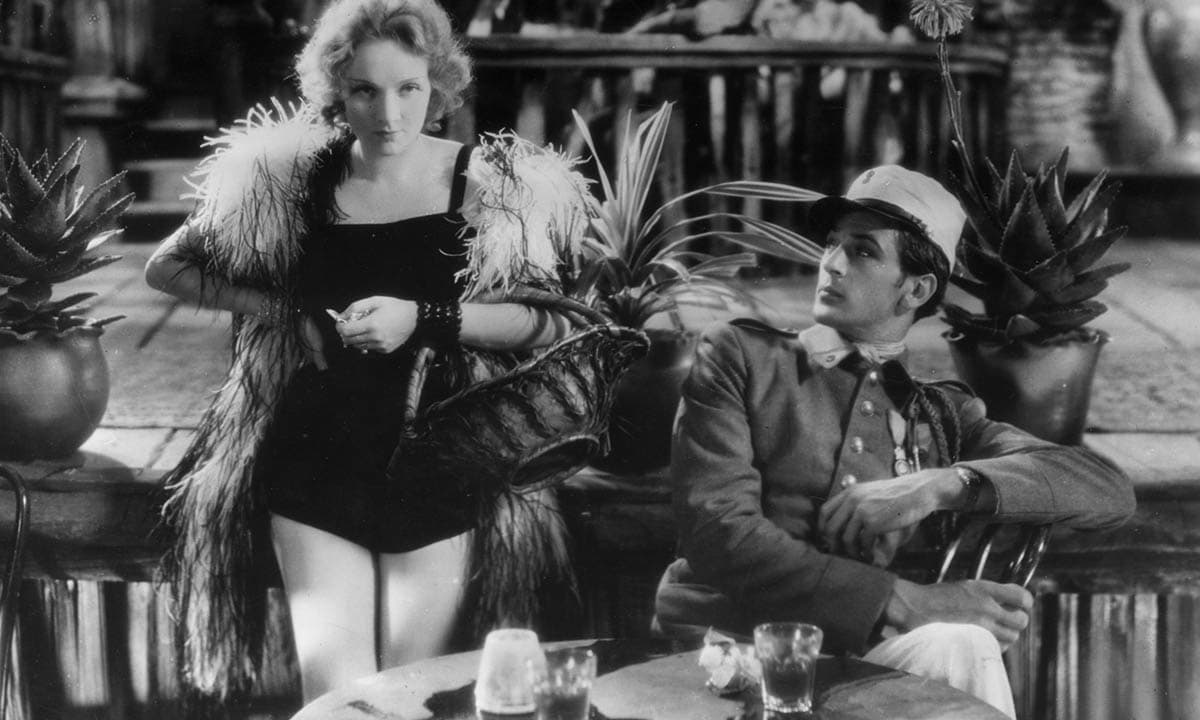
Morocco (Josef von Sternberg, 1930)
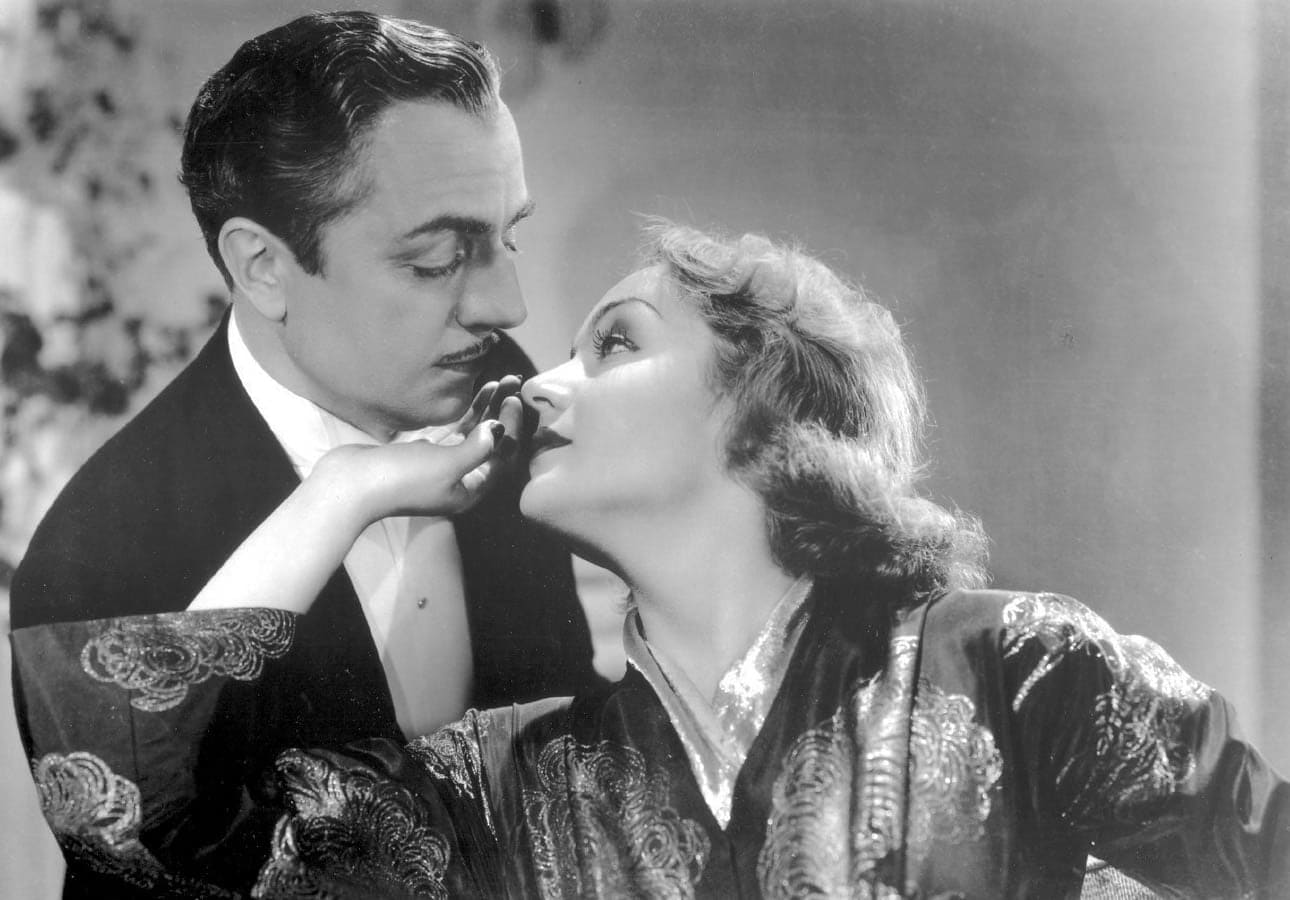
Even when Josef von Sternberg presents Marlene Dietrich in the most unflattering way, he’s always on her side, which comes across in their second film, Morocco. It’s quiet and moody, filled with scarred adults afraid to reach out to each other. This is best expressed in the electric hesitation before a tuxedoed Mademoiselle Amy Jolly (Dietrich) kisses a woman during her opening cabaret act, and in the pregnant pauses between words when she talks with Légionnaire Tom Brown (Gary Cooper). In Morocco, Dietrich is frightening to watch because she seems capable of anything—a staggering mixture of animal-like Berlin instinct and sentimental old German vulnerability. Dan Callahan
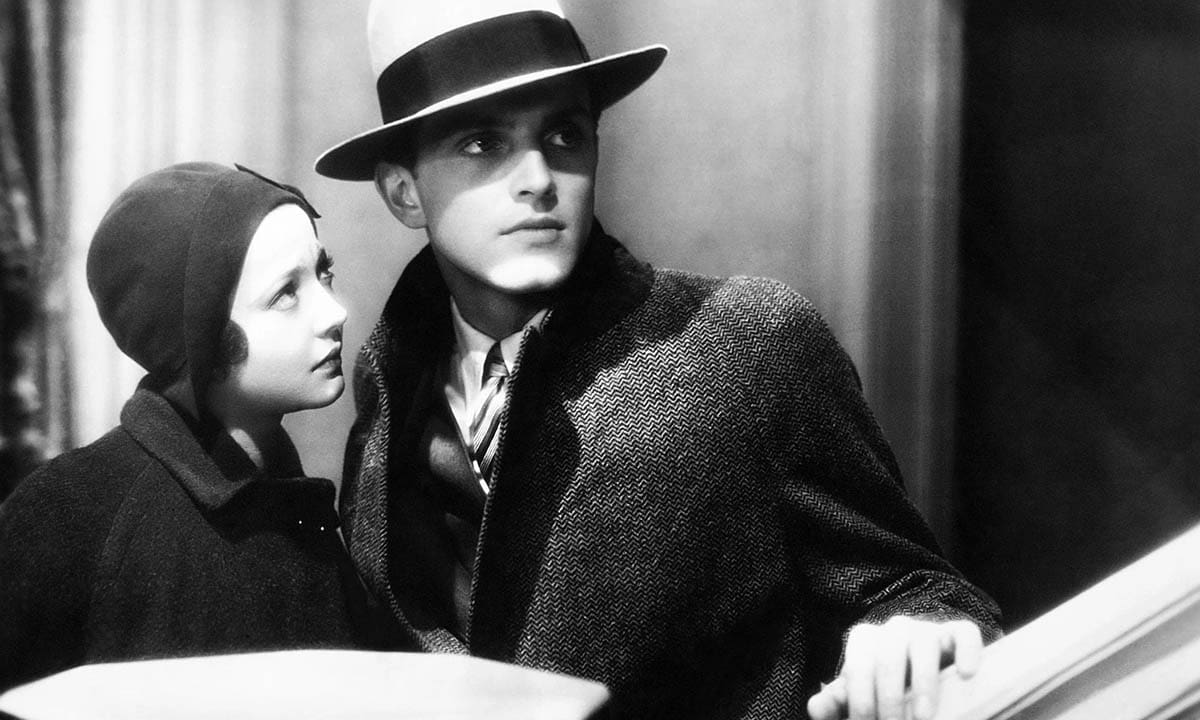
An American Tragedy (Josef von Sternberg, 1931)
Josef von Sternberg called his work on An American Tragedy a “little finger exercise” in his autobiography. But his version trumps A Place in the Sun at every turn and stands on its own as a full-blooded, uncompromised vision of temptation and abject cowardice. Though the film is compressed, it never feels rushed, and the full sociological impact of Theodore Dreiser’s book is captured in the flowingly poetic visuals. Von Sternberg emphasizes that Clyde (Phillips Holmes) has a clear choice when he rows the pregnant Roberta (Sylvia Sidney) out onto a lake to drown her, and we see that money and sex trump sweetness and poverty, even if murder is the price. Von Sternberg makes inspired use of water imagery throughout, so that when we’re shut up in a courtroom in the last scenes, we feel that something has been lost. Callahan
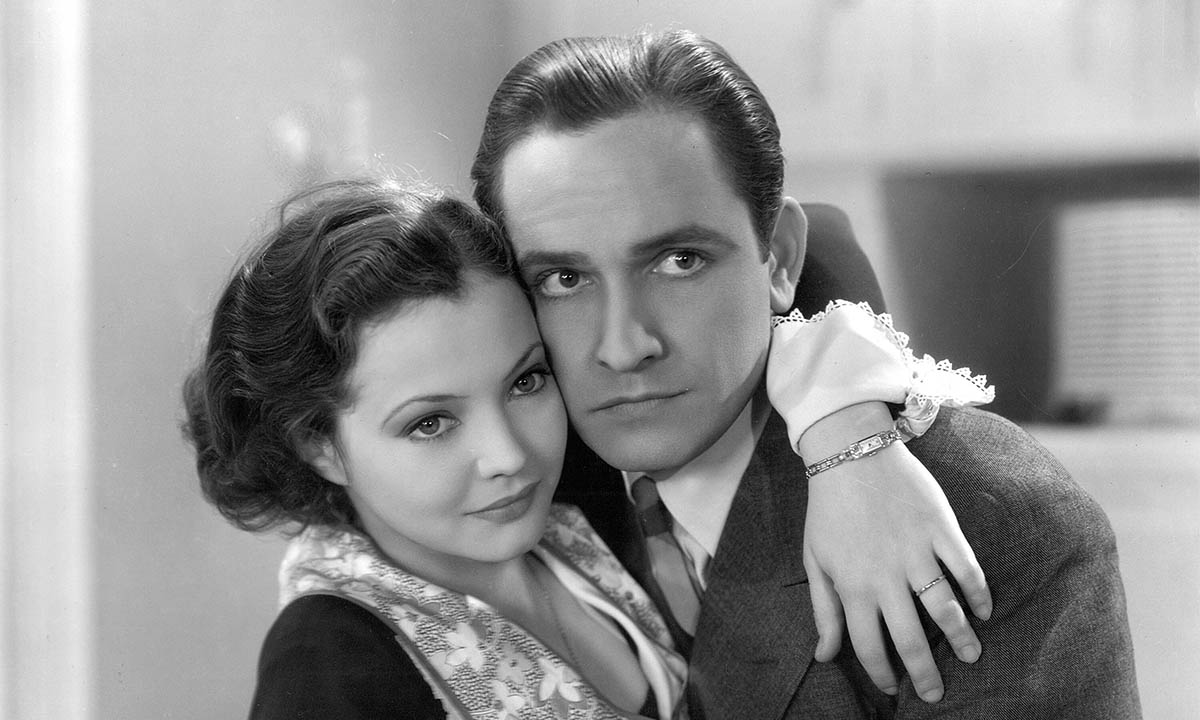
Merrily We Go to Hell (Dorothy Arzner, 1931)
Merrily We Go to Hell is an insistently skeptical Prohibition-era anti-romance recounting the seemingly doomed nuptials between dandyish drunkard and newspaper reporter Jerry Corbett (Fredric March) and blithely optimistic Joan Prentice (Sylvia Sidney), the only child of a wealthy manufacturing tycoon. A specific setup to be sure, but Dorothy Arzner mines the material (based on Cleo Lucas’s 1931 novel I, Jerry, Take Thee, Joan) for the more universal hard truths it has to offer. Aside from the potentially crushing weight of so many societal ills careening about—alcoholism foremost, but also the distribution of wealth, perched patriarchy, and the constraints of monogamy—Merrily We Go to Hell is actually a surprisingly lithe drama, with both leads pulling bursts of energy from their back pockets just as the scenario’s moralizing threatens to bring the whole thing to collapse. Eric Henderson
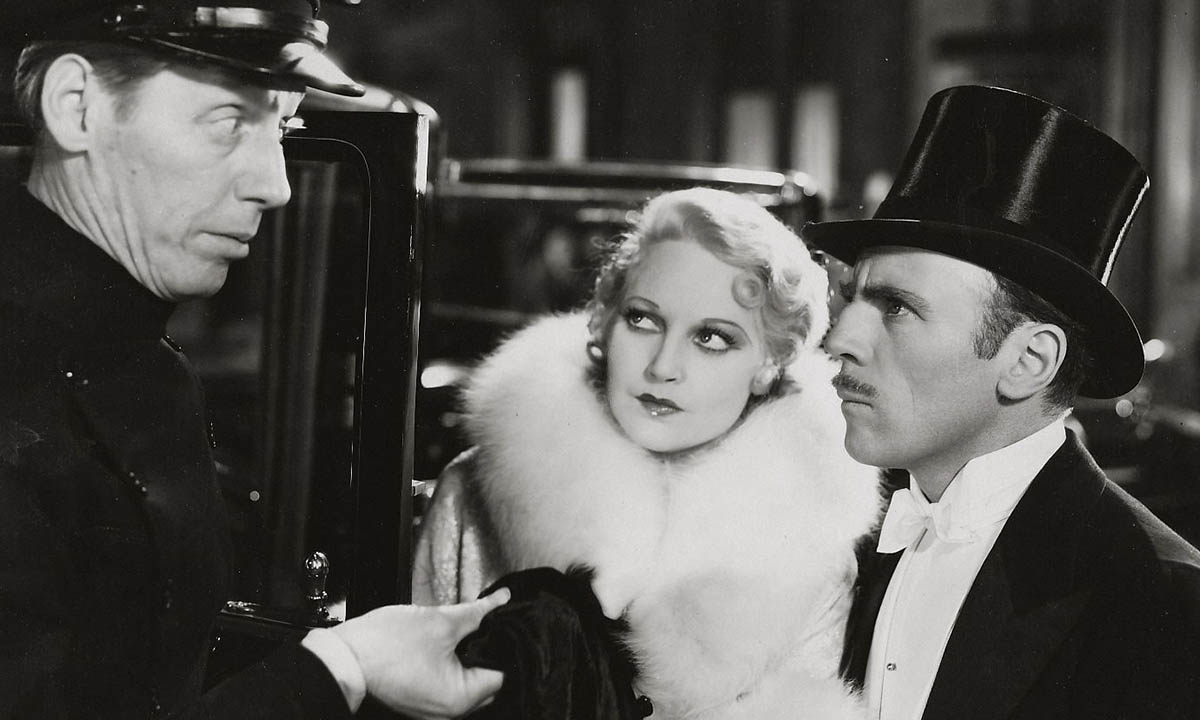
This Is the Night (Frank Tuttle, 1931)
This Is the Night is snappy farce soaked in the sexual innuendo of the first order and a very appealing sense of the absurd to countermand its straight-up, generously moneyed surfaces. The plot revolves around an Olympic javelin tosser, Stephen (Cary Grant, in his first feature role), coming back early from his travels and learning about the dalliance between his wife, Claire (Thelma Todd), and her lover, Gerald (Roland Young). Frank Tuttle infuses a sense of playfulness right from the start by structuring the film’s sexual roundelays, deceptions, and shifting partnerships as a playful symphony come to life. He also employs the strange but nicely modulated device of tinting the image a deep, rich blue to render more mysterious and bewitching the film’s outdoor nighttime sequences. This technique, first visible over the Paramount logo that opens the picture, alternates essentially blue-and-silver images with the conventional black and white of the interiors and creates a kind of magical alternate reality that nicely complements This Is the Night’s musical stylization. Dennis Cozzalio
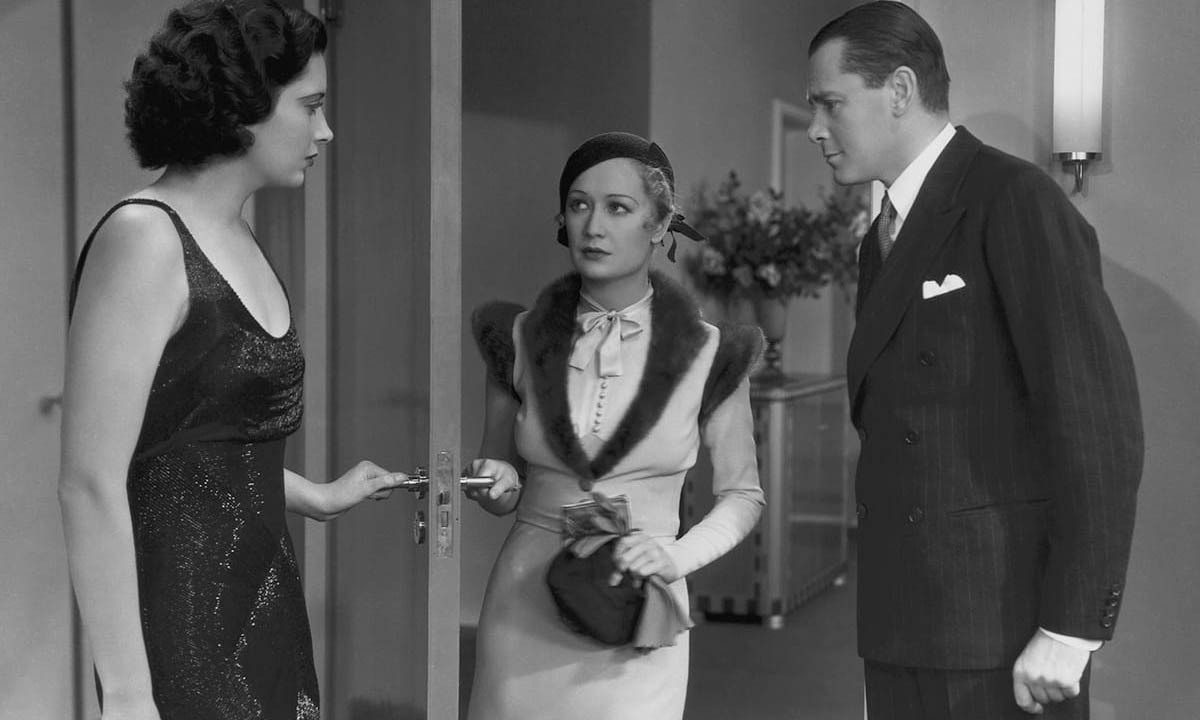
Trouble in Paradise (Ernst Lubitsch, 1932)
Oh, that Lubitsch touch. So sly, so urbane. What often goes unsaid is how utterly empathetic it also is—so accepting of foibles and the unruly passions that roil the human heart. There’s no better showcase for Ernst Lubitsch’s profoundly humane brand of comedy his dazzling comedy of manners Trouble in Paradise. The double- and triple-crosses that mark the relationship between a thief (Herbert Marshall), his partner in crime and love (Miriam Hopkins), and the perfume manufacturer he’s conning (Kay Francis) are as sleek, sexy, and sophisticated as anything Hollywood has ever produced. But it’s the moments of wistfulness—the acknowledgment that the world is flawed and messy, and all the more wonderful for it—that make this gem sparkle all the more. Matthew Connolly
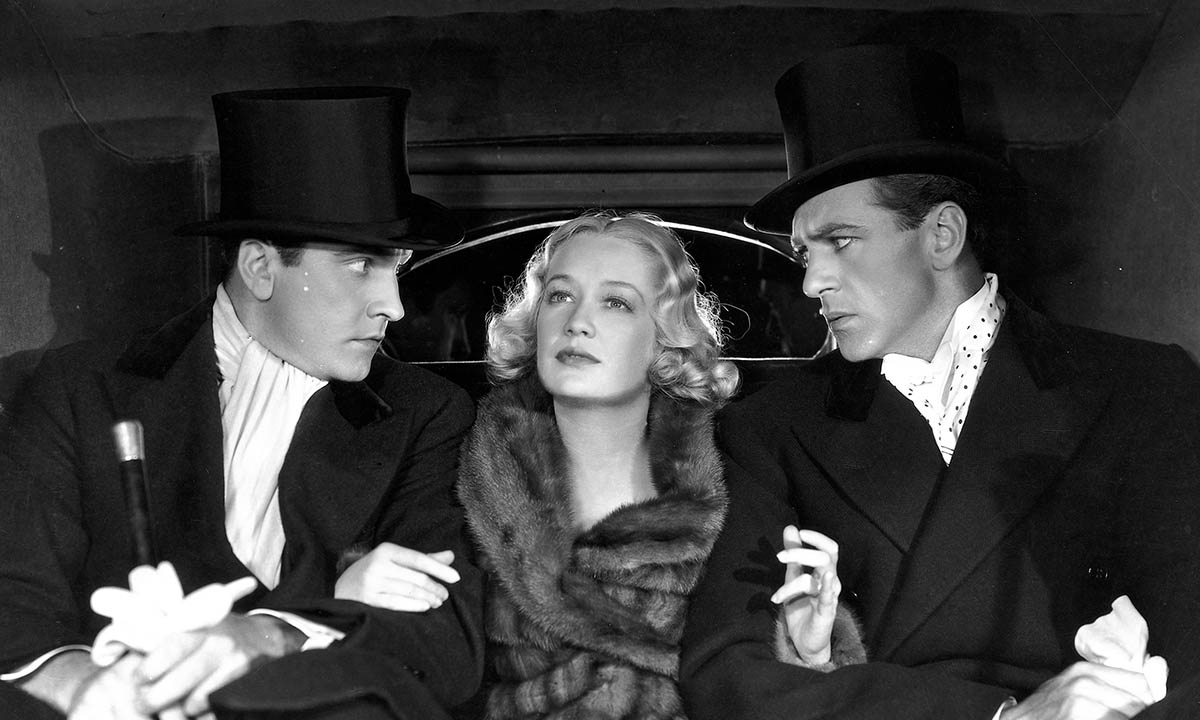
Design for Living (Ernst Lubitsch, 1933)
Design for Living’s lack of innuendo drove the censors wild, but its perspective of human sexuality never quite oversteps the boundaries of tradition. Two men compete for the favor of the character played by Miriam Hopkins, who reprises her “comedienne of empowerment” from Ernst Lubitsch’s Trouble in Paradise, and she doesn’t allow herself to be penetrated by anyone she doesn’t love. The primary sexual freedom rendered on the screen is the freedom to confess—to express attraction, or to admit dalliances that will cause hurt. In one faux-feminist monologue, Hopkins’s Gilda marvels at the luck she’s been given to be able to try various men on, like hats, and decide to keep two in her closet. And when Fredric March’s playwright succeeds in stealing away Gilda from Gary Cooper’s painter for a night, the conversational results—an exchange of words and fists—are uncomfortably candid. Joseph Jon Lanthier
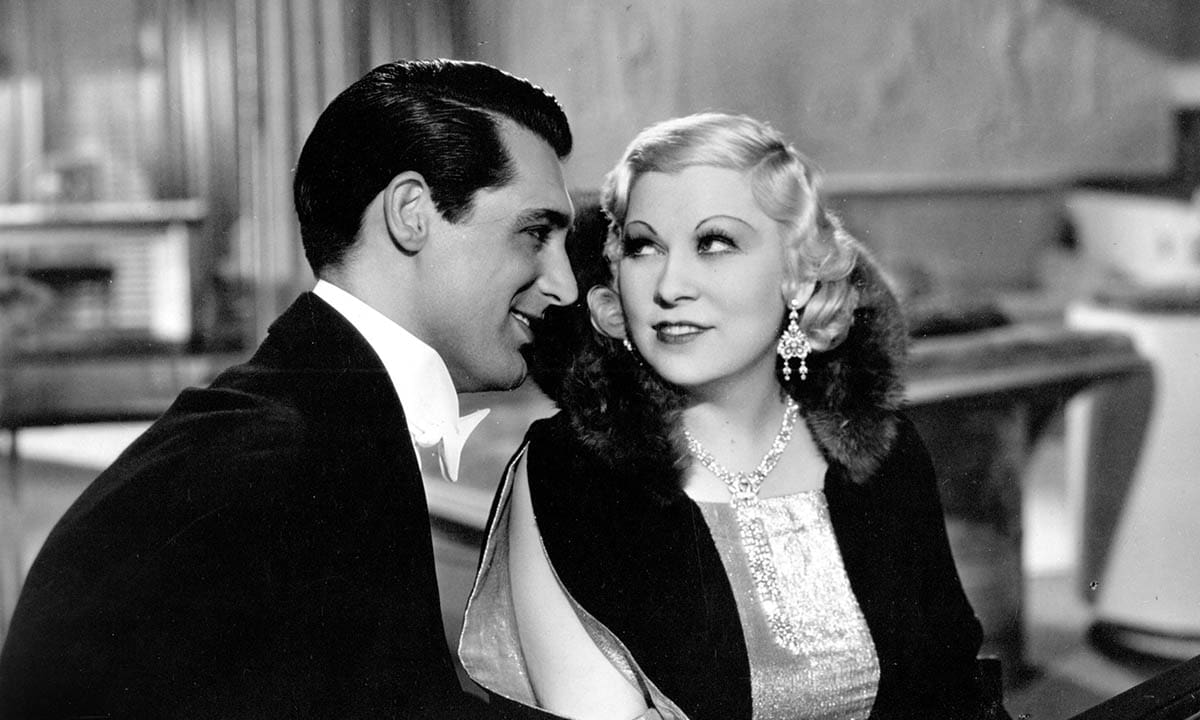
I’m No Angel (Wesley Ruggles, 1933)
In Wesley Ruggles’s I’m No Angel, Tira (Mae West) is first seen doing a shimmy, driving gross men to distraction with her extremely lazy gyrations. As she undulates off stage, West memorably sneers under her breath, “Suckers!” It was a woman’s sharpest gibe at the opposite sex on scene until Jane Fonda looked at her wristwatch mid-coitus in Alan J. Pakula’s Klute. Tira finds fame doing a lion act, and as she gets richer, she employs a trio of black maids (played by Hattie McDaniel, Gertrude Howard, and Libby Taylor). West classes herself with the outsiders of the time: Blacks, gays, and fallen women are her people, and they’re always her friends on screen, whereas the ones with power, rich white men, are generally seen as repulsive. Her leading man here, Cary Grant, seems amused by West, and not always in a kind way, as he projects a mocking aggression that she doesn’t seem to notice. Callahan
Since 2001, we've brought you uncompromising, candid takes on the world of film, music, television, video games, theater, and more. Independently owned and operated publications like Slant have been hit hard in recent years, but we’re committed to keeping our content free and accessible—meaning no paywalls or fees.
If you like what we do, please consider subscribing to our Patreon or making a donation.