
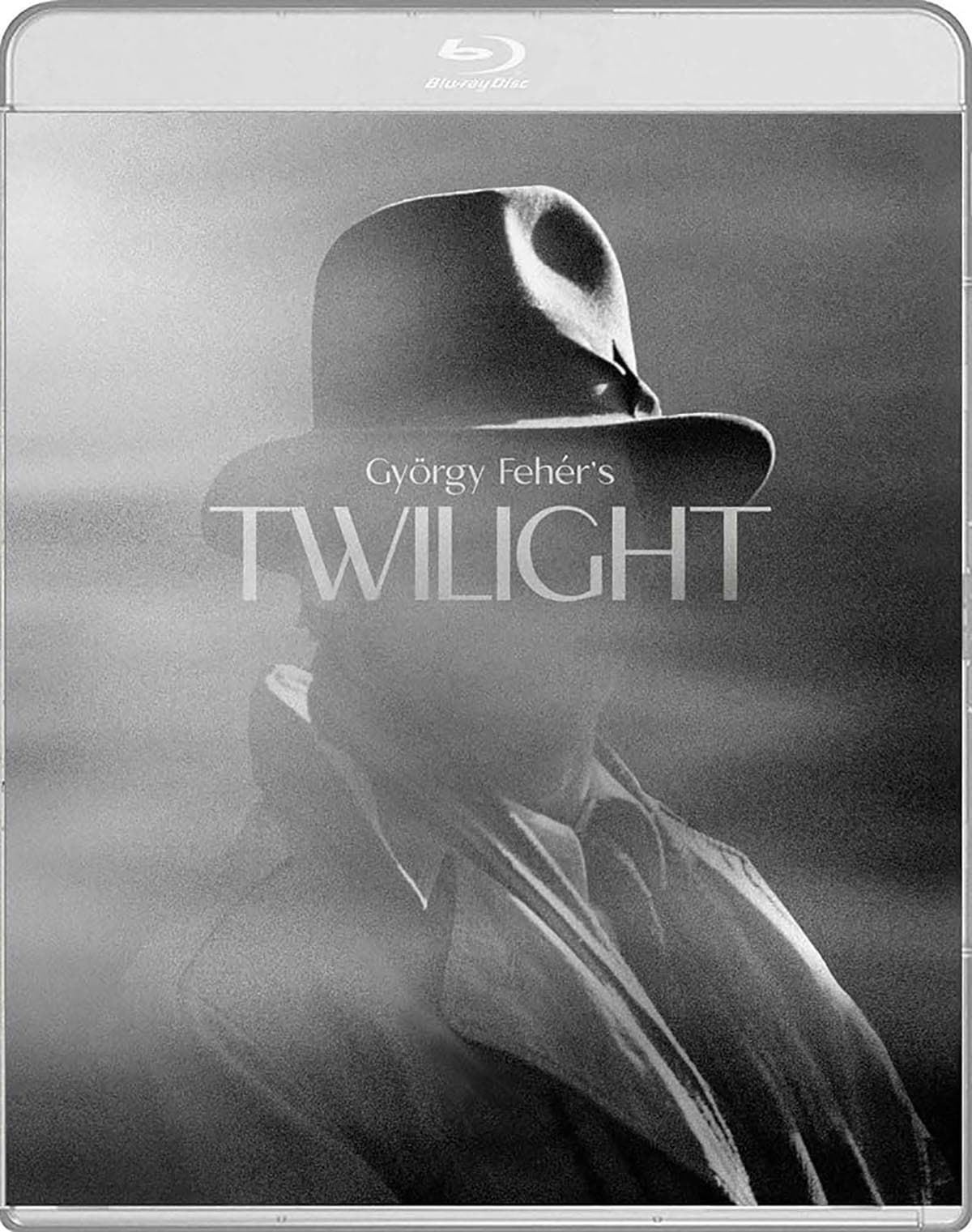
 Though based on Friedrich Dürrenmatt’s 1958 crime novella The Pledge (which was also the source for Sean Penn’s 2001 film of the same name), György Fehér’s Twilight plays more like an existential horror film than a noir or police procedural. Indeed, the ins and outs of the investigation into the mysterious murder of a child are of little concern to Fehér, who crafts a mood piece that’s keyed to the aura of dread and despair that grips a community in the wake of this and other similar murders.
Set in a small, remote Hungarian town surrounded by vast hills and dense thickets of trees, Twilight exists in a sort of metaphorical purgatory. Throughout, the film’s spare black-and-white images, deliberate pacing, and glacial camera movements, coupled with the near-constant rumbling ambiance that dominates the soundtrack, brilliantly conjure how an unseen but ubiquitous evil haunts the townsfolk. Long tracking shots of the landscape enveloped in fog and mist further arouse feelings of impending doom as the child serial killer—known only as “the giant” and “the wizard”—wreaks havoc, seemingly in non-corporeal form.
The killer’s inscrutability becomes a defining feature of Twilight, which frequently jumps ahead in time, often eliding crucial events without contextualizing much of what’s occurred in the interim. That the characters, including the lead detective in the case (Péter Haumann), don’t have names further contributes to the constant feeling of uncertainty. Even the pledge that informs the title of Dürrenmatt’s novella—a promise on the detective’s part to bring the killer to justice—is delivered as the camera, already on the other side of a window, tracks away from another detective (János Derzsi), who’s speaking to the first victim’s mother, and toward Haumann’s character, who’s eavesdropping on the conversation from outside the house. It’s as if the evil forces themselves are drawing Fehér’s attention away from the details of the case.
The lack of any propulsive narrative highlights the stasis that’s of a piece with both the murder investigation at the center of the story and Twilight’s own slow-cinema style, which bears the clear influence of Béla Tarr (who served as consultant on the film). The killer kills again, yet the inability to make any headway in the case leaves the lead detective obsessing over clues that go nowhere, searching for a truth that remains frustratingly out of reach.

In one of the film’s most haunting shots, the camera gradually tracks left from within the police station where detectives discuss the case and lands on a group of citizens standing outside, motionless and unblinking, like ghosts stuck in a liminal space seemingly brought on by the horrific murders of the town’s children. At its most arresting, Twilight gives a grueling, almost paradoxical significance to a force of evil that’s as inexplicable as it is unimaginable.
Image/Sound
For this release, Arbelos Films sourced the same 4K restoration that Second Run used for their 2023 Blu-ray. The results are very similar, with this transfer showing a bit more detail and slightly deeper blacks, though it stays true to the roots of Twilight’s obsessively gray-toned palette, which avoids stark blacks and whites. The mono soundtrack was also restored and remastered, and it nimbly handles all the low-end rumbles of the film’s moody sound design and the recurring chant-heavy Georgian folk music score.
Extras
This release comes with two lengthy interviews, one with editor Mária Czeilik and cinematographer Miklós Gurbán. Czeilik discusses her various collaborations with Fehér, whom she knew since college, and how her philosophy of editing (including sound editing) gels with the director’s meditative style. Gurbán is particularly enlightening in regards to how he and director György Fehér achieved Twilight’s unique look via lighting and a specific film stock. The disc also includes Fehér’s first two short films, 1969’s “Öregek” and 1970’s “Tomikám,” and an essay by Hungarian film critic Andrea Virginás, who writes about Twilight’s lasting influence on Hungarian cinema and its reception in the post-Cold War era.
Overall
Arbelos’s excellent Blu-ray release boasts a strong slate of extras and top-notch A/V quality.
Since 2001, we've brought you uncompromising, candid takes on the world of film, music, television, video games, theater, and more. Independently owned and operated publications like Slant have been hit hard in recent years, but we’re committed to keeping our content free and accessible—meaning no paywalls or fees.
If you like what we do, please consider subscribing to our Patreon or making a donation.





You really used the same review text for this as the Second Run release except for the headline and what’s specific about this edition? OK