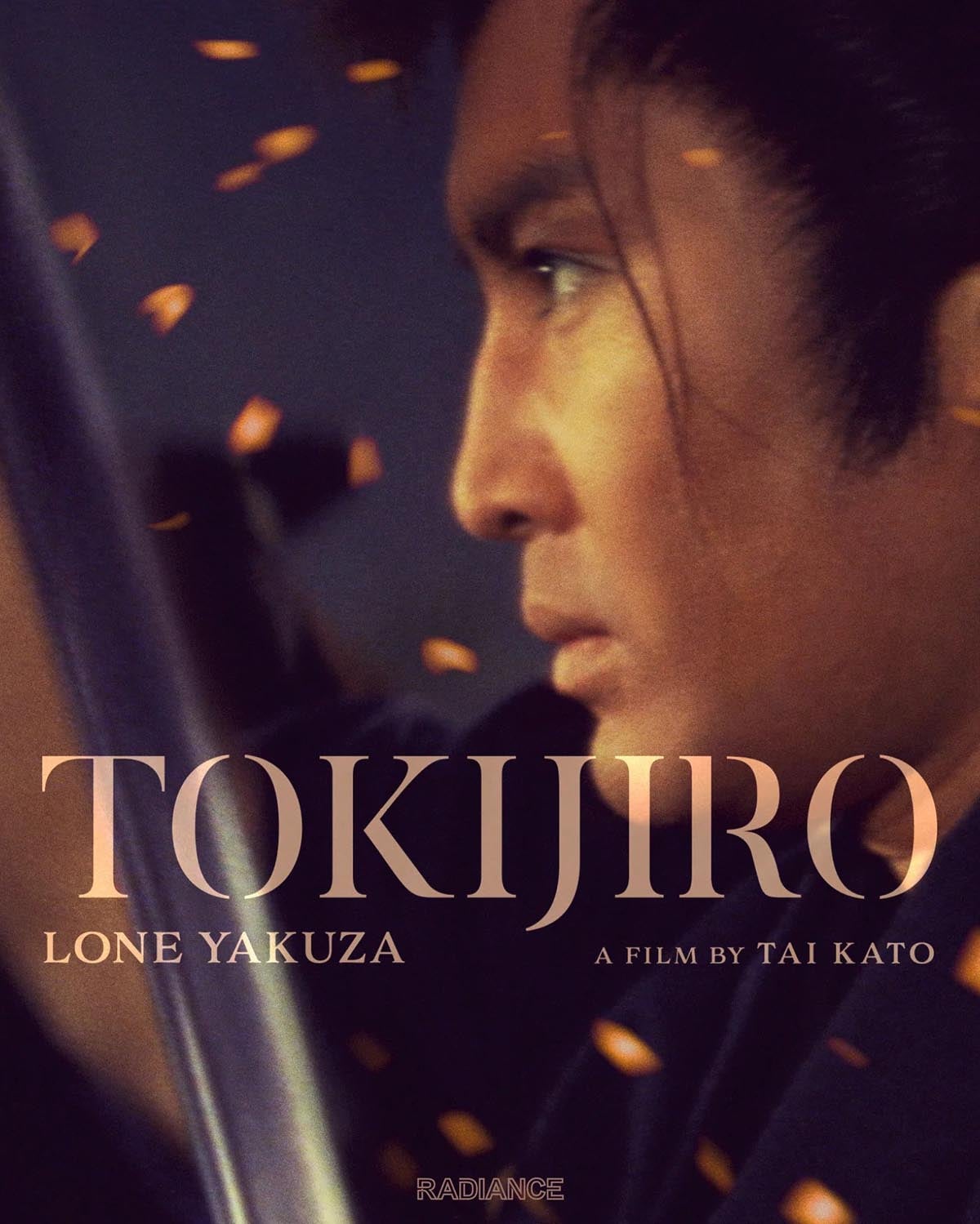
 The 18th-century yakuza underworld of Katō Tai’s Tokijiro: Lone Yakuza is defined by stringent codes of honor that inevitably lead to bloodshed. Even men like Tokijiro (Nakamura Kinnosuke), a gambling drifter with no allegiances, are easily caught in the yakuza’s web of violence, as they must often provide a service (typically murdering a rival clan member) in exchange for lodging and a hot meal. Indeed, even as Tokijiro actively strives to live a pacifistic live, death follows him from the opening scene, during which a trio of thieves challenge him at the beach, to the final one, in which he’s forced to head off against a former protégé (Okazaki Jiro) looking to kill him merely to impress the clan he recently joined.
Early on, when Tokijiro refuses a deadly mission given to him by his hosts, this shirking of responsibility still leads to needless death—that of his current protégé, Asakichi (Atsumi Kiyoshi), who, inexperienced and bumbling, quickly gets killed when he takes on the task. When he honors the code at his next stop, killing the reputable Sanzo (Azuma Chiyonosuke), he earns the wrath of the entire yakuza clan when he grants the man his dying wish of protecting his wife (Ikeuchi Junko) and (Izumi Kazuko) on the long journey to a family member’s house.
The irony of Tokijiro’s desperate quagmire is front and center, as he’s truly damned if he does and damned if he doesn’t stick to the yakuza code. But for all the film’s bloody clashes, captured with a visceral intensity by Katō’s camera, it’s the melancholy of Tokijiro’s failure to successfully live up to his own moral convictions in the face of a socially dominant code that’s revealed to be as hollow as it is unscrupulous that sets the film’s elegiac, mournful tone.
The inevitable love that grows between Tokjiro and Okinu briefly veers toward the hackneyed but ultimately transcends its familiarity as a trope of the yakuza genre through the depth of feeling with which the filmmakers present it. Tokijiro and Okinu’s separation and reuniting bring with it a tragic dimension that’s enhanced by the fact that their love is disrupted by another widely accepted social code that only serves to bring unhappiness into their lives.
Though Katō is considered a contemporary of, rather than a part of, the Japanese New Wave, Lone Yakuza’s grappling with the failures and limitations of traditional Japanese codes and traditions brings it in line with many of the mid-’60s films made by the likes of Oshima Nagisa, Masamura Yasuzo, and Imamura Shohei. And his unusual employment of extreme low-angle shots and use of deep focus with multiple planes of action lend it a stylistic verve that is more sophisticated, and more compelling, than your typical Japanese genre programmer of the era.
Image/Sound
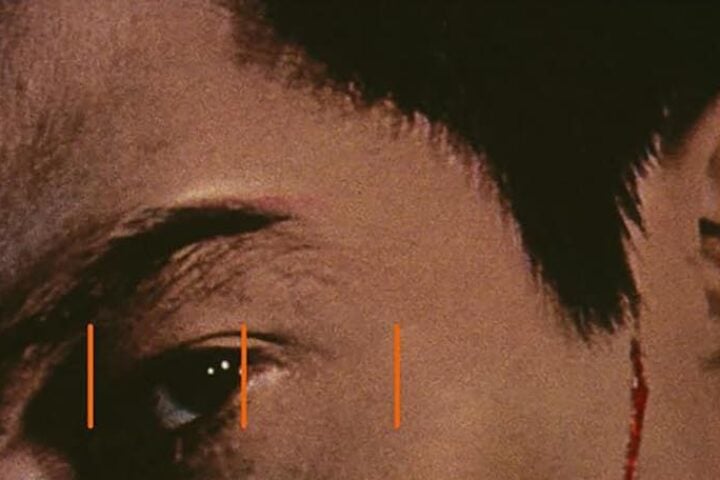
Radiance’s HD transfer is a tad on the soft side, but image detail is generally strong, allowing one to revel in the beauty of Tokijiro: Lone Yakuza’s layered widescreen compositions. The color balancing is mostly naturalistic, the frequent splashes of blue and red exude a spectacular vibrancy, and the grain is tight and even. It’s a strong video presentation that’s free of any signs of damage or debris. On the audio front, the uncompressed mono track effectively handles the aural chaos of the sword fight scenes and presents clean, crisp dialogue.
Extras
In a new interview, film critic Ueno Koushi discusses Hasegawa Shin’s 1928 source novel and the ways in which it was adapted it to reflect Katō Tai’s ideology. While it would’ve been nice to see Ueno delve more into the specifics of that ideology, he does a fine job placing Katō’s within the context of Japan’s ninkyo yakuza films and describing how it broke with that tradition.
Elsewhere we get a visual essay by Japanese cinema expert Robin Gatto on the career of star Nakamura Kinnosuke. It’s quite a compelling piece that covers everything from Nakamura’s father’s work as a successful kabuki actor to Nakamura’s various collaborations with Katō and later work in television as the popularity of period dramas declined. Rounding out the package is a beautiful bound booklet with, interestingly enough, a negative archival review of the film published in Kinema Junpo and an essay by scholar Ivo Smits, who provides essential context of both the historical yakuza film and the subgenre of wandering gambler films.
Overall
Katō Tai’s historical yakuza film Tokijiro: Lone Yakuza gets a strong transfer and small, though compelling, batch of extras courtesy of Radiance Films.
Since 2001, we've brought you uncompromising, candid takes on the world of film, music, television, video games, theater, and more. Independently owned and operated publications like Slant have been hit hard in recent years, but we’re committed to keeping our content free and accessible—meaning no paywalls or fees.
If you like what we do, please consider subscribing to our Patreon or making a donation.