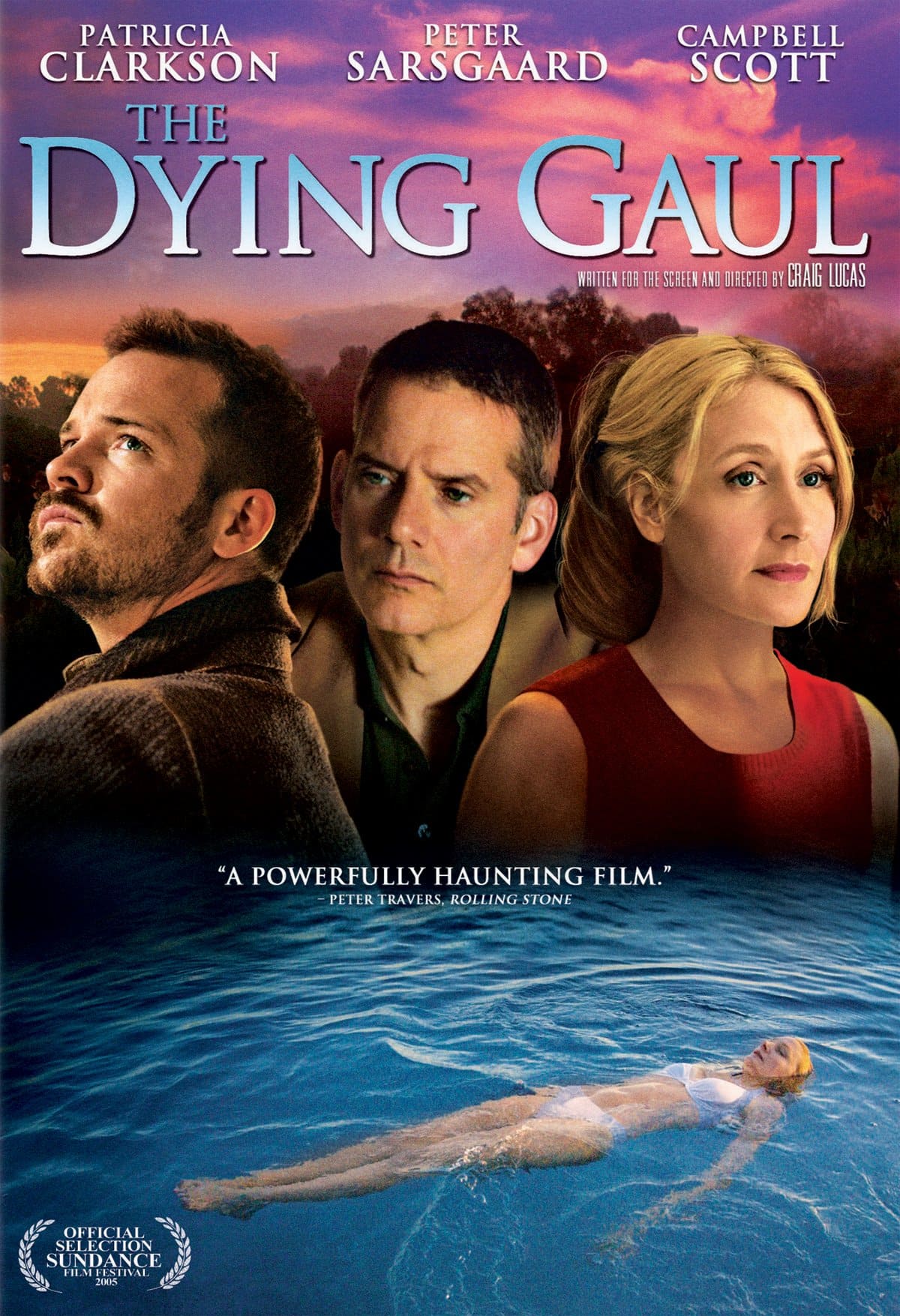
 Years after Al Gore invented the Internet, chat rooms had yet to evolve into the systems of intelligent design they are today. As rudimentary and easy to navigate as they were in 1995, they still managed to intimidate anyone who was wary of the idea of non-face-to-face communication. In Craig Lucas’s contemporary Greek tragedy The Dying Gaul, the Internet is a means for people to sort through the baggage they’re afraid to handle in person. A Hollywood bigwig, Jeffrey (Campbell Scott), goes crazy for the work (and cock) of a young screenwriter, Robert (Peter Sarsgaard), who still suffers from the recent death of his lover. Robert sells out for a million dollars, changing the gays in his script to breeders and allowing himself to be indoctrinated into the world of his new boss and his bored society wife, Elaine (Patricia Clarkson), who used to write scripts her husband would never greenlight. Robert and Elaine get along, exchanging Hollywood war stories and sinister tidbits about flowers (‘cause, you know, gays know a lot about horticulture), but when Robert starts fucking Jeffrey, and Robert’s stories about the Zen-like pleasures of chat rooms convince Elaine to anonymously shoot the shit with Robert online, a rather ghoulish game of cat-and-mouse ensues between the two, with Elaine pretending to be Robert’s dead lover and Robert trying to find out if the man he helped to commit suicide was really trying to reach him from the great beyond. Saarsgard’s lisp is too model-perfect and he caps an orgasm with an awkward emotional explosion the material doesn’t really care to elaborate on, which means Lucas has a habit of stranding his actors. But while the characters are contrived and the script’s anti-Hollywood swipes make Entourage and Swimming With Sharks seem deep by comparison, there’s something oddly compelling, albeit pretentious, about the film’s rudimentary visual argot, especially during the sinister back-and-forth between Robert and Elaine. The narrative the two characters author on the Web is one their heterosexual elite refuses to let them write in real life and Lucas shoots them as if they were gay and feminist figureheads featured in some contempo video installation. I’m not exactly sure any of it is very relevant today, but for a story that takes place in chilly, Philadelphia-era Hollywood, it’s at least plugged in to the politics of the time.
Image/Sound
On the big screen, The Dying Gaul looked like one of the ugliest films ever made, but the shrinking qualities of video flatter it on the small screen. Now the film looks as if it had a cinematographer-the colors are vibrant and the grain isn’t totally unflattering. Still, edge enhancement is visible throughout and detail around smaller objects can be shaky and unattractive. Craig Lucas’s shrill, razor-sharp dialogue still comes through loud and clear.
Extras
A lousy series of deleted scenes, a whole bunch of theatrical trailers, and an alternate ending that really just extends the existing ending by a minute or two and features Peter Sarsgaard’s character lapping up one of those I-showed-them tropical vacations these types of characters seem to enjoy in movies as varied as Office Space and Wild Things.
Overall
In the end, the film is only of interest for members of the Campbell Scott Honorary Gay Man Society.
Since 2001, we've brought you uncompromising, candid takes on the world of film, music, television, video games, theater, and more. Independently owned and operated publications like Slant have been hit hard in recent years, but we’re committed to keeping our content free and accessible—meaning no paywalls or fees.
If you like what we do, please consider subscribing to our Patreon or making a donation.