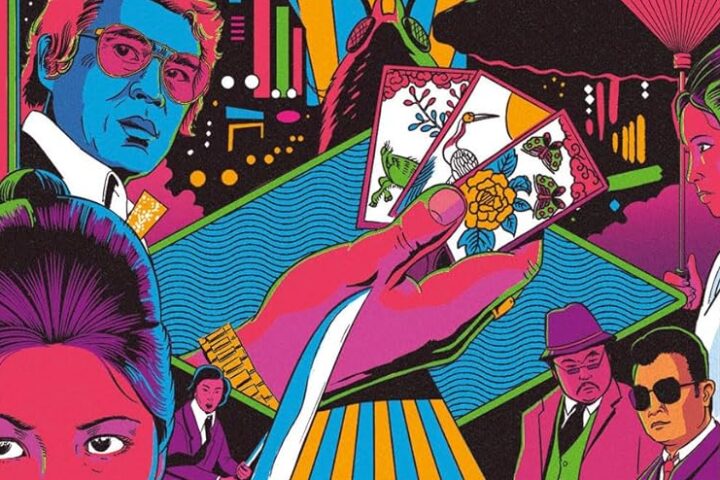
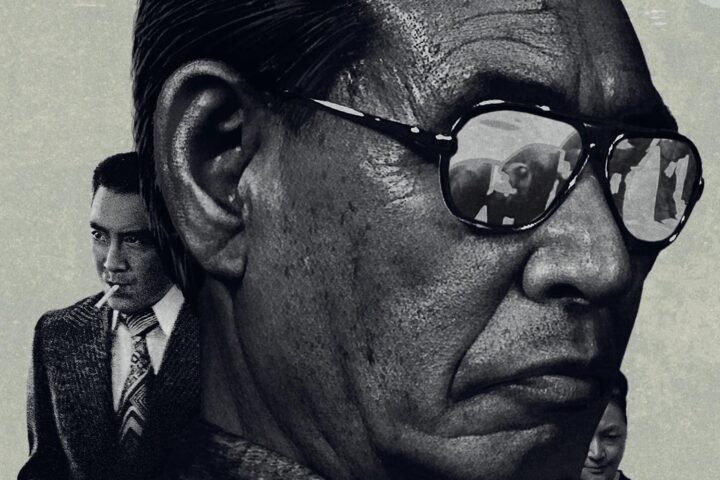
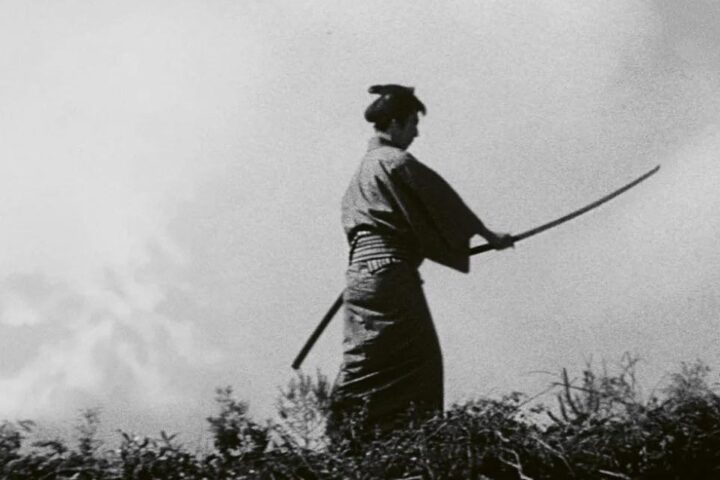
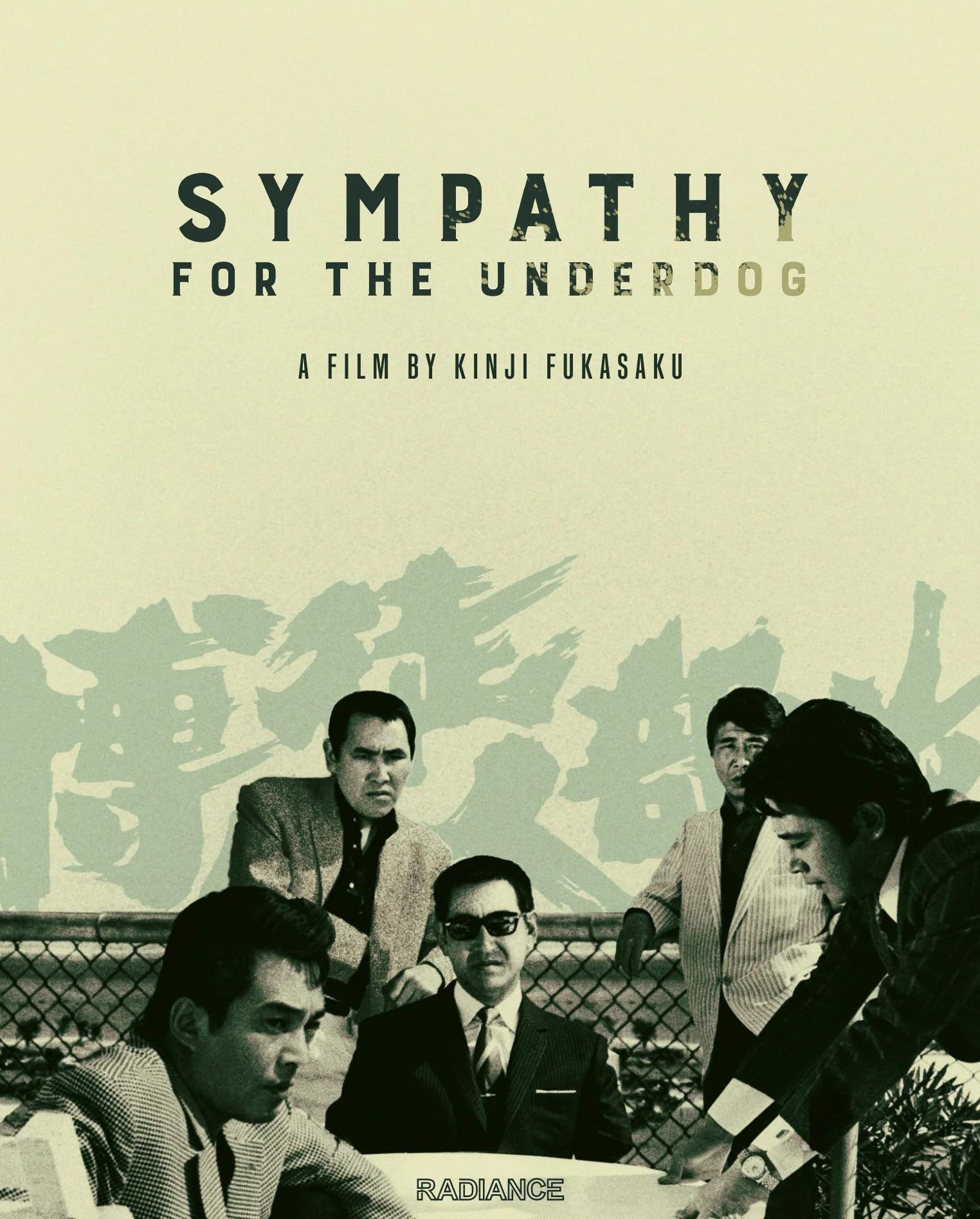
 When we first see Gunji Masuo (Tsuruta Kōji), the ex-chief of a yakuza gang, he’s strutting out of Yokohama prison following a 10-year stint inside. As two of his former lackeys greet him, fawningly placing a trench coat over his shoulders, Gunji exudes an aura of effortless cool, wearing shades that he’ll rarely take off for the remainder of director Fukasaku Kinji’s Sympathy for the Underdog.
But the man’s sense of authority and suaveness is illusory, as we learn that his gang dissolved long ago, and that other big shots from his era have devolved into pachinko addicts and ramen cooks. The world has moved on without him, and the small, tightly knit brotherhoods he once knew have been replaced by a larger, Tokyo-based conglomerate, the Daitokai, who are unconcerned with the codes of honor that once guided the yakuza life.
The filmmakers use this unbalanced dichotomy in Sympathy for the Underdog as a means of reflecting Japan’s cultural shifts since World War II, something which becomes even more clear when Gunji packs up and heads to Okinawa to try and regain some turf of his own. Despite showing up with only a handful of followers in tow, Gunji earns some territory solely through brute force of will and a maniacal, near-suicidal tendency to challenge larger gangs by reminding them they won’t all survive either if things take a turn toward bloodshed.
If the plot for Sympathy for the Underdog makes it sound like a relatively boilerplate gangster yarn, its lent a distinct flavor by being set in Okinawa, which, still under U.S. occupation in 1971, is considerably more globalized than the homogenized mainland. American businessmen and G.I.s have cut into the yakuza’s criminal game and the Japanese find their entertainment at Chinese opera houses and American-owned rock clubs with Black musicians.
Inspired by Gillo Pontecorvo’s Battle of Algiers, Fukasaku’s film employs similarly propulsive handheld camerawork, creating a palpable tactility of the grimy Okinawa underworld. There’s an urgency and immediacy to every shot that’s further intensified by a frequent use of canted angles, quick cuts, and still images. It’s a feverish style that mirrors the alienation and disorientation that the Okinawese people felt in this oft-neglected region of their own country, as well as the sheer viciousness of violence that defines the film’s many yakuza showdowns.
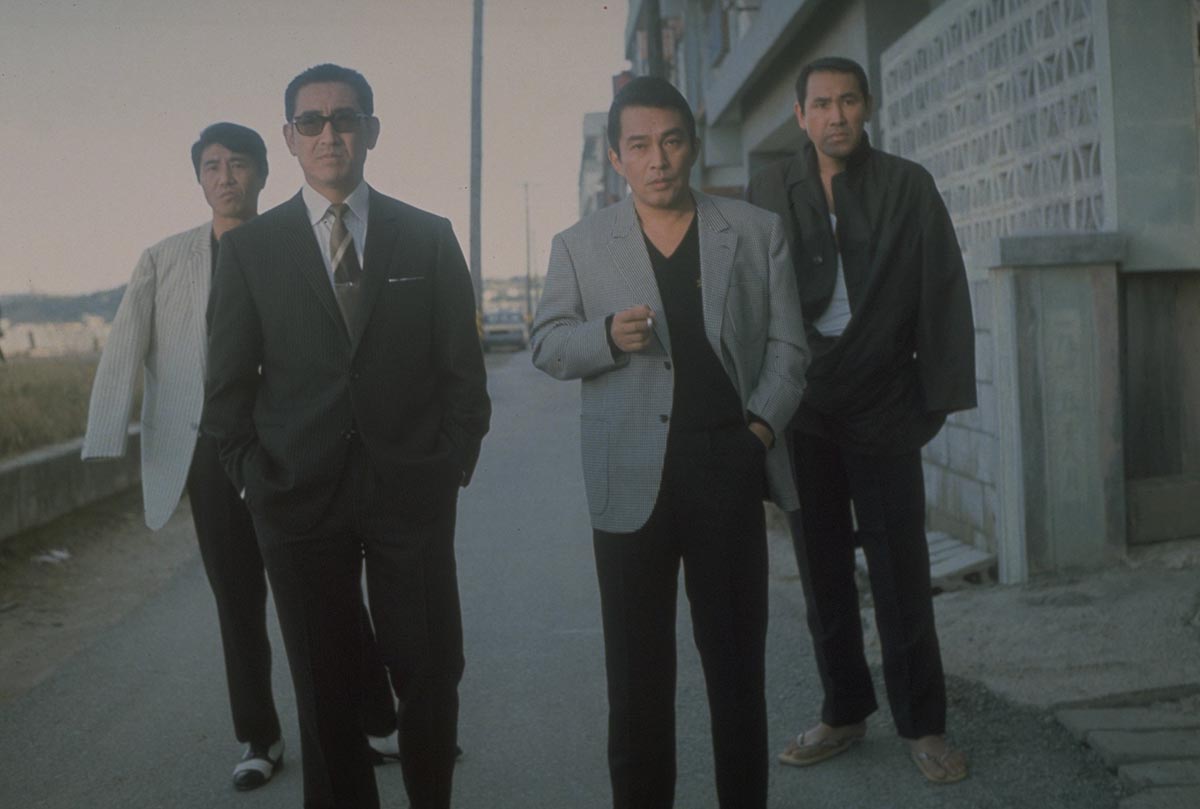
Sympathy for the Underdog may not interrogate the sociopolitical realities of his setting as exhaustively as Pontecorvo’s 1966 masterpiece, but it presents a fascinating cultural melting pot that was rarely captured on film, and would never be again after the U.S. occupation ended the following year in 1972. As such, it’s a fitting locale for a protagonist whose initial bids for power eventually, perhaps inevitably, give way to unrepentant nihilism.
By the time the Daitokai make their way down to Okinawa, sniffing out the same fresh criminal terrain that Gunji was smart enough to go after, he knows in his heart that the age of the traditional small-time yakuza clans is truly over. Indeed, there’s no place for Gunji in this hypermodern Japan, where ruthless feuds lead to increasingly violent clashes that merely delay the predestined coalescence of power that causes smaller yakuza clans to either merge with groups like the Daitokai or face certain death fighting against them.
For Gunji, this is no choice, as he only knows one way to live (or die), and surrendering and compliance aren’t in the cards. At one point, one of Gunji’s brothers tells him, “I wasn’t born to live long.” Perhaps no member of the yakuza is, but it’s a sentiment Gunji wholeheartedly agrees with. Better to go out on your own terms even if your era has passed.
Image/Sound
The high-def transfer by Radiance Films boasts sharp, fine detail in everything from the numerous close-ups to the various dingy locales that the yakuza gangs hang out in. The color balancing shows signs of blue tinting, though that’s primarily noticeable in the whites. Otherwise, skin tones are very naturalistic and the reds are vibrant, as evinced by the copious amount of blood that’s spilt throughout Sympathy for the Underdog. The presence of grain is strong and evenly distributed, and even if the image is slightly soft overall, it’s very film-like. On the audio side, the uncompressed mono track has plenty of depth, nicely handling the often chaotic sound design, while the dialogue is clean and forward in the mix.
Extras
In his audio commentary, yakuza film expert Nathan Stuart discusses the history of yakuza films in Japan in great detail, placing this, and other similar Fukasaku Kinji films, in the larger context of the genre. It’s an extremely well-researched track that balances historical and aesthetic analysis and is particularly informative in breaking down how Sympathy for the Underdog plays with the tropes of the genre. Also of note is a unique visual essay by film historian and author Aaron Gerow that focuses on Okinawa’s representation in Japanese films, delving into the cultural differences between Okinawan and mainland cultures and how the government of Japan has historically forced Okinawans to conform to the demands of the latter.
The final on-disc extra is an interview with Fukasaku biographer Olivier Hadouchi, who makes a compelling case for Fukasaku’s auteur status, drawing parallels between the director’s work and that of Sam Peckinpah and William Friedkin. He also provides a nice overview of Fukasaku’s career and his importance in kickstarting the jitsuroku eiga (“actual record films”) subgenre of yakuza film. The package is rounded out by a lovely 24-page booklet with an archival review of the film from Kinema Junpo and a new essay by author Bastian Meiresonne, who makes an impassioned plea for Japanese genre cinema of the 20th century to be taken more seriously.
Overall
Standing at the crossroads of the yakuza genre as it began to incorporate ripped-from-the-headlines stories, Sympathy for the Underdog has lost none of its raw, kinetic power.
Since 2001, we've brought you uncompromising, candid takes on the world of film, music, television, video games, theater, and more. Independently owned and operated publications like Slant have been hit hard in recent years, but we’re committed to keeping our content free and accessible—meaning no paywalls or fees.
If you like what we do, please consider subscribing to our Patreon or making a donation.