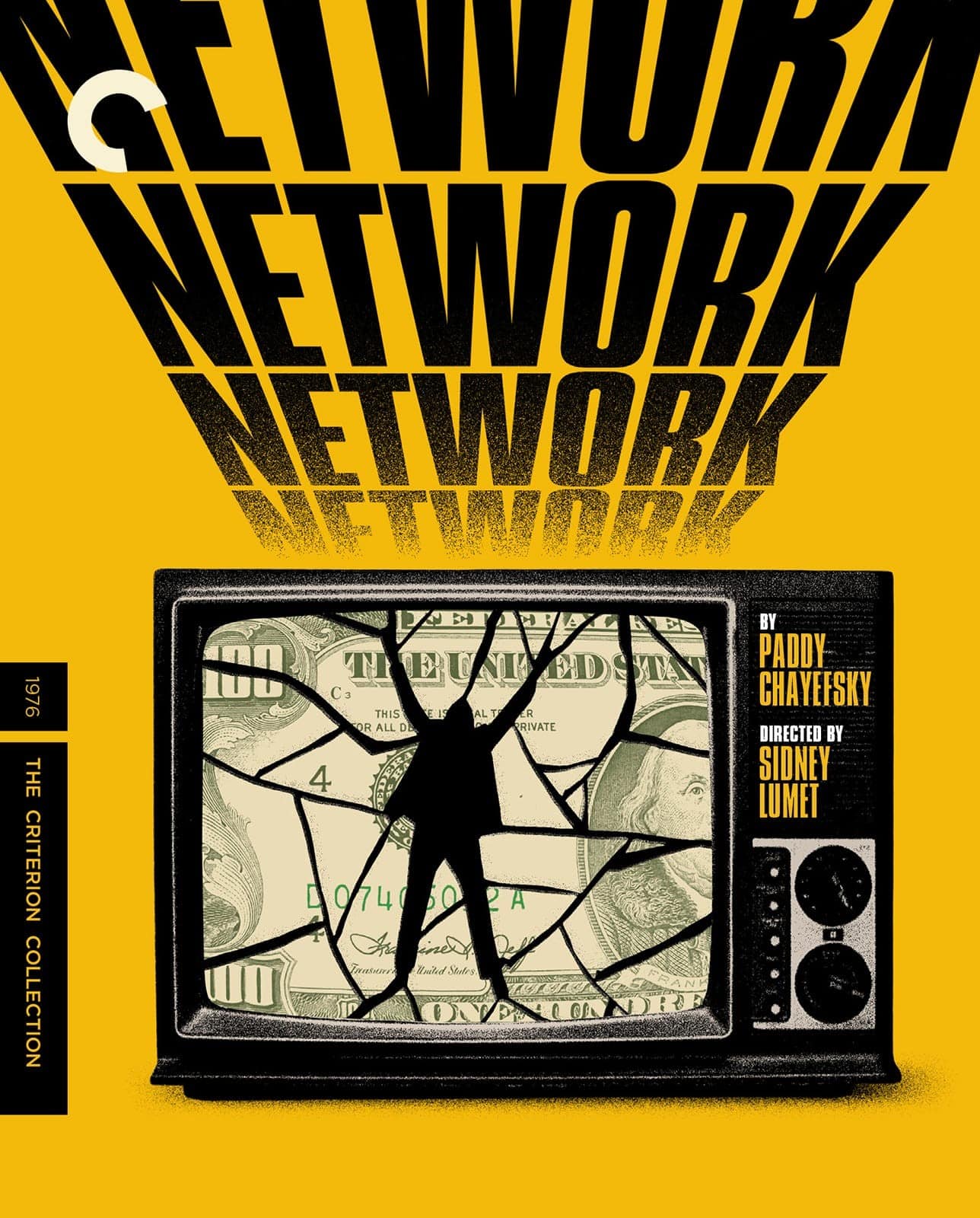
 As prescient as it is trenchant, Sidney Lumet’s Network wears its ideas on its sleeve. As such, there are times when this incendiary script may leave you wanting for characters that feel less like mouthpieces with ideological agendas: Faye Dunaway’s Diana is the ruthless, über-capitalist go-getter; Peter Finch’s Howard Beale is the delusional, malleable purveyor of proletarian rag; and Ned Beatty’s Arthur Jensen is the unassailable, towering figurehead of multinational corporate power.
These characters’ more symbolic functions tend to dampen the emotional punch that several scenes strive for, even as they serve the theme of capitalism’s erosion of morality. Indeed, Diana and much of the network brass’s blind pursuit of ratings ultimately curdles whatever humanity they still had by the end of the film, to the point that murder isn’t only an acceptable decision but also an inevitable and logical one. Meanwhile, Howard, for all his popularity with the public, devolves from a respected dispenser of objective truth—or, at least, something approaching it—to a hollow puppet easily swayed by the powers that be.
Which is to say, the collective hollowness of these characters is more of a feature than a bug. These individuals stand in stark contrast to Max (William Holden), who’s representative of the old, principled guard. The only person who recognizes the callousness of how Howard’s mental instability is exploited for ratings, he escapes the hypnotic pull of television and the morally bankrupt TV industry that captures virtually everyone in his orbit.
Through its self-reflexive examination of television’s real-world ramifications, Network shrewdly captures how, especially in times when the masses are disillusioned by leaders and institutions, the urge to live within the soulless yet alluring reality that TV constructs for us is often too strong to resist. When reality is too overwhelming or depressing, television is there to provide the comfort of order and predictably. But then as now, it comes at an enormous cost.
Image/Sound
Criterion’s new 4K transfer boasts consistently sharp clarity and a richness in detail in everything from the actors’ faces and costumes to the sets and exteriors. Black levels are strong, particularly in the nighttime and Howard Beale Show sequences, while skin tones are naturalistic. (The color balancing leans toward teal, though that’s primarily limited to exteriors seen through the office building windows.) On the audio front, the uncompressed mono features clean dialogue with strong separation between the frequently overlapping dialogue.
Extras
In his 2006 audio commentary, Sidney Lumet talks about everything from Network’s aesthetic strategies to working with screenwriter Paddy Chayefsky and actors William Holden and Faye Dunaway. Coming as no surprise to anyone who’s read his book on filmmaking, Making Movies, Lumet unpacks technical nuts and bolts in a clear and digestible way, and he shares plenty of fascinating behind-the-scenes stories as well. Also included are two feature-length documentaries, one focused on the film’s themes, style, and casting and rehearsal processes, the other on Chayefsky and his storied career. Rounding out the package is a trailer and a booklet with an essay by New York Times columnist Jamelle Bouie, who explores the multitudinous ways in which Network approaches the conflicts between younger and older generations.
Overall
Half a century later, Sidney Lumet’s Network remains a darkly humorous and relevant treatise on capitalism’s erosion of morality.
Since 2001, we've brought you uncompromising, candid takes on the world of film, music, television, video games, theater, and more. Independently owned and operated publications like Slant have been hit hard in recent years, but we’re committed to keeping our content free and accessible—meaning no paywalls or fees.
If you like what we do, please consider subscribing to our Patreon or making a donation.