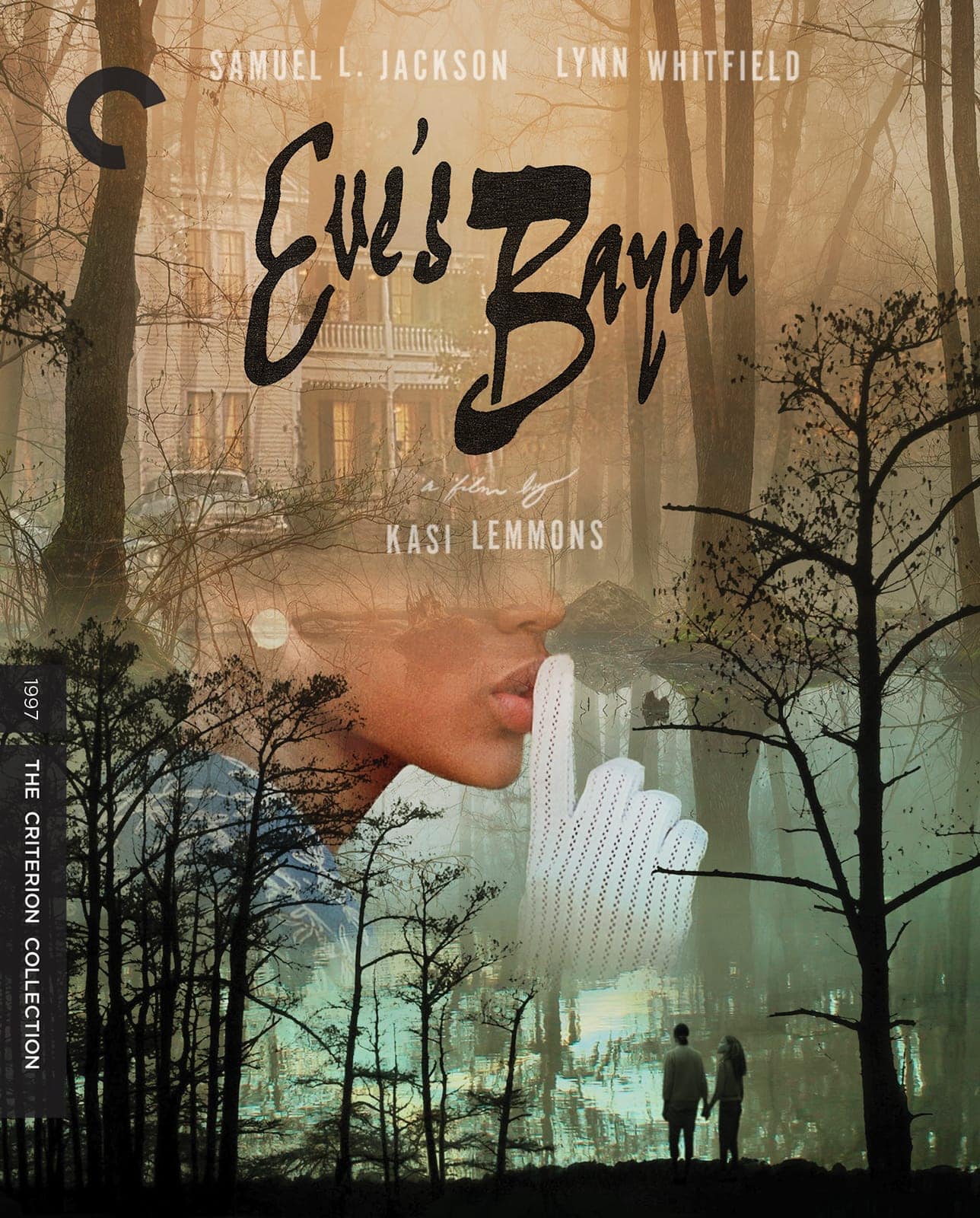
 Kasi Lemmons’s Eve’s Bayou is set in an enclave of Black affluence in Louisiana at the start of the 1960s. A world removed from the immiseration of the era and the civil rights movement pushing back against it, the milieu almost seems to exist in the mind of its child protagonist, Eve Batiste (Jurnee Smollett). The rest of the film feels much the same as it charts the girl’s maturation into adolescence and puberty while also contending with her family’s active repression of their sordid sexual affairs.
Lemmons sets the narrative in motion at a party thrown by Eve’s parents, Louis (Samuel L. Jackson) and Roz (Lynn Whitfield), at which Eve catches her father in flagrante with a family friend, Matty Mereaux (Lisa Nicole Carson). When the child attempts to talk about this with her tween sister, Cisely (Meagan Good), the older girl insists that Eve misconstrued what she saw, and in the background of the shot the earlier scene of Louis’s tryst is superimposed, albeit this time from a new angle, as Cisely begins to verbally rewrite her sister’s memory into something far less scandalous.
For the remainder of Eve’s Bayou, Eve’s grasp of the world and her family is subject to such internal and external challenges, with relatives attempting to hide their shame by inducing her to join in the house of cards they have all made out of denial, prompting Eve to lose any sense of what’s real or imagined. Exacerbating this is a kind of second sight that plagues her with visions that mingle past recollections with possible premonitions of things to come.
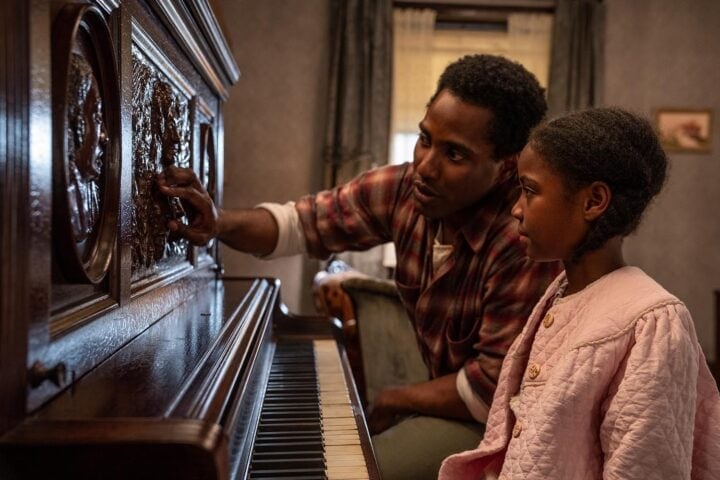
It’s a gift—or is it a cure?—that she shares with her aunt Mozelle (Debbi Morgan), who has a wandering eye like her brother Louis but, unlike him, is racked with guilt over the chaos that her affairs have brought upon herself and her loved ones. Eve’s Bayou may be told from Eve’s perspective and driven by her increasingly erratic behavior, but its beating heart is Mozelle, who’s old enough to have a clearer perspective on the lies we tell ourselves and others but wants desperately to push her young nieces out of this endless cycle of anguish and self-destruction.
Scenes featuring Mozelle slow the pace of the film, opening space for sober, mature conversations in what’s otherwise a spiraling descent into its protagonist’s inability to cope with her family’s dark secrets. Many shots are fragmented and brief, capturing little more than a close-up on a character’s feet as they walk up stairs or the flash of a look of warning between Eve and Cisely as the latter constantly wills her sister with her eyes to keep quiet.
Eve’s Bayou is a film of endless ambiguities, never more so than when it’s taking in Louis’s multivalent facial expressions. (In a long and prolific career, Jackson may never have been better than he is here, always walking a tightrope between disarming charisma and dagger-grin predatory lust.) Louis is a man who’s been wooing women his whole life and, as becomes relevant in the final act, cannot even approach his own daughters without leaning into his oily seductiveness. Louis’s maddening inability to change leads the film to its grim conclusion—one that brings all of the story’s sexual tension to a boil yet, in one final twist of mystery, leaves just enough unsaid and unconfirmed at the end to complicate any possible sense of closure.
Image/Sound
Amy Vincent’s warm, watercolor-esque outdoor cinematography looks sublime in Criterion’s 4K-sourced transfer, hazy without sacrificing clarity of definition or color saturation. The golden shimmer of sunlight refracting off of water is balanced by verdant swamp flora and light shades of pinks and blues in everything from flowers to clothing. Darker interior shots retain similar depth, including a consistent balance of the variety of Black skin tones. The 5.1 lossless audio centers dialogue clearly while using side channels to distribute the ambient sound effects of buzzing insects or bustling town noise, as well as Terence Blanchard’s supple score.
Extras
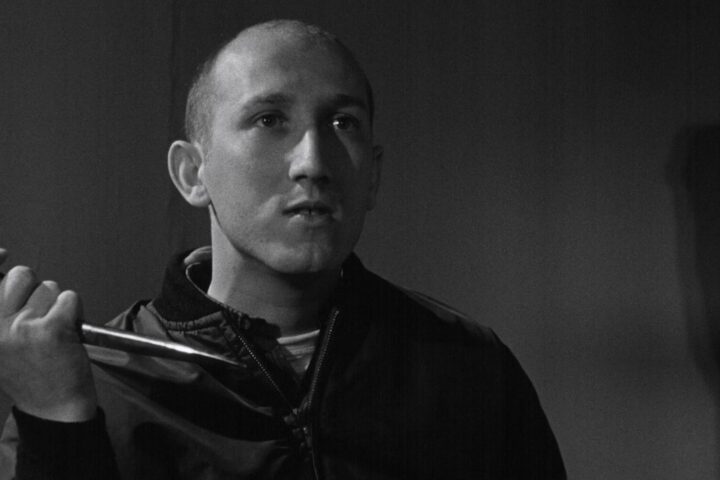
A select-scene commentary track ported over from the 2002 Lionsgate DVD features Kasi Lemmons along with producer Cotty Chubb, editor Terilyn A. Shropshire, and cinematographer Amy Vincent discussing the film’s development and production, with particular emphasis on the location shooting and how it shaped the production design. Dr. Hugo, the proof-of-concept short film that Lemmons made to pitch the feature, is also included, and it plays out almost like a prequel of the film proper, following a doctor (Vondie Curtis-Hall) whose house calls to bored housewives lead to comic tension when one woman’s husband returns home and nearly catches them in a compromising position. The short is amusing, yet in its framing glimpses of the wife’s young girl watching the doctor come and go is the seed of Eve’s Bayou’s more fraught exploration of such indiscretions. Criterion also includes newly recorded interviews with Lemmons and Blanchard, as well as a virtual reunion of cast and crew from the 2021 New Orleans Film Festival. The disc also comes with a booklet essay by film scholar Kara Keeling, who elucidates the film’s impressionistic and literary qualities.
Overall
Criterion’s transfer maximizes the beauty of Kasi Lemmons’s bold, haunting feature debut.
Since 2001, we've brought you uncompromising, candid takes on the world of film, music, television, video games, theater, and more. Independently owned and operated publications like Slant have been hit hard in recent years, but we’re committed to keeping our content free and accessible—meaning no paywalls or fees.
If you like what we do, please consider subscribing to our Patreon or making a donation.