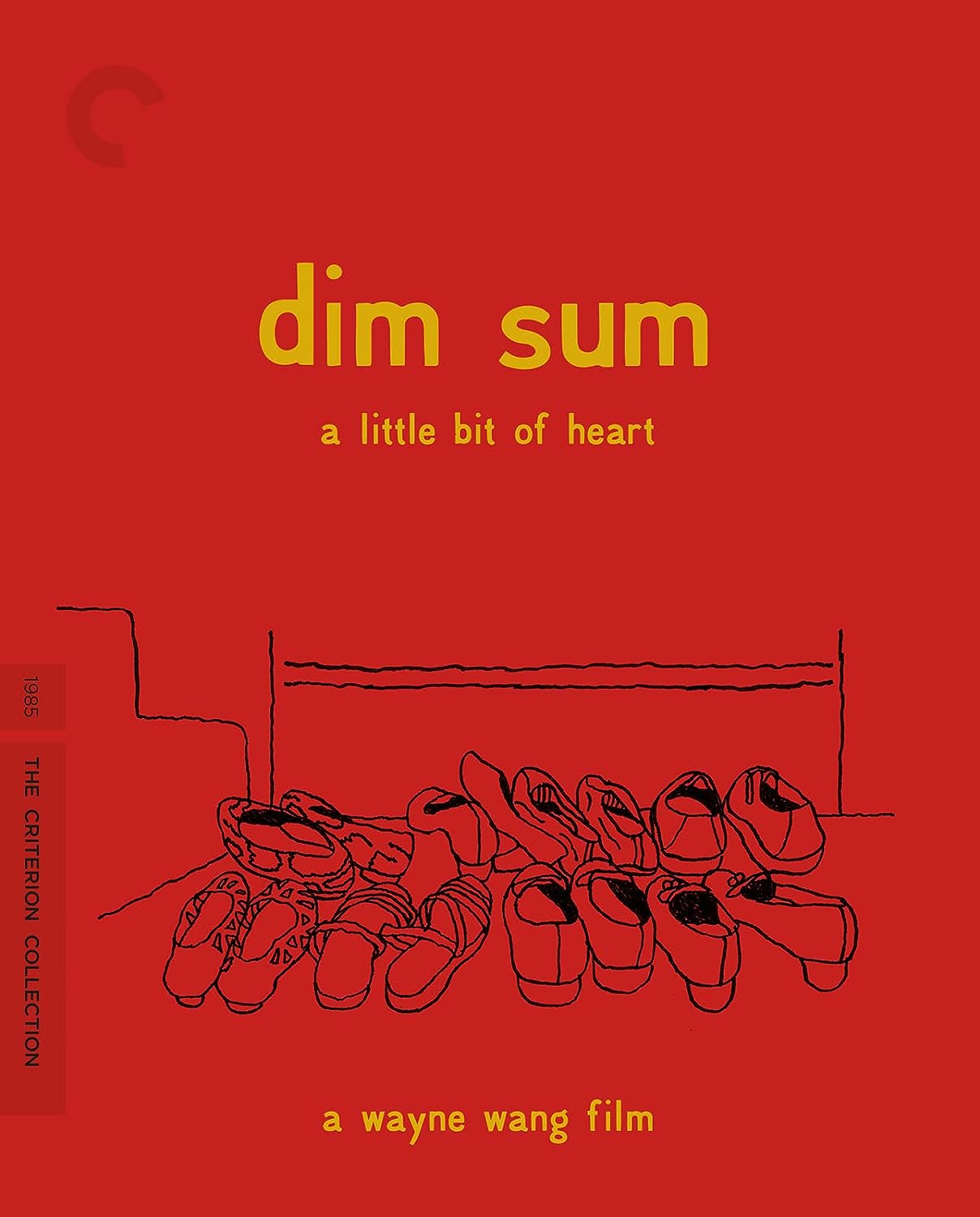
 Wayne Wang’s Dim Sum: A Little Bit of Heart, the filmmaker’s follow-up to his existential noir riff Chan Is Missing, again focuses explicitly on the Chinese American community in San Francisco. But where his debut feature found its protagonists constantly scrambling about the city, Dim Sum is set almost exclusively within, or just outside, the domestic space. Echoes of Ozu Yasujirō, specifically Late Spring, ring throughout Wang’s melodrama, whose tender, empathetic, and often funny examination of a loving, codependent mother-daughter relationship is reminiscent of Ryū Chishū and Haru Setsuko’s characters’ in Ozu’s masterwork.
Dim Sum, too, is a film of extended silences and often mundane conversations, and of emotions coursing beneath placid surfaces across settings where old customs collide with new ones. Wang makes evocative use of Ozu’s signature pillow shots throughout, reflecting elements of a Chinese community through shots of Chinatown and its surrounding neighborhoods and the various objects within the widowed Mrs. Tam’s (Kim Chew) home, where most of the film unfolds.
But Wang’s Chinese American perspective gives Dim Sum a flavor all its own. The film warmly telegraphs a sense of a lived-in life in the way that it captures cultural traditions, from a celebration of Chinese New Year, to games of mahjong being played, to the slippers that sit by the front door for people to put on. He also highlights subtler details that reflect a melding of American and Chinese cultures, from the speaking of Chinglish to the stresses that arise from Mrs. Tam’s conflicting desires for her thirtysomething daughter, Geraldine (Laureen Chew), as she wants her to get married but to also stay home and continue to be her companion.
The heart of Dim Sum is this relationship, which feels all the more authentic given that Mrs. Tam and Geraldine are played by a real-life mother and daughter. Their extreme comfort with and love for one another is clearly apparent throughout. And it not only brings a certain naturalism to the film, but their adeptness at nonverbal communication allows Wang to visually communicate a deep well of emotions without the need to spell things out.
Image/Sound
Criterion’s high-def transfer is rich in detail and sports tight grain and vibrant colors. The film’s lighting is often more on the flat side, but the nighttime scenes and those set in Uncle Tam’s dimly lit bar have a wonderful depth to them, showing off the transfer’s strong black levels and an impressive range of colors. On the audio front, the uncompressed mono soundtrack is clean, crisp, and more than robust enough to handle the occasional swells in Todd Boekelheide’s score.
Extras
In a new conversation, Wayne Wang and filmmaker and film scholar Arthur Dong have a warm rapport, bonding over the shared experience of growing up as Asian Americans. Wang compelling touches on Ozu’s influence on his work, his attempt to capture a specific area of San Francisco just outside Chinatown, and his reasons for wanting an all-Asian crew on the set. The only other extra disc is a 2004 interview with actor Laureen Chew, who talks about acting opposite her real mother and the comforts and the challenges of shooting in her own home. The package is rounded out with an accompanying booklet that includes an essay by Brian Hu that, among other things, examines Wang’s blend of formal rigor with relaxed realism.
Overall
Wayne Wang’s tender domestic melodrama gets a beautiful transfer courtesy of Criterion, though one wishes they put a little bit more heart into the extra features.
Since 2001, we've brought you uncompromising, candid takes on the world of film, music, television, video games, theater, and more. Independently owned and operated publications like Slant have been hit hard in recent years, but we’re committed to keeping our content free and accessible—meaning no paywalls or fees.
If you like what we do, please consider subscribing to our Patreon or making a donation.