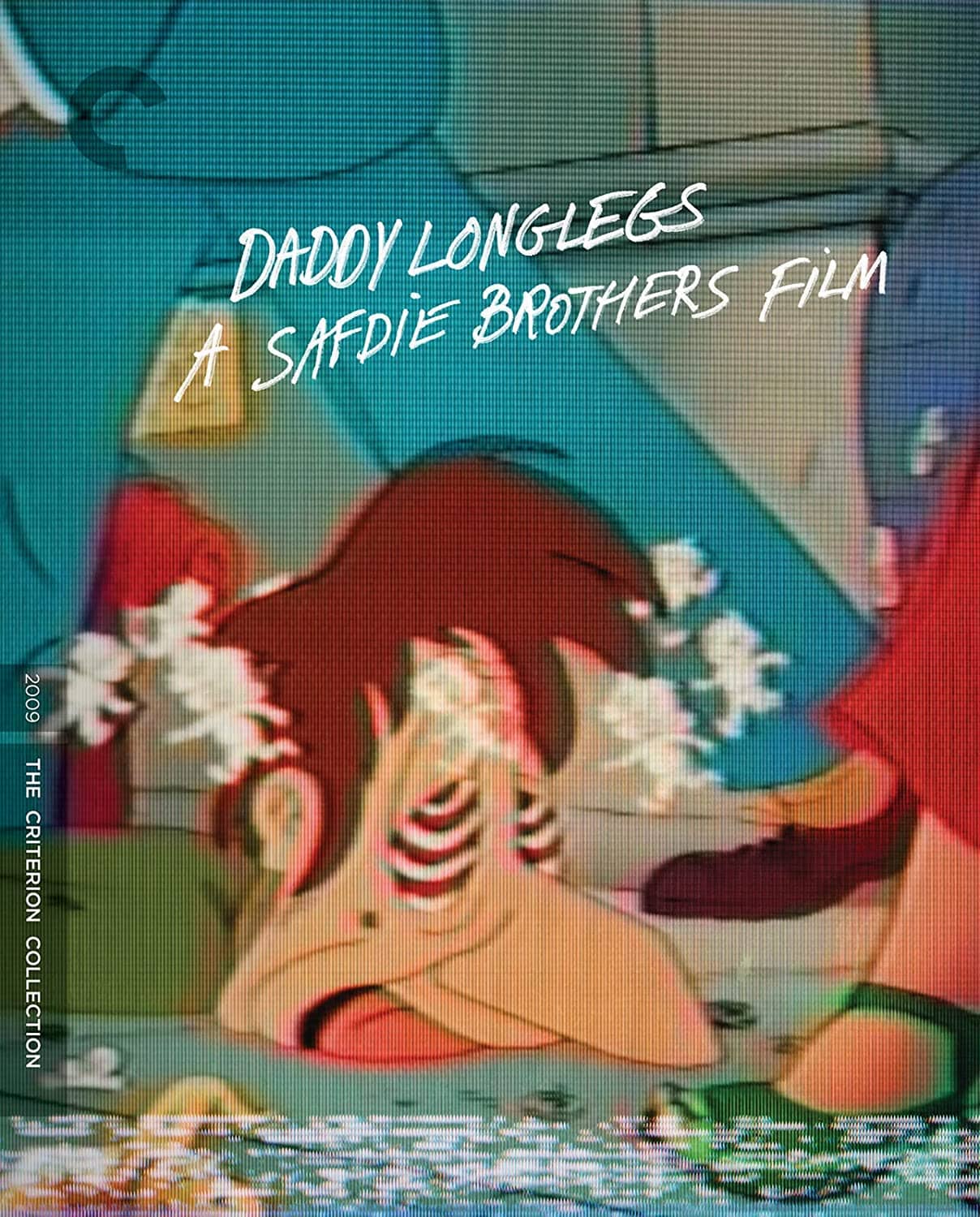
 Josh and Benny Safdie’s Daddy Longlegs follows Lenny (Ronald Bronstein), a frustrated would-be creative—you can tell by the invitingly unkempt hair, as well as his job as a movie theater projectionist—as he struggles to care for his two children over the few weeks he’s given each year to see them. Aptly, but often frustratingly so, the film’s first half also feels frustrated, as it essentially settles for letting the actors the chance to strive for realism in the traditional Cassavetes sense, which too-often equates to showily stepping on one another’s lines in a race to say virtually nothing.
Not unusually for a micro-budgeted indie, Daddy Longlegs equates realism with boredom, as its characters are rarely allowed to say anything interesting or to pleasantly surprise one another. Lenny continually fails at small tasks, whether it’s an unconvincing brush-up with the principal of the children’s school, or a prolonged argument with the ex over the phone within inappropriate earshot of the kids. This somewhat rigged procession of all that sucks is the worst of all worlds; the scenario is as predictable as a Hollywood picture, only in a more consciously awkward direction, and the execution—the self-congratulatory pauses, the shaky mud-puddle cinematography—is just as false, only without the polish that a fun, reasonably competent Hollywood picture can offer.
But little details begin to accumulate across the film and you begin to suspect that the Safdies might actually know what they’re up to. One brief, early moment of Lenny pretending to pull fish from a lake especially stands out, as it allows you to see someone who isn’t always remote, self-absorbed, and generally tedious and miserable to be around. And a midway plot turn shakes Daddy Longlegs out of its stasis: Lenny, desperate to get to work, gives his kids a watered-down adult sleeping aid to keep them from waking up while he’s gone.
This grossly negligent action works too well: The children sleep for a few days with the brief possibility that they might not awake at all. These moments, suffused with a surprising, primal horror, ironically humanize Lenny, as we see him not just as a prick, but as a father on the fringes of polite society terrified and baffled by the various checks and balances of responsibility—attention to occupation versus attention to family, private amusement versus boundaries—that a theoretically well-adjusted person takes for granted. This passage of panic, prefaced with Lenny frantically racing up and down the cramped stairwell in attempts to browbeat his neighbor into watching the kids for him, is effectively set up, and explains Lenny more vividly to us through action and body language, giving him human contradiction.
A number of moments after the bit with the sleeping pills also register: an exchange with a current girlfriend (who looks like the ex), a creepy nightmare with a giant mosquito, and yet another episode of casually alarming negligence. The look of the film, which initially serves little purpose other than to be fashionably ugly, begins to make sense, as the viewer grows to understand the narrowness of Lenny’s existence, the desperation, the money issues, and the general bafflement of two children whom he unintentionally mistreats.
Daddy Longlegs has been called nostalgic, a label that’s initially mystifying given the latter events of the film, but that word goes a way toward explaining why the film works near the end. We understand that these children are indeed seeing their father nostalgically, because their strained, frazzled connection with him is still a connection. Daddy Longlegs might have been something—a more original than usual treatment of what is basically abuse—if the earlier scenes had been more clearly worked out. As it stands, the film is a notable misfire.
Image/Sound
On Criterion’s new 4K transfer, the image has thick grain to it but never suffers from lack of detail. Most striking is the vivid, almost tactile grime of New York City’s streets. A wide range of color contrast is on display, especially whenever Ronald Bronstein’s Lenny disappears into dive bars soaked in neon red, as if entering the lowest circle of Dante’s hell. The soundtrack is remarkably enveloping despite being in mono, a testament to Josh and Benny Safdie’s early mastery of street noise and overlapping conversation to generate tension. The audio is consistently strong and bustling, and there are no issues with channel distribution.
Extras
Criterion opts for quantity over quality with the extras assembled for this disc. Some, like footage of Sage and Frey Ranaldo’s scripted first-time meeting with Bronstein, run barely a minute, while others are more substantial. A 2011 documentary by Becky Luxani, shot behind the scenes during the making of Daddy Longlegs, offers insights into the Safides’ working methods and how they approached their child actors as avatars of their younger selves. A longer documentary from 2017, made around the time that the filmmakers were riding high off the success of Good Time, delves into how much they’d grown as filmmakers, a point that’s backed up by the interviews with their collaborators on this film, including Bronstein.
A new interview with the Ranaldo silbings, along with their parents Leah Singer and Lee Ranaldo (of Sonic Youth fame), finds the young men reflecting on their experiences making the film. Other odds and ends include a nervy but comical 2008 short by the Safdies titled There’s Nothing You Can Do in which Benny Safdie plays a bus passenger drawn into an increasingly helpless argument with seemingly everyone else in the vehicle; a goofy promotional short promoting theatrical screenings of Daddy Longlegs; and a 2008 episode of Talk Show, a public-access-style interview show run by some of the Safdies’ early collaborators, who interview the brothers and other members of the crew of this film.
The disc’s accompanying booklet contains a 2009 interview with the Safdies and an essay by critic and former Cahiers du Cinéma editor Stéphane Delorme, who pulls in references ranging from John Cassavetes to Winsor McCay’s Nemo in Slumberland comic strips to discuss the curious power of Daddy Longlegs. Amusingly, the booklet even contains a faux-profile of the film’s young leads written up as the formal report of a child psychiatrist.
Overall
The Safdie brothers’ mordant but oddly nostalgic, semi-autobiographical breakout receives a strong release that not only testifies to their nascent talent at the time of the film’s making, but also to how they would go on to deliver on that early promise.
Since 2001, we've brought you uncompromising, candid takes on the world of film, music, television, video games, theater, and more. Independently owned and operated publications like Slant have been hit hard in recent years, but we’re committed to keeping our content free and accessible—meaning no paywalls or fees.
If you like what we do, please consider subscribing to our Patreon or making a donation.