“Whatever we sing was reflected in our interviews and our culture,” said Omar Sayed, a founding member of the Moroccan band Nass El Ghiwane, in a 2013 interview. It’s a very matter-of-fact statement that speaks to the band’s deep connection to their Moroccan heritage, particularly Gnawa music, as well as their heightened political and historical awareness. Their unwavering social consciousness is immediately apparent in their lyrics, which speak to ordinary Moroccans’ daily struggles and concerns, be it religious persecution, unemployment, or political corruption. And these issues are further enlivened by the group’s integration of the works of 16th-century Sufi poet Abderrahman el Majdoub and decision to sing in Darija, an Arabic dialect with a long-standing oral tradition but no written form. These localized influences are directly tied to distinct forms of communal worship and communication that only further endeared Nass El Ghiwane to fans across the Arabic world, many of whom saw themselves reflected in the feverish protestations of the dynamic quartet.
As the Nass El Ghiwane performances captured in Ahmed El Maanouni’s Trances attest to, the band has an extraordinary ability to dissolve the barrier between themselves and their audience through the hypnotic, trance-like quality of their sound. And whether documenting Nass El Ghiwane’s performances in front of a spirited crowd of thousands in a large venue or a few dozen onlookers on a side street, the 1981 documentary finds the band casting a spell with their frenzied rhythms on everyone within a shared space, including themselves.
El Maanouni’s extensive use of close-ups highlights the sheer intensity of the musicians’ physical exertions—their sweaty faces and pained expressions exuding a sense of transcendence that their uptempo, looping beats and melodies transmit to their audiences. Based on the countless shots of people lost in Nass El Ghiwane’s music—some driven to charge the stage and embrace the band’s members, others engaging in passionate group chants praising the band or Allah—it’s abundantly clear that their music is overpowering and charged with spirituality for nearly everyone in attendance. And while overly excited audience members aren’t exactly novel in concert films, the cultural specificity of the music and the people enjoying it lends Trances a uniquely compelling ethnographic quality.
Many of the film’s shorter sequences depict Nass El Ghiwane’s touring across Morroco, and they provide sterling snapshots of ordinary lower-class Morrocans, such as those living in the slums of Casablanca. One scene finds Abderrahmane “Paco” Kirouche casually playing his Guembri, a traditional guitar-like instrument, in a mosque as one man dances himself to the point of exhaustion and passes out on the floor. In another spontaneous occurrence, Paco sets down his woodworking to join a street performer playing outside of his shop, jamming with him for a while before chatting him up about music history.
Fleeting moments of happenstance such as these epitomize the free-wheeling nature of Trances at its peak and the down-to-earth quality that made Nass El Ghiwane a band very much for the Moroccan people. When El Maanouni diverts his gaze from the band in action, cutting to interviews with them expounding on their philosophies of life and music, the film regrettably grinds to a halt. Like Nass El Ghiwane, Trances is best when it’s fully engulfed by the impulsive, frenetic energy of live performance, where true ecstasy can be found.
Image/Sound
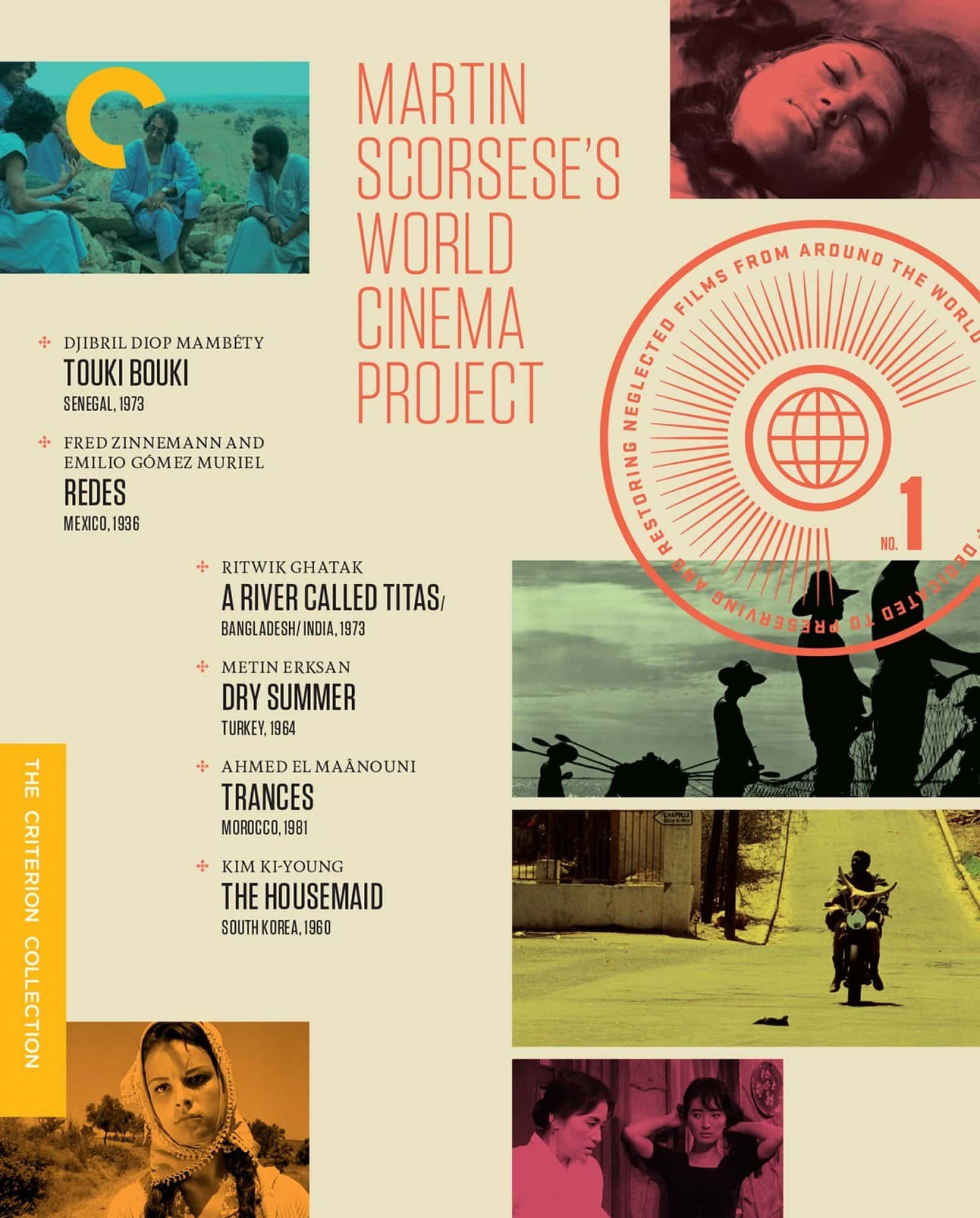
The Criterion Collection has transferred the same restoration of Trances that was included on their first World Cinema Project box set from 2013. As on that release, the decades that the film remained in obscurity outside of its native country of Morocco are apparent in the quality of the print, but most signs of damage and debris have been dutifully removed. Unsurprisingly, the image here benefits from Trances no longer having to share a disc with a second feature. It may only be a nominal improvement, but when you’re dealing with source materials of less-than-desirable quality, any upgrade is a good thing. As opposed to the image, the audio is consistently solid and especially robust during the numerous performances.
Extras
The two extras included on this Blu-ray have been ported over from the first World Cinema Project box set. Martin Scorsese’s brief intro gives one a taste of why he was so drawn to Trances, and to the point that he wanted to spotlight it on that set. And interview program with director Ahmed El Maanouni, producer Izza Génini, musician Omar Sayed, and Scorsese digs a bit deeper, both in terms of how the film captures the ecstasy of the performers and audience alike and in speaking to the popularity and importance of Nass El Ghiwane throughout the Arab world. Rounding out the package is an essay by film scholar Sally Shafto, who provides an overview of the history of Moroccan cinema and succinctly contextualizes Nass El Ghiwane’s rise to fame within Morocco’s period of post-independence.
Overall
Criterion’s solo release of Ahmed El Maanouni’s Trances is nothing more than a straight port of the transfer and limited extras included in their first World Cinema Project box set. But the film remains a fascinating glimpse into a culture and musical style rarely seen on film.
Since 2001, we've brought you uncompromising, candid takes on the world of film, music, television, video games, theater, and more. Independently owned and operated publications like Slant have been hit hard in recent years, but we’re committed to keeping our content free and accessible—meaning no paywalls or fees.
If you like what we do, please consider subscribing to our Patreon or making a donation.