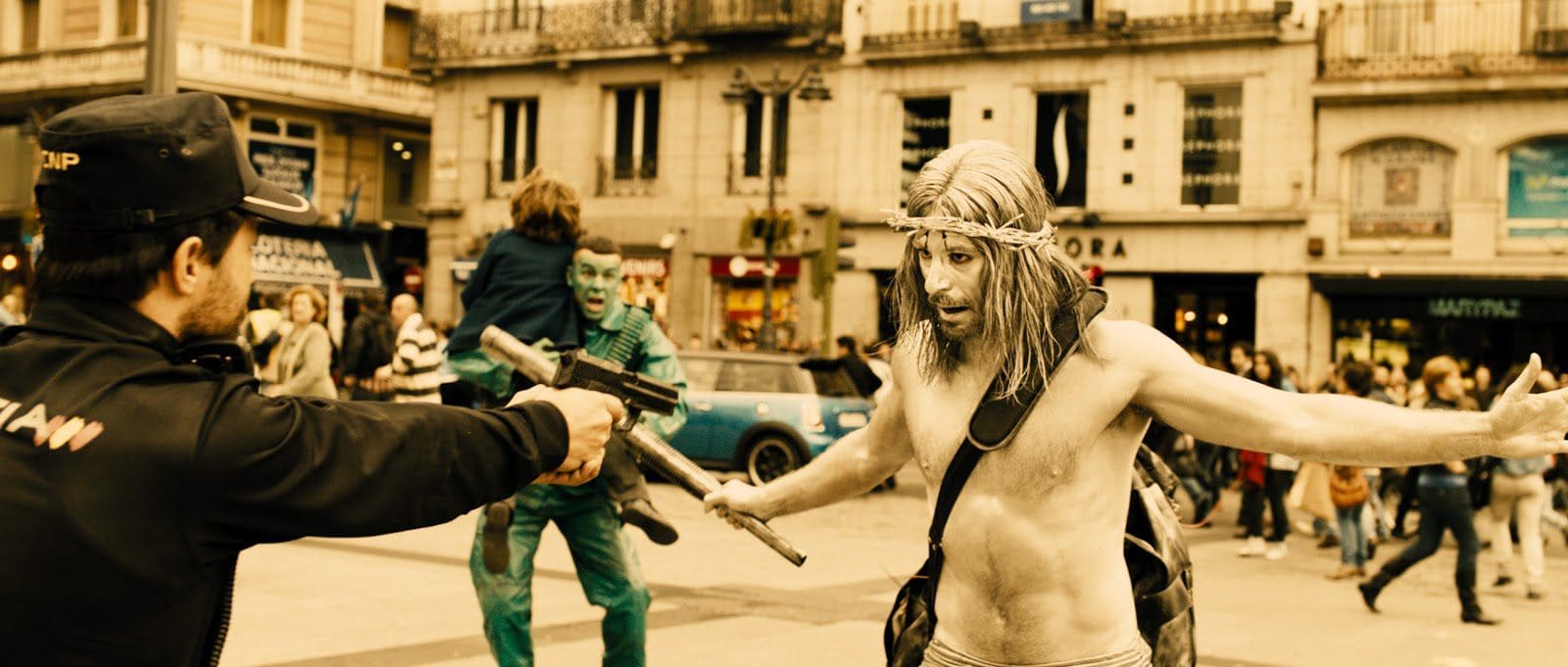
Álex de la Iglesia has a real flair for wild action sequences that remain exhilaratingly coherent and sensical.


Chuck Bowen's writing has appeared in The Guardian, The Atlantic, The AV Club, Style Weekly, and other publications.
Álex de la Iglesia has a real flair for wild action sequences that remain exhilaratingly coherent and sensical.

Frontloaded with a surprising amount of plot, All Cheerleaders Die takes forever to get going, but it’s the filmmakers’ hypocrisy that really grates.

The home-video format, which encourages binge viewing, could serve to accentuate the nagging hollowness of the show’s busy-body plotting.

The art is the reason to see the enjoyable but egregiously slight Remembering the Artist.

Ti West has bitten off more of a premise than his classically modest barebones approach to horror movies can presently chew.

Marc Bauder’s documentary quietly detonates the conservative notion that our largest corporations should be allowed to duke it out in metaphorical no-holds-barred cage matches.

King shrewdly connects Hodges’s torment, the stuff of formula cop movies, to larger American feelings of rootlessness and economic despair.
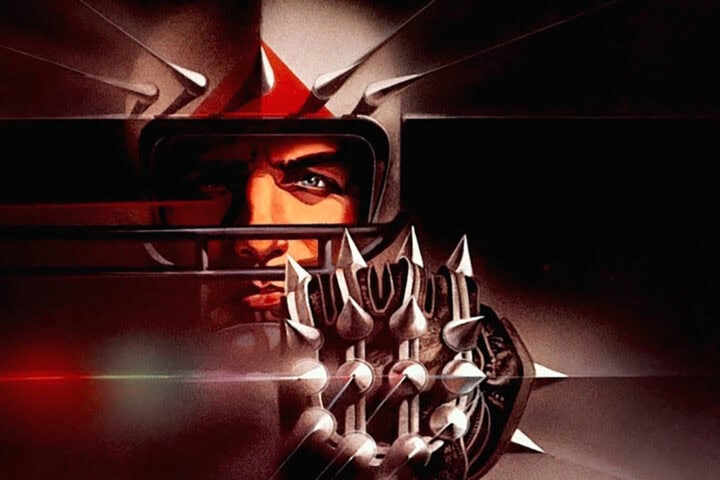
Rollerball remains a poignant and unusually prescient vision of our world as defined by Walmart and Exxon-Mobil.

Arnaud des Pallières unsettles the audience’s usual feelings of vicarious blood lust.

Herzog’s idiosyncratic horror classic remains a vital conversation between two distinct generations of brilliant German filmmakers.

The film ultimately leaves you feeling as if you’re stuck watching your cousin’s boring slideshow of his trip to Palookaville.

Fleischner paints a vivid portrait of New York life, with its dreamers and schemers and working-class people just trying to pay the bills.

The film is Wilder’s definitive expression of his master theme of vice as the most reliable and trustworthy gauge of reality.

There are cheap shocks in the film, but there are also terrifying moments that poetically command our empathy.

It’s too neat, too tasteful and narcotizing, for a work that’s full of diseases and serial killers and classist atrocity.

Atom Egoyan’s hypocritical prestige-movie skittishness is more offensive than ordinary sensationalism.

It portrays a war against self-pity that’s unusually resonant for its willingness to plumb the legitimately pitiful.
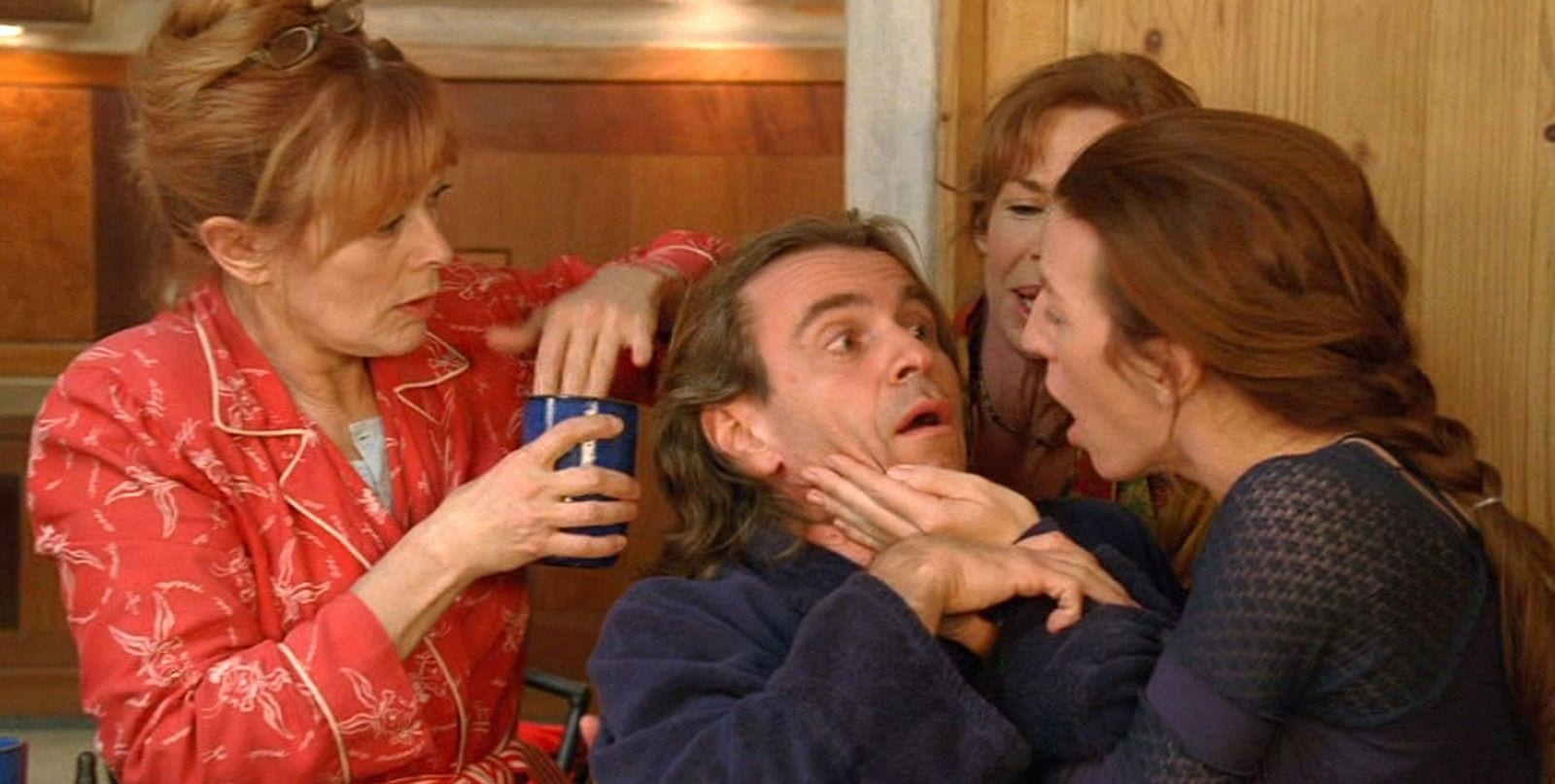
Like a number of cult directors to emerge in the 1970s, Henry Jaglom values a party atmosphere at the expense of narrative cohesion.

This beautifully composed, workmanlike noir will be enjoyable to those looking to trace the evolution of Sirk’s complex mise-en-scène.

A potential barroom joke blossoms into a surprisingly poignant portrait of three aging men wrestling with how to shed their mortal coil.