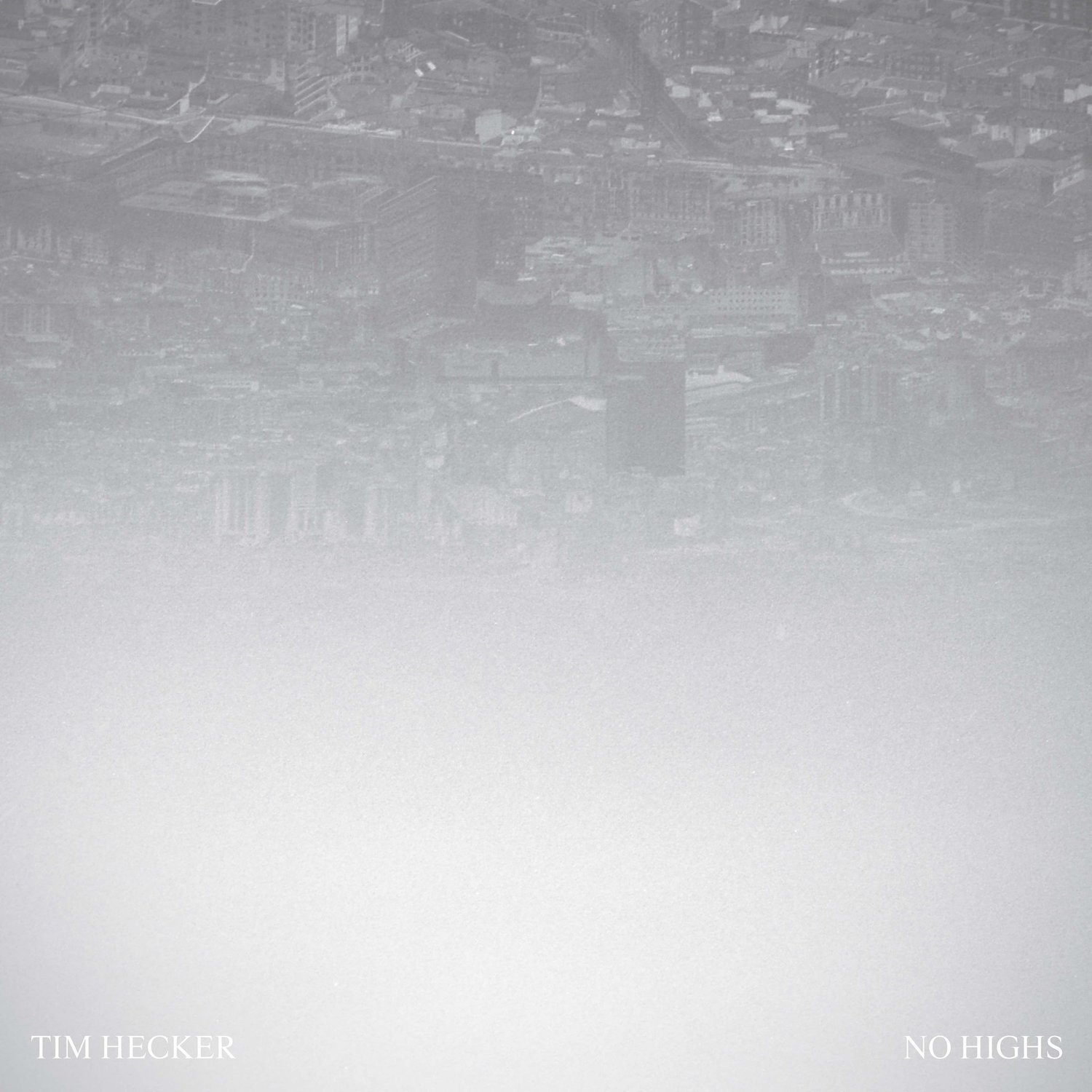
 “The latest by Canadian composer Tim Hecker serves as a beacon of unease against the deluge of false positive corporate ambient currently in vogue,” reads the cocksure press notes for No Highs, Hecker’s 11th studio album. Misgivings about the state of ambient music aside, at least the first part of that statement rings true, as a sense of foreboding restlessness permeates the album’s most stimulating material. The last thing you’ll be doing is dozing off to these overwhelmingly fretful compositions.
While No Highs functions well enough as a cohesive body of work—with a few slight, if still noticeable, suites popping up throughout—the album’s main attractions come in the form of a trio of eight-minute-plus heavyweights: opener “Monotony,” the haunting “Lotus Light,” and spectral “Anxiety.” All three are fascinating exercises in tension-building and casual release, each steadily building to a climax reasonably early in their runtimes, holding for a minute or two at peak intensity, then marching beyond the point where they should reasonably end.
These songs’ unconventional, often enigmatic qualities—including the occasional stray appearance from saxophonist Colin Stetson, whose virtuosic performances are weaved in and out the synth-heavy mixes—help to instill a feeling of anxiousness across the album. Trying to guess where each of one of these pieces might go feels like a fool’s errand: At the three-and-a-half minute mark of “Lotus Light,” for instance, a loud, high-pitched beeping noise goes off for seemingly no reason other than to startle listeners, and the effect is downright hair-raising.
This is why No Highs’s remaining eight tracks feel less substantive when taken on their own merits. The airy “Winter Cop” and glacially gorgeous “Sense Suppression” are rather scant offerings that don’t provide much to chew on besides some pleasing acoustics. And while “Total Garbage” certainly conjures some ominous soundscapes from what sounds like an overly rosined bow, it pales in comparison to the alien textures of the subsequent “Lotus Light.”
Still, No Highs’s, well, “highs” rank as some of Hecker’s most accomplished and dynamic work to date. And the album serves as a continued refinement of the talents that he displayed on 2006’s immense Harmony in Ultraviolet and 2016’s confrontational Love Streams, even if it’s ultimately not as consistent. Its atmosphere is so suffocating that “Anxiety” may accurately sum up most listeners’ emotional states after listening to the album in full—and considering No Highs’s ambitions, that’s perhaps the highest possible praise one could bestow upon it.
Since 2001, we've brought you uncompromising, candid takes on the world of film, music, television, video games, theater, and more. Independently owned and operated publications like Slant have been hit hard in recent years, but we’re committed to keeping our content free and accessible—meaning no paywalls or fees.
If you like what we do, please consider subscribing to our Patreon or making a donation.