

In some sense, house music has never gone out of favor, but a resurgence has been bubbling up from underground and niche circles for the last few years. This reached a boiling point in 2022, with three of the music industry’s biggest names—Beyoncé, Drake, and the Weeknd—recording entire projects with club culture at their center, drawing from a swath of electronic music history. Even rappers such as Megan Thee Stallion and Rico Nasty incorporated dance beats into their respective albums this year, while genre-blurring artists like the post-rock duo Sam Prekop and John McEntire leaned into the dance-forward momentum to some renown.
While some boogie-inspiring electronic music impressed us this year (chief among them two stunning efforts by Charlotte Adigéry and Bolis Pupul and Daphni), we were more transfixed by synthetic sound that prized texture over traditional song structure (Björk, Whatever the Weather). Discontented moods like those conjured by Caterina Barbieri and Burial mostly prevailed, but intermittently, artists like the ever-ebullient duo Sofi Tukker still reminded us of electronic music’s potential to produce a contact high. Charles Lyons-Burt
Honorable Mentions: Bad Boy Chiller Crew, Disrespectful; Axel Bowman, LUZ/Quest for Fire; DJ Python & Ela Minus, ♡; Hudson Mohawke, Cry Sugar; µ-Ziq, Hello; Naked Flames, Miracle in Transit; Pantha du Prince, Garden Gaia; Sam Prekop & John McEntire, Sons Of; The Soft Pink Truth, Is It Going to Get Any Deeper Than This?; TSHA, Capricorn Sun

Charlotte Adigéry & Bolis Pupul, Topical Dancer
Belgium-based duo Charlotte Adigéry and Bolis Pupul’s debut album is a marvel that juggles several ambitious pursuits at once, accomplishing each with devastating ease. Topical Dancer is bursting with commentary about bigotry and feminism without ever feeling polemical or didactic, subverting its non-finger-wagging assertions with absurdism and non sequiturs. But most importantly, even while Adigéry is making memorable observations about consumerism, Topical Dancer never less than a delivery system for relentless dance-oriented grooves. Reminiscent of Lindstrøm and Christabelle’s Real Life Is No Cool—though the delineation between singer and producer isn’t as distinct here—the beats that Adigéry and Pupul cook up are elemental yet still as deliciously percussive and bass-forward. Most of the songs utilize a charmingly rudimentary combination of guitar, drums, and bulging bass, with the occasional appearance of what sounds like a Moog analog synth on tracks like “Mantra.” Topical Dancer is a brainy, ethically conscious survey of modern cultural norms that both deconstructs and rejuvenates clichés, questions why we police other peoples’ behaviors in the first place, and Trojan Horses it all in the guise of a collection of bops. Lyons-Burt

Nia Archives, Forbidden Feelingz
“Give me a motherfucking breakbeat,” Nia Archives demands via a sample of Hardsequencer’s radioactive “Some Motherfucking Breakbeat” at about the halfway point of “18 & Over,” the third track from her invigorating Forbidden Feelingz EP. This simple request is then fulfilled a few seconds later. The album features a delicate tribute to Maya Angelou, where the poet’s vocals interlock and eventually bounce off of Archives’s mantras, but even that track features comparably (and confidently) volatile breakbeats. Like much of Forbidden Feelingz, the music and voices of yesteryear help to shape the direction of Archives’s drum ‘n’ bass-heavy genre fusions, such as the EP’s dynamic title track, which uses a sample of Peter Falk’s popular TV detective Columbo talking to help set the foundation for an especially frenetic ode to self-care. Paul Attard

Caterina Barbieri, Spirit Exit
Listening to Caterina Barbieri’s stratified synthesizer arrangements evoke what one might call a true transcendental state. The radiant “Transfixed,” the second track off of Barbieri’s Spirit Exit, steadily builds from a few stray organ keys into a sweeping, heavenly melody, while the following song, “Canticle of Cryo,” sounds like a deconstructed church hymn. Recorded at the Italian composer’s apartment in Milan during the start of the Covid-19 pandemic, the album conveys a sense of isolation from the outside world, where each wail of electronic noise sounds like a distress signal being shot out into the ether. It’s the perfect soundtrack for our socially distanced era, with cuts like the crestfallen “Broken Melody” conveying the hyper-precarity of everyday living: “Like a melting snowflake in your mouth/Our future is so volatile.” Attard

Björk, Fossora
Björk’s Fossora is often outright ecstatic, with fiery gabber beats, proudly oblique brass, and lyrics celebrating interpersonal connection. Aesthetically, the album can feel intangible or obscure, but thematically it has many of the underpinnings of your standard pop album, in that it centers largely around love in various forms—romantic, familial, societal. Likewise, Björk’s feminist perspective, colored by decades of experience and a penchant for ecological imagery, grounds Fossora in real personal and political struggles when its sound grows eccentric, even by Björk’s standards. The title track is declaratory and headbanging in ways that evoke her work with Timbaland on 2007’s Volta, and, in stark contrast, “Her Mother’s House” is gorgeously ethereal. But while there are plenty of sonic and lyrical callbacks to Björk’s prior work, Fossora still feels like an evolution for an artist who refuses to rest on her laurels. Eric Mason

Burial, Antidawn
Even on a hot summer day, Burial’s Antidawn is liable to fill your body with a wintry chill. Gray and despairing, the EP communicates a degree of distance and abstraction, hinting at the lack of community and extremes of wealth and poverty in urban life without getting explicitly political. Its power stems from that reluctance to spell its ideas out too bluntly. Amid electronic drones and static hiss, voices poke out to mournfully intone phrases like “let me hold you for a while” and “I’m in a bad place.” While ditching the last remnants of dance music from Burial’s sound, Antidawn is structured around constant change while remaining carefully composed. Steve Erickson

Daphni, Cherry
Oftentimes in criticism, significance is mistaken for greatness. But what makes Dan Snaith’s Cherry so remarkable, or at least what makes his Daphni project’s third album so fun on a moment-by-moment basis, is how effortlessly it flirts with greatness without ever needing to adopt an air of self-importance. Taking a “less is more” approach to arrangement, most of the album’s material sits somewhere in the two-to-three-minute range, contains one or two key compositional ideas, and usually eschews the most basic of listener expectations, like how “Always There,” with its wild Pungi instrumentation, keeps building to a drop that never properly materializes. Look no further than the jazzy “Cloudy” to get a sense of the plainspoken pleasures that Cherry readily supplies, which consists of a few basic piano loops stretched into a euphoric seven-minute long jam session and serves as the album’s most convincing evidence of Snaith’s adept skills as a producer. Attard
Kelly Lee Owens, LP.8
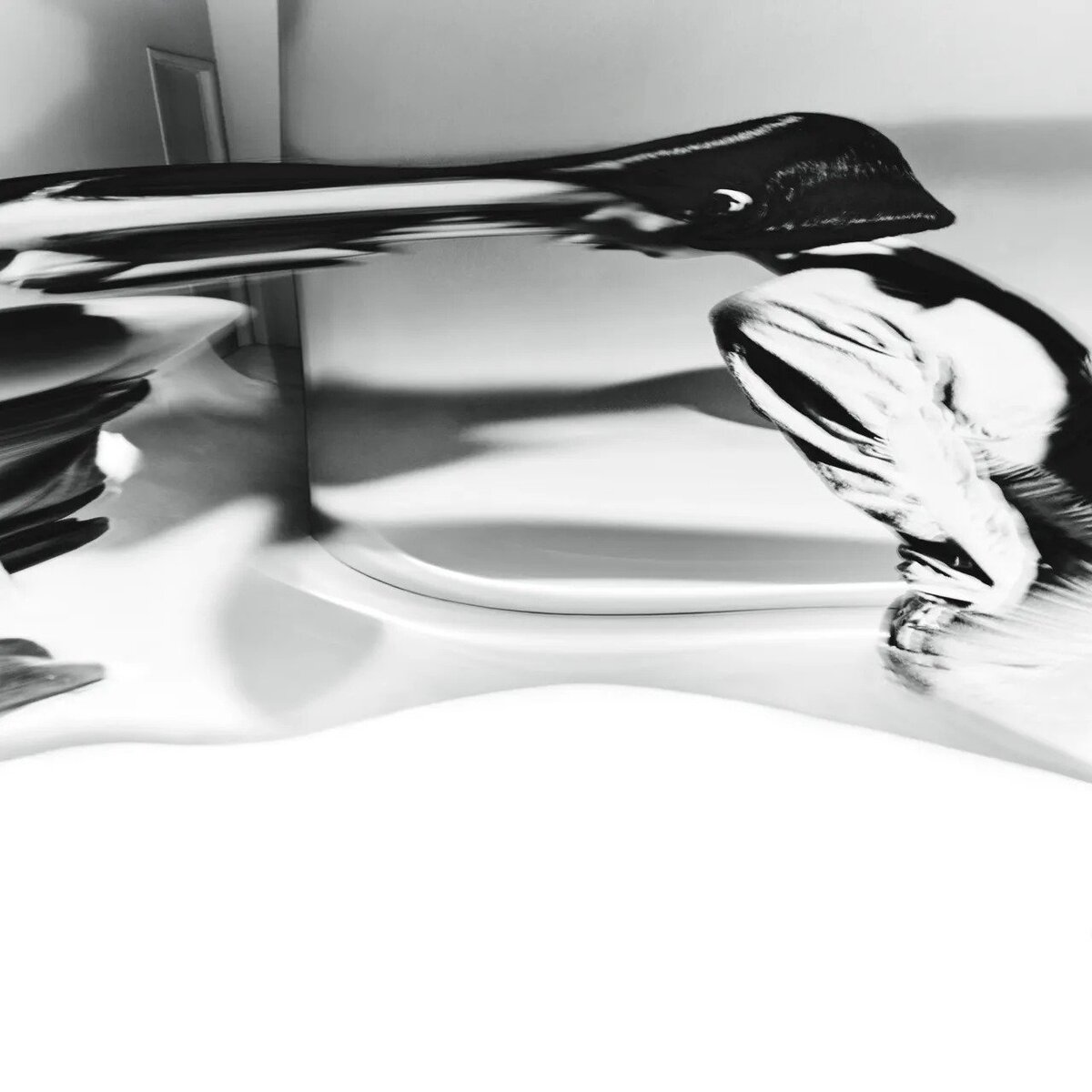
With her third album, LP.8, Kelly Lee Owens makes a mad gamble, throwing incremental evolution to the wind and imagining what her eighth album might sound like. From its first track, “Release,” the Welsh singer and producer pivots starkly, with double-time, unrelenting 808s and satisfying but jolting steam hisses. LP.8 is a feat of layering and contrast: Tendrils of Owens’s quaking, delicate vocals are woven through synth patterns and soundscapes, flitting between the unrelenting (“Voice”) and the atmospheric (“Nana Piano”). Indeed, like Julianne Barwick before her, Owens is interested in the directionality of sound and how a song can traverse spaces, playing with the internal and external. The album is a submergence into ambient mystery that truly leaves us at a loss guessing where Owens will go from here. Lyons-Burt

Kali Malone, Living Torch
Kali Malone’s minimal drone compositions require your undivided attention, and the two-part Living Torch truly demands that you listen not with your ears, but with your soul. After all, the rich, complex subtleties that her music takes on are, at times, so miniscule that you practically need a microscope to discern them. The album itself seemingly in a constant state of tonal and textural metamorphosis. Starting with austere meditations and working her way into grandiose arrangements, Malone traverses a rarified zone of barren soundscapes at a measured speed. Each note carries a clearly defined weight and character, resulting in a meticulous effort that rewards both patience and keen perception in equal measure. Attard

Sofi Tukker, Wet Tennis
Electronic-pop duo Sophie Hawley-Weld and Tucker Halpern, a.k.a. Sofi Tukker, have made a name for themselves by drawing from some of the most far-reaching sounds and influences in dance music, and Wet Tennis, continues in this tradition. The album stages a 35-minute dance party that’s tempered, as well as bolstered, by notes of reflective melancholy. The album is predominantly ebullient in spirit, though, and it all comes to a head on “Mon Cheri,” a bona fide floor filler featuring the incomparable Amadou & Mariam. It’s as representative a creation as you’ll find on Wet Tennis: a celebration of globalism, love, and exuberance flowing from a wellspring of sources. Lyons-Burt

Whatever the Weather, Whatever the Weather
Whatever the Weather is the alias of 27-year-old British electronic musician Loraine James, who made this list last year for Reflection, a striking, sometimes chaotic collection of clanging, unpredictable IDM. James’s work here takes a more serene approach, emphasizing improvised keyboard tones and extended intervals of softly whooshing white noise. This approach means that little fractures and interruptions—like the sudden flutter of excitable, jumbled breakbeats on “17°C” or the propeller-like rumble on “25°C ”—register all the more intensely. Like Mother Nature’s cyclical essence, Whatever the Weather sways between the placating, interwoven keys of “6°C” and, just two degrees away, the cavernous stew of “4°C,” which feeds the Grimes-esque vocal processing of a twisted, childlike falsetto into a mess of sputtering, buzzing sounds. Traversing these various climates, James maintains a steadiness that seems to accept and welcome whatever the forecast brings. Lyons-Burt
Since 2001, we've brought you uncompromising, candid takes on the world of film, music, television, video games, theater, and more. Independently owned and operated publications like Slant have been hit hard in recent years, but we’re committed to keeping our content free and accessible—meaning no paywalls or fees.
If you like what we do, please consider subscribing to our Patreon or making a donation.



wow. Has music died, or is it just really sick?
We need to get back to 70’s rock and roll. Even disco is netted than this garbage.
In the XX century music had the value, however in the current time due to internet piracy it worth nothing. It’s on the same level as garbage, want you it to be or you don’t. So for the artists there’s simply no reason to put their heart into it. That’s how it goes.