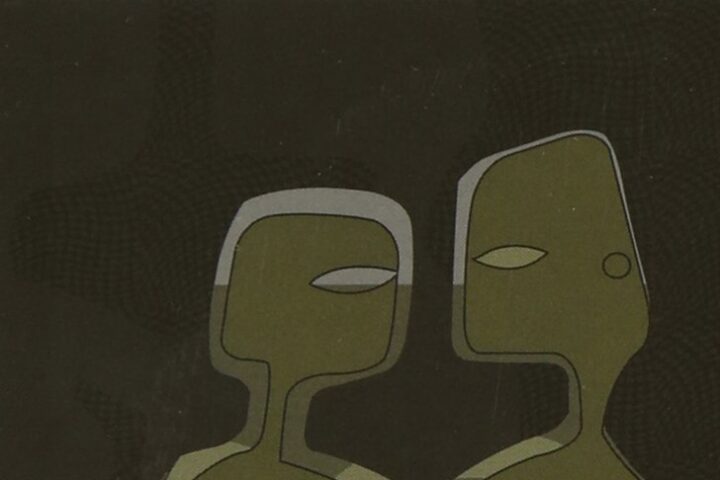
Under the alias Mr. Fingers, Chicago DJ Larry Heard has spent decades refining a sound that, on paper, borders on austere: drum patterns that rarely deviate, circling basslines, and chord sequences that seem wary of committing to anything resembling a progression. On Leev Ur Mynd, this approach can register, depending on your tolerance for repetition, as either masterful or stubborn to a fault.
It’s striking how little Heard’s formula has shifted as contemporary house music has tilted toward maximalism. The tracks here rarely build so much as they accrue, each new element sliding into place with such restraint that it nearly slips past unnoticed. The result resists the usual metrics of development, asking instead to be judged by the interplay between parts rather than any overt sense of forward motion. You can dance to it but only within the limits it sets.
Heard’s harmonic language is richer than it first appears, even when everything seems locked into a single chord. The voicings—major 7ths, minor 9ths, the occasional suspended cluster—barely move, shifting internally as small changes in individual notes subtly alter the mood without calling attention to themselves. Simple musical figures gain weight through subtle variation on tracks like “April Rain” and “Ribbons.”
Heard’s rhythms across the album’s tracks work the same way: The kicks stay put, but the rest of the percussion drifts just enough to keep the grooves from settling. If anything, Leev Ur Mynd is a reminder that complexity doesn’t have to be obvious, and that working with very little can still yield something surprisingly intricate.
Where Leev Ur Mynd falters is in its rigid reliance on these strategies, without pushing them much further. “Tension,” with its harsher intervals, and “Enceladus 5,” which edges toward something more ambient, suggest an expanded palette but neither gathers enough force to shift the album’s center of gravity. The vocal tracks add structure, though they feel intentionally underwritten, as if wary of committing to anything too declarative.
But none of this meaningfully undercuts the album’s quiet pleasures. Heard still has an unmatched feel for how a groove should sit and how a track can sustain itself on a handful of well-chosen elements. There’s a stubborn elegance in the way Leev Ur Mynd refuses escalation, choosing instead to settle into its own logic and trust the listener to meet it there. It doesn’t expand the boundaries of Heard’s sound in any consequential way, but the album reaffirms how much ground he can cover without ever seeming to move very far at all.
Since 2001, we've brought you uncompromising, candid takes on the world of film, music, television, video games, theater, and more. Independently owned and operated publications like Slant have been hit hard in recent years, but we’re committed to keeping our content free and accessible—meaning no paywalls or fees.
If you like what we do, please consider subscribing to our Patreon or making a donation.