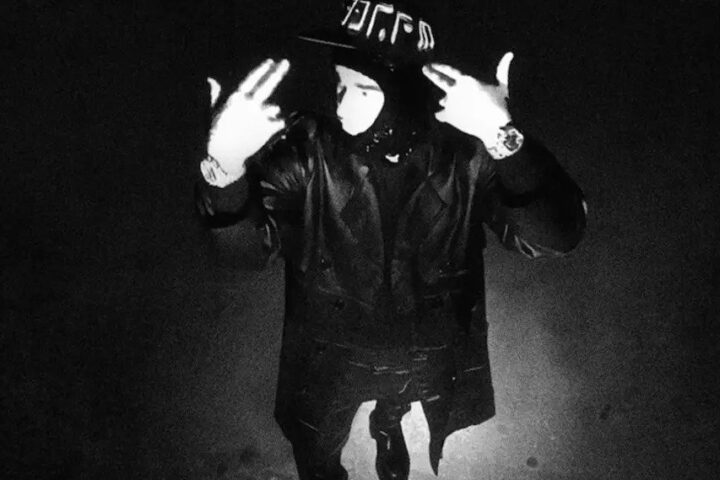
Across the 26 tracks that comprise Pink Tape, Lil Uzi Vert raps, sings, squeals, screams, and even screeches their way through a little of every genre influence that’s helped define the Philadelphia rapper’s polychrome sound since 2017’s Luv Is Rage 2. The nearly 90-minute album spans heavy metal (“Werewolf,” a collaboration with British Metalcore outfit Bring Me the Horizon), energetic pop-punk (“Amped”), hyperpop (“X2”), candy-coated trap (“Days Come and Go” and “Died and Came Back”), and industrial witchcore (“Fire Alarm”).
There’s something of a skeletal framework by which Uzi has sequenced this sprawling opus, one where by the time we get to the hard Jersey Club banger “Just Wanna Rock,” it feels like a natural progression of the album’s wide-ranging vision rather than a leftfield grab for attention. There’s an almost gleefully breathless irreverence to the way Uzi picks up and immediately drops ideas, dipping in and out of different melodic pockets or styles at a moment’s notice. With its cosmic-sounding beat and soaring, vowel-emphasizing hook, opener “Flooded the Face” is classic Uzi, only to be upended by the following track, “Suicide Doors,” which ranks as one of the biggest, loudest, and most exciting things they’ve done to date.
“Suicide Doors” kicks off with a brief interview clip of comedian and influencer Charleston White claiming he could never identify an Uzi song but knows the rapper is a “sissified lookin’ n*gga that put fingernail polish on his motherfuckin’ nails,” right before a chilling synth line courtesy of co-producer Arca creeps into the mix. After Uzi spews a few braggadocious taunts (“Fuck you, and fuck your bitch”), a series of explosive guitar riffs begin to subsume the remainder of the track, building to an unabashedly emo second verse: “Suicide doors/Suicide whores tryna fuck me for the fame/I just wanna crash/I just wanna crash out in a Track’.”
Other moments on Pink Tape approach that level of delirium, most notably “Nakamura,” where Uzi gracefully rides on top of professional wrestler Shinsuke Nakamura’s entrance theme, and “Crush Em,” which is loaded with slippery 808s that serve as the perfect musical motif for the refrain “swervin’ and smashin’ all over the place just like I got road rage.” The album begins to swirl into one amorphous, uncategorizable style that feels like a culmination of everything Uzi has been building toward over the past six years.
Pink Tape isn’t without its swing and misses, such as a karaoke-grade cover of System of a Down’s politically charged “Chop Suey!,” and “Blue (Da Ba Dee)”-sampling “Endless Fashion,” which is the clearest example of Uzi engaging in gonzo stunts with little discernible payoff. (In particular, Nicki Minaj’s strained guest spot, with a line about having a Republican doctor who will make “my ass great again,” proves the pop-centric lane the Queen of Rap paved for herself in the early 2010s might be officially closed.)
But even these blunders still offer some interesting quirks, including the utterly obnoxious way Uzi belts out “I got a Chinеse girl, yeah, she from Shanghai” on “Endless Fashion,” where they stress the “ang” in “Shanghai” for so long that it seems as if they’ve forgotten the rest of the lyrics. Pink Tape at least attempts bold things, as opposed to the vast majority of contemporary hip-hop albums, which are content to repeat themselves ad nauseam.
Still, perhaps Pink Tape’s biggest blunder might be how ephemeral of an experience it amounts to, where, like taking a big bite of cotton candy, many of the songs here instantly dissolve upon first contact. There simply isn’t much in the way of staying power to the bleary “Patience” or any of the three throwaway bonus tracks beyond some absurdist lines and a few neat vocal melodies. But taken as a whole—something that’s frequently overlooked in a singles genre such as rap—this unabashedly creative album showcases its creator’s ever-developing abilities.
Since 2001, we've brought you uncompromising, candid takes on the world of film, music, television, video games, theater, and more. Independently owned and operated publications like Slant have been hit hard in recent years, but we’re committed to keeping our content free and accessible—meaning no paywalls or fees.
If you like what we do, please consider subscribing to our Patreon or making a donation.