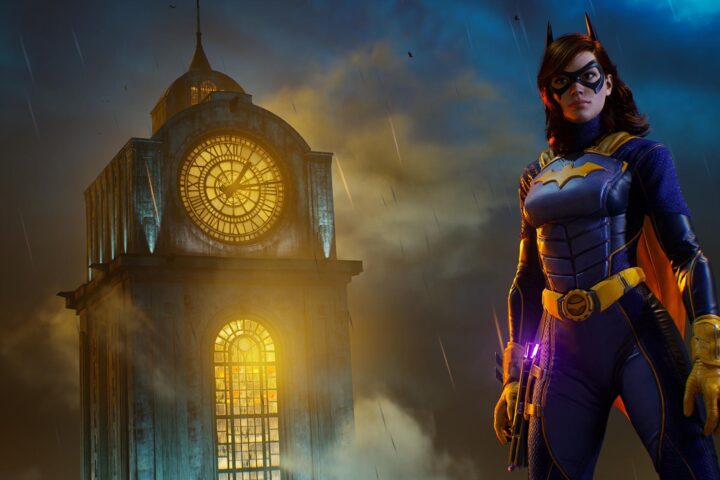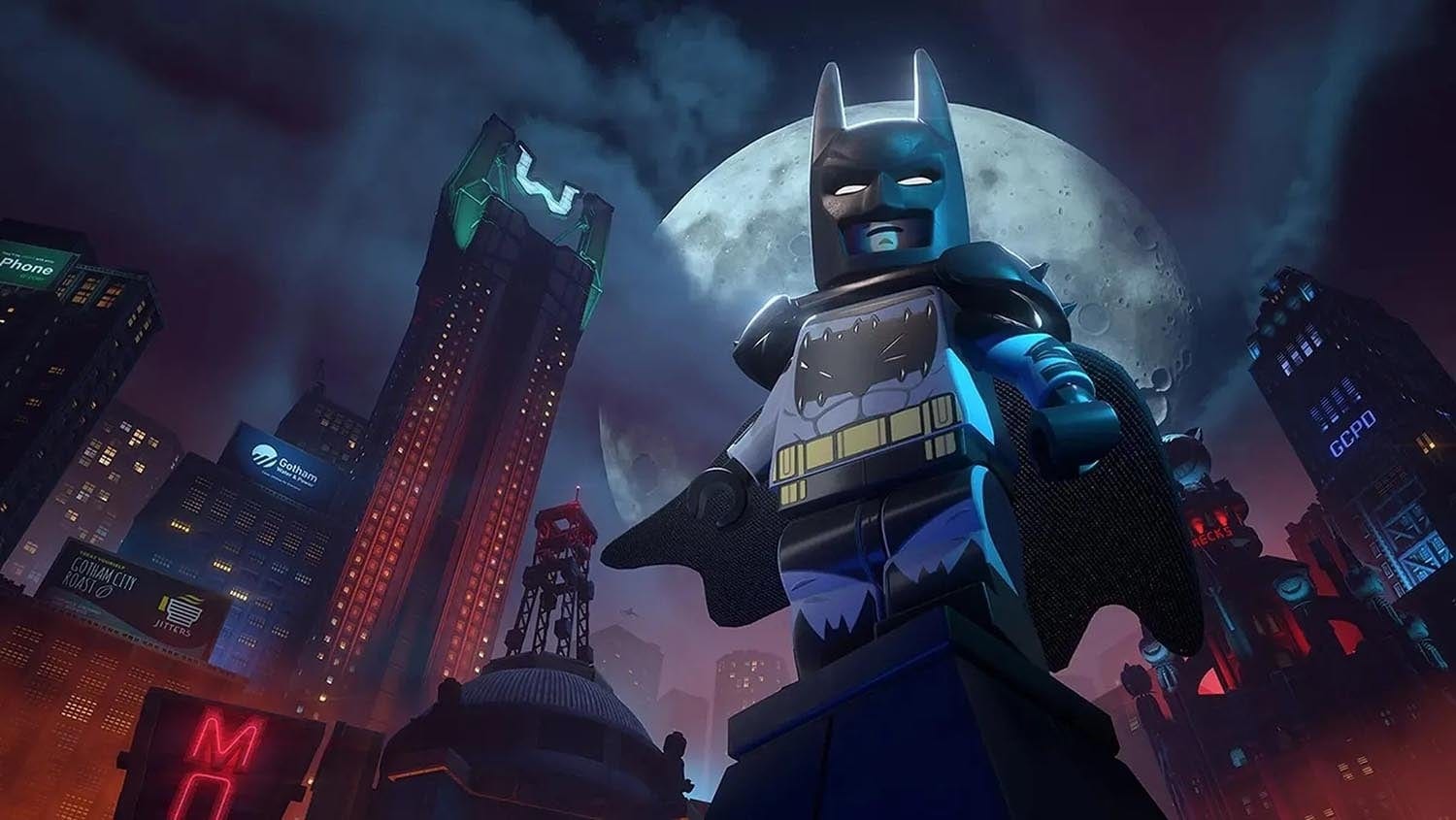
More so than the ill-fated Lego Dimensions, Legacy of the Dark Knight may be the ultimate Lego game, not just drawing on a single series but nearly every popular iteration of Batman. The game’s well of sly references reaches deep into the Dark Knight’s history. Indeed, that’s evident in everything from Talia Al Ghul’s voice actor doing a mean Marion Cotillard impression, to young Bruce’s obsession with the Gray Ghost, to the Penguin quoting Frank Reynolds from It’s Always Sunny in Philadelphia.
But the net of source material expands fast once Bruce takes up the cape and cowl, largely using Christopher Nolan, Tim Burton, and Matt Reeves’s Batman films as a framework. (Okay, yes, and one stray “Martha” joke as a treat for the Snyder bros.) However, wherever possible, the game pulls from the far wackier and obscure elements of Caped Crusaders past to fill in the gaps or paper over the darker parts of the mythology. The gritty edges of the various adaptations over the years are generally replaced with gentle but effective sight gags and slapstick aimed directly at the younger players who weren’t even alive when The Dark Knight was in theaters.
Ironically for a Lego game, it’s the mechanics that seem more catered towards more seasoned players. What becomes obvious through the initial training segment is that TT Games didn’t just copy-paste their usual blueprint for Lego action-platformers, but poured a much more apt frame of reference into the game’s design: the Batman: Arkham trilogy.
Legacy of the Dark Knight’s combat, stealth, traversal, and open-world mechanics all take their cues directly from the titles in Rocksteady’s series, and given how much the Batman: Arkham formula was diluted and stripped of its efficacy in Gotham Knights and Suicide Squad: Kill the Justice League, the fact that being the Bat actually feels good again is a blessing in and of itself. Those mechanics play nicely with the established Lego formula of running around collecting Lego pieces and building wild contraptions to solve puzzles.
The typical structure of Lego games has the knock-on effect of streamlining the experience, keeping the open world map of Gotham City from being slathered with side-quest icon vomit too quickly. That linearity keeps players on a bit of a leash, for sure, but it’s a small inconvenience given just how dense with interactivity and jokes and callbacks the game is. The Dark Knight’s legacy goes extremely deep here, and it’s certainly not a bad thing that the developers want to make sure every player gets the most out of it before leaving them to their own devices.
This game was reviewed with a code provided by 42West.
Since 2001, we've brought you uncompromising, candid takes on the world of film, music, television, video games, theater, and more. Independently owned and operated publications like Slant have been hit hard in recent years, but we’re committed to keeping our content free and accessible—meaning no paywalls or fees.
If you like what we do, please consider subscribing to our Patreon or making a donation.