There has never been a more apt name for a developer than One More Level. The studio, based in Cracow, Poland, has carved out a delightful little niche for themselves making deeply addictive games that feel, look, and play like the fever dream of someone blissed out on an illicit street drug from the year 2099 while watching nothing but the Matrix trilogy on repeat. Ghostrunner 2 is the next fix, a breathless cyberpunk speedball of a game that adds complexity to the Ghostrunner experience without sacrificing the primal thrills that made the original worth retrying—even as it aims to put players in the dirt for the 200th time.
That complexity is most prominent at the outset from the narrative end. The first game’s city-wide coup against the technocrat government of Dharma Tower—the last human sanctuary—was a rousing success, as the rebels have now taken power, with rogue cyborg ninja protagonist Jack now acting as the future of law enforcement. Compared to the bog-standard plot of the original Ghostrunner, there’s quite a bit more nuance knocking around in the sequel, with the rebels squabbling over how to govern and parse out resources, the new cybernetic villains operating out of a sort of broken Eastern religious cult fervor more than vengeance for their dead creator, and some genuinely surprising character turns and deaths along the way.
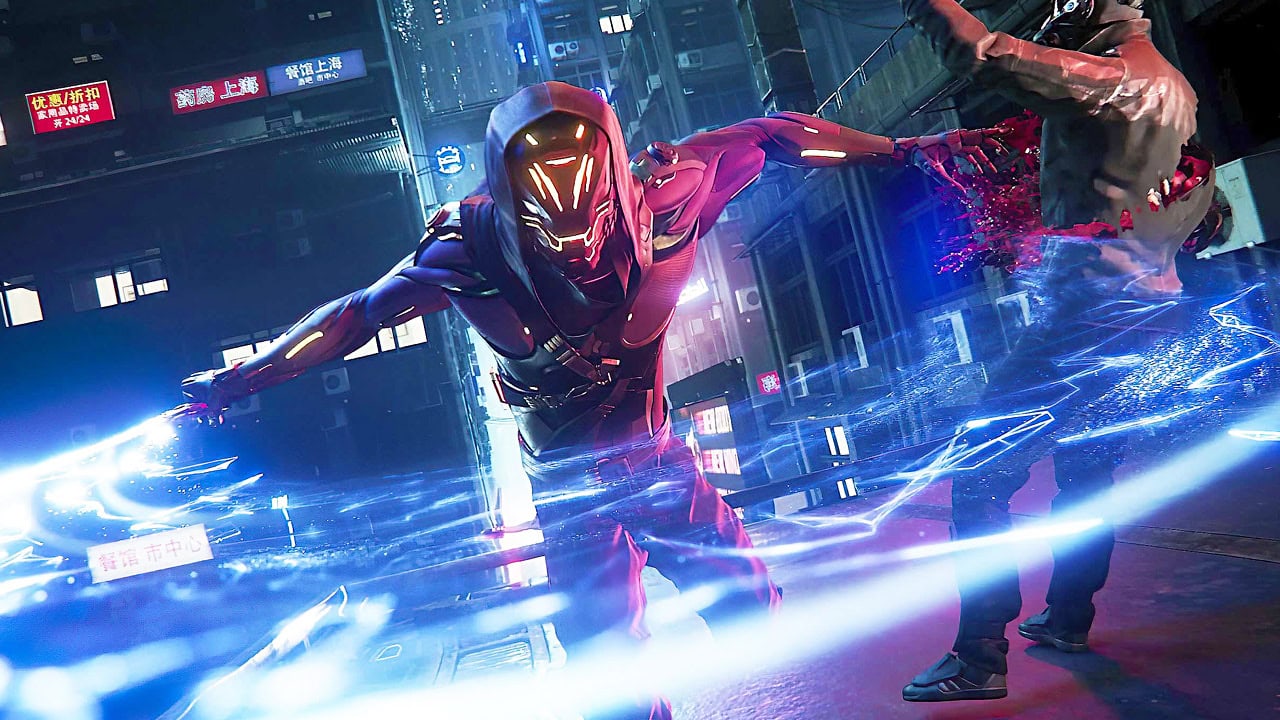
As layered as that narrative is, all of that fades into background noise once Jack’s blade comes to play. The game builds literal and figurative cathedrals on the mechanical foundation set by its predecessor, a still-unique, lightning-fast mix of free-running, old-school platforming, and slick, violent ninja combat set to one of the best, bass-destroying EDM soundtracks in all of gaming. The goal in the sequel is still to navigate a series of relatively self-contained killzones in the middle of neon-tinged futuristic hellscapes that must be solved for maximum murder efficiency, where the penalty for a screw-up is a near-instantaneous return to the entrance, and the reward is watching one’s enemies get chopped into mozzarella with borderline fetishistic detail.
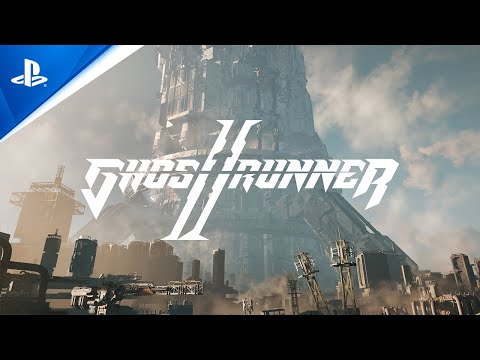
The first Ghostrunner’s already solid design principles are joined here by a number of welcome quality-of-life improvements, among them a dedicated block/parry button, an ultimate ability system to make quick work of entire fields of enemies, and a revamped upgrade system that rewards exploration without forcing players too far off the main path.
All that threatens to overwhelm Ghostrunner 2 with overdesign, with one too many moves to consider when planning your dance of death. Most of the time, though, the game stays on the positive end of simply supplying you with options rather than necessities. Dealing with the myriad enemies in Jack’s path is still perilous—until you find a specific perk later on, one hit will always kill you—but, again, you’re only a second away from giving it another shot, and the thrill that the game gives you when you get into a good flow with a level is absolutely exhilarating.
Where Ghostrunner 2 decides to take things to the next level is a stretch about two-thirds of the way through the campaign, where an audacious, gravity-defying motorcycle chase leads Jack to the cursed earth outside of Dharma Tower, and the game’s scope suddenly expands from linear arenas to semi-open world. We get some dizzying set pieces in towers high above the scorched Earth, and the bipedal new enemy types make it feel like you’re up against an entire nation of Mass Effect 3’s horrifying Banshees. But this is also one of the game’s more maddening stretches, especially thanks to a new projectile-tossing tentacle enemy and some truly diabolical placement for your foes compared to Dharma Tower. Death can always come from any direction in Ghostrunner, but more of those deaths felt cheap once you’re out in the wild.
Still, a frustrating stretch isn’t enough to make Ghostrunner 2 lose sight of its true purpose as the world’s foremost cyborg ninja simulator. At its most mundane, Jack’s travels let players float through beautifully rendered sci-fi hellscapes with steps light enough to walk on water. And at its most astonishing and electric, this is a game of balletic death-dealing that may demand perfection but rewards persistence like very few other games in recent memory. Even its most infuriating killzones don’t last long enough for the adrenaline to wear off.
This game was reviewed with code provided by Stride PR.
Since 2001, we've brought you uncompromising, candid takes on the world of film, music, television, video games, theater, and more. Independently owned and operated publications like Slant have been hit hard in recent years, but we’re committed to keeping our content free and accessible—meaning no paywalls or fees.
If you like what we do, please consider subscribing to our Patreon or making a donation.