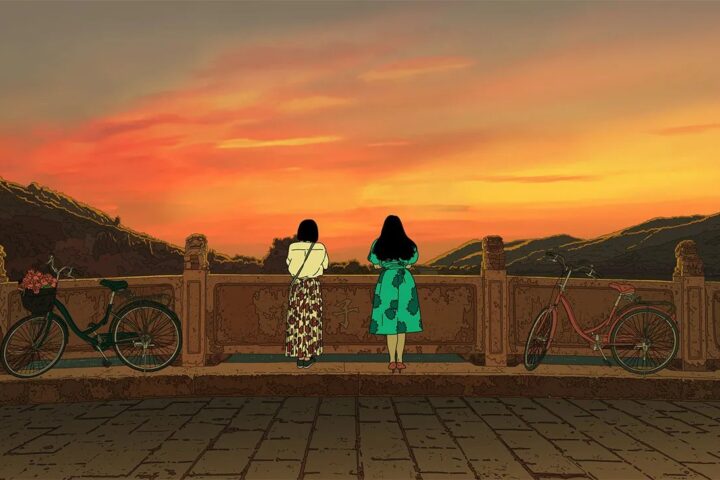
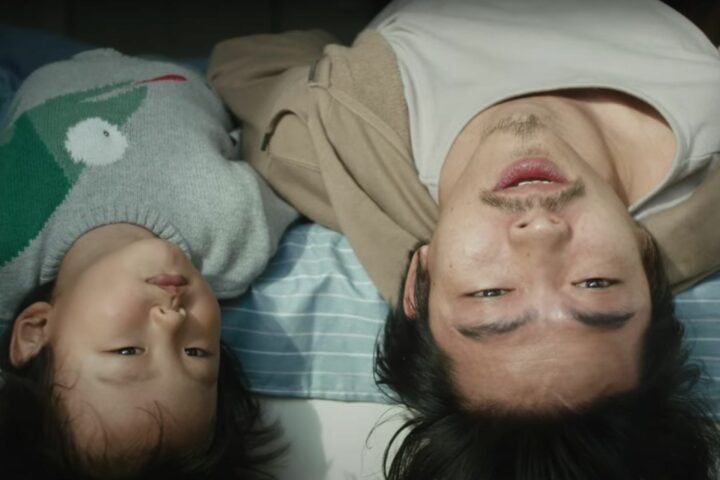
The clue to unlocking the delicate dynamics of Singaporean writer-director Anthony Chen’s The Breaking Ice is in its very title. Certainly, the film is too eager to underline how its characters’ sexual and emotional entanglements are symbolic of water in its various forms. But, in the end, Chen’s portrayal of three repressed twentysomethings whose lives converge in the sleepy Chinese northern border town of Yanji is unpredictable for being less focused on the freedom of catharsis than on the messiness of self-actualization.
The Breaking Ice is fixated on intense in-between states that work to separate people from each other and from themselves, as if to say self-acceptance and love aren’t destinations so much as journeys, at once formidable and worthwhile. But the film is also about how some of the barriers that hold us back are unnatural, political, and classed. As Yanji is a working-class city near the Chinese border with North Korea, Chen inevitably has us consider who has the freedom to explore the vastness of life, and that China is sociopolitically becoming like North Korea.
The Breaking Ice follows Haofeng (Liu Haoran), an adrift finance manager from Shanghai, as he falls in with two locals: Nana (Zhou Dongyu), a former Olympian turned tour guide, and Xiao (Qu Chuxiao), a line cook at a kitschy Korean restaurant. The trio meet because Haofeng takes Nana’s tour the day after attending a wedding. On the tour, Haofeng loses his phone, and, either out of pity or a desire to learn more about him, Nana invites him to join her and Xiao at a neon-lit club for what was supposed to be a date. From there, the trio hit it off, and as the boundaries between them blur, their respective emotional barriers start to break down.
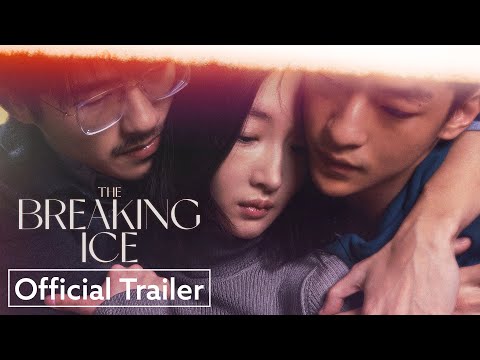
Through its focus on ritual, the film makes clear the cultural osmosis that shapes Yanji (a significant portion of its population is ethnic Korean). That, too, is another instance of how The Breaking Ice relies heavily on symbolism. Indeed, that the film takes place in close proximity to North Korea (it even opens with workers cutting ice blocks from the frozen waters beneath a bridge) is well taken if a bit too tidy. But less so is how Chen leans away from painting China’s neighbor as an ominous enigma to paint a resonant portrait of his characters finding little meaning and little opportunity for personal fulfillment and expression through work.
We mostly learn about the characters’ respective pasts via half-uttered admittances, sometimes in a moment of post-coital bliss, and what we do learn reveals enough of what keeps them down. Haofeng’s phone rings incessantly from a mental health counseling service with reminders of his missed appointments. Nana, after an injury derailed her figure-skating career, became a tour guide. And Xiao’s real talent for Korean cuisine is squandered by having to work in this isolated part of China. Even as Haofeng toils for his relative wealth, he’s gripped by thoughts of suicide. By contrast, Xiao doesn’t have the security to realize his passion. As for Nana, the film suggests that she might be able to return to figure skating if she could only ease her disappointments.
A side story of the film concerns the search for a serial shoplifter, for whom the authorities are offering the reward of 200,000 yuan, or $28,000, for information on his whereabouts. While Haofeng, Nana, and Xiao are shopping at a convenience store, the news story pops up on a TV screen and Xiao morosely states, “I’m not even worth that much.” In the end, The Breaking Ice asks how an economy values the people it purportedly serves. And Chen answers this question by simply showing how his characters struggle to not internalize the shame around being down and out, and celebrating how friendship provides the strength to stare down such challenges.
Since 2001, we've brought you uncompromising, candid takes on the world of film, music, television, video games, theater, and more. Independently owned and operated publications like Slant have been hit hard in recent years, but we’re committed to keeping our content free and accessible—meaning no paywalls or fees.
If you like what we do, please consider subscribing to our Patreon or making a donation.