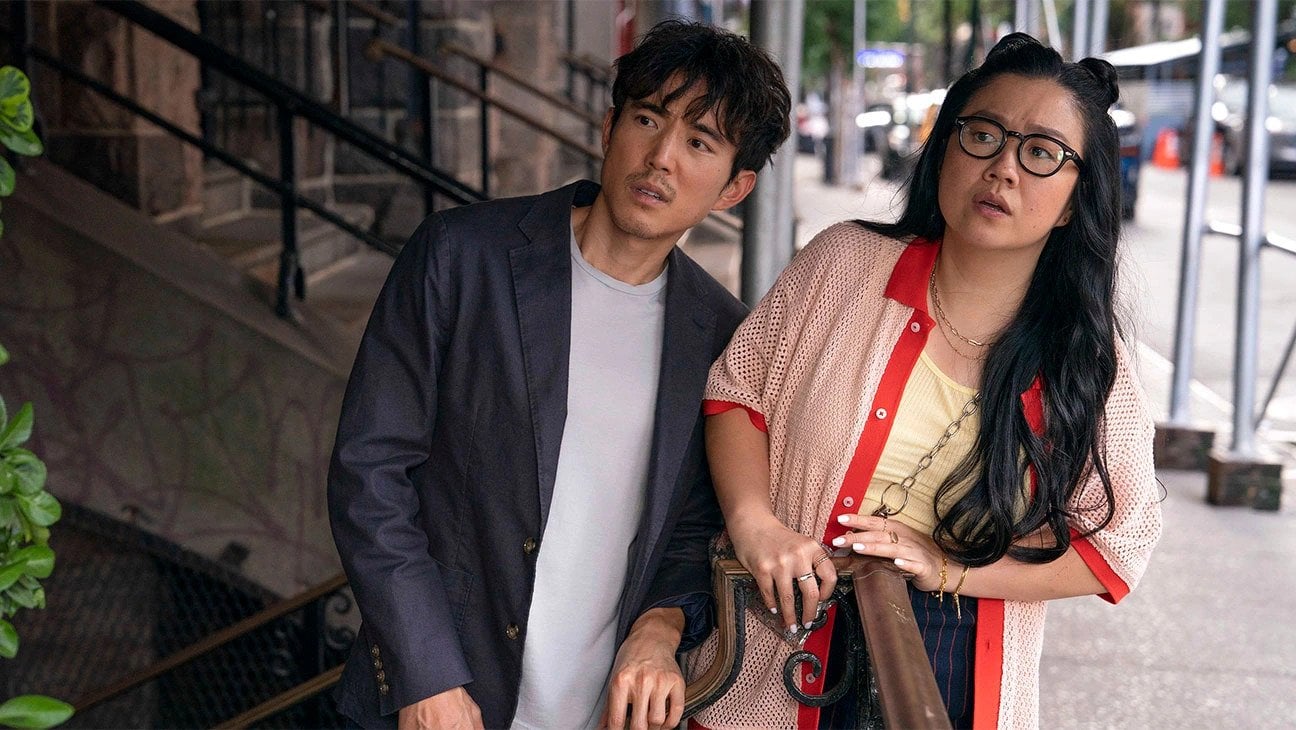
As misanthropes go, Ben (Justin H. Min), the early thirtysomething protagonist of director Randall Park’s Shortcomings, is on the cheerful side. Not particularly when he’s around other people, mind you. But when by himself, he seems reasonably content and self-contained. It’s only when he has to manage that pesky thing of having to maintain human interactions by showing interest in other people and not shooting his mouth off that he runs into trouble. For Ben, who suggests a Gen-X culture snob stuck in the wrong decade, life would probably be a lot easier if it could be limited to just Criterion Collection and chill.
Adapted by Adrian Tomine from his 2007 graphic novel, Shortcomings follows Ben’s attempts to keep his life together after a break with his girlfriend, Miko (Ally Maki), turns out to be more permanent than he thought. A film school dropout, Ben is introduced as a man on autopilot: sleepwalking through his job managing a Berkeley arthouse theater while either ignoring or getting into fights with Miko. After she leaves for an internship in New York, Ben jumps into dating with more enthusiasm than judgment. He first pursues Autumn (Tavi Gevinson), a noticeably younger and flighty theater employee. And despite the warnings of his best friend, Alice (Sherry Cola), he starts going out with Sasha (Debby Ryan), who’s just gotten out of a relationship with another woman. Things go poorly, albeit in entertaining fashion.
As a portrait of Ben, Shortcomings is a mostly comedic but fitfully insightful examination of a character type familiar to indie cinema: the solipsistic guy who fills the gap left by emotional underdevelopment with intense opinions delivered at bad times. While the film never excuses Ben’s antisocial behavior, and in fact devotes numerous scenes to different women laying out clear explanations of his defects, it also doesn’t pretend that he’s always wrong.

This is evident in a couple standout moments where Shortcomings deftly incorporates the discussion of race, representation, and culture that gave depth to the novel’s introspective story. In the opening scene, after an Asian American film festival screening where the crowd reacts ecstatically to a pandering Crazy Rich Asians-esque film (winkingly starring Ronnie Chieng and Stephanie Hsu), Miko is thrilled about the possibility of Asians finally being seen by Hollywood while Ben denounces what he views as the audience’s desire for acceptance by non-Asians.
Later, thinking that Miko has taken up with Leon (Timothy Simons), a pretentious New York fashion designer, Ben sneeringly describes him as a “rice king” after confronting them on the street. In terms of the argument, the film seems to be on Ben’s side; after all, Leon speaks Japanese and his West Village apartment takes more than a few cues from Orientalist art, even though he does proffer a cogent critique of the problematic nature of the Bruce Lee scene in Quentin Tarantino’s Once Upon a Time… in Hollywood. But in terms of whether Ben is a decent boyfriend, the film finds him to be largely a jerk (not to mention potentially a hypocrite, given how often characters call him out for fetishizing blond, white women).
Fortunately for Ben, Alice mostly doesn’t mind his jerkiness, given her similarly heedless and sometimes abrasive personality. The scenes with Ben and Alice just shooting the breeze about the women they’re seeing are some of the film’s best, due in part to the witty writing but also Cola’s ability to thread Alice’s brassiness with surprising vulnerability.
As a director, Park maintains a quick pace that fits Tomine’s scrappy and theory-laden screenplay, which focuses somewhat less on Ben’s self-hatred than the graphic novel and more on how his fixation on argumentative hot takes sabotages his relationships. Maintaining a high ratio of humor to introspection, and surrounding Ben with a strong cast of engaging secondary characters, the film manages the trick of presenting a frequently antisocial protagonist in a way that’s honest and unsparing while still empathetic. After watching Ben burn one bridge after another, viewers may not want to care what happens to him at the end of the film, but the power of this peppy and romantic-ish comedy is that many of them will.
Since 2001, we've brought you uncompromising, candid takes on the world of film, music, television, video games, theater, and more. Independently owned and operated publications like Slant have been hit hard in recent years, but we’re committed to keeping our content free and accessible—meaning no paywalls or fees.
If you like what we do, please consider subscribing to our Patreon or making a donation.