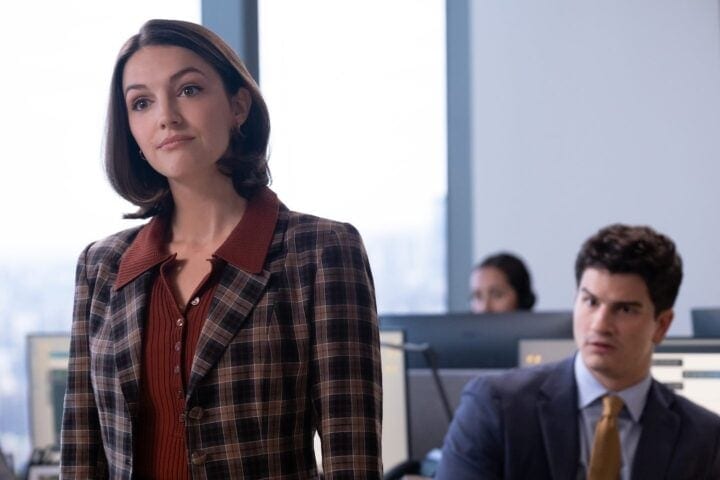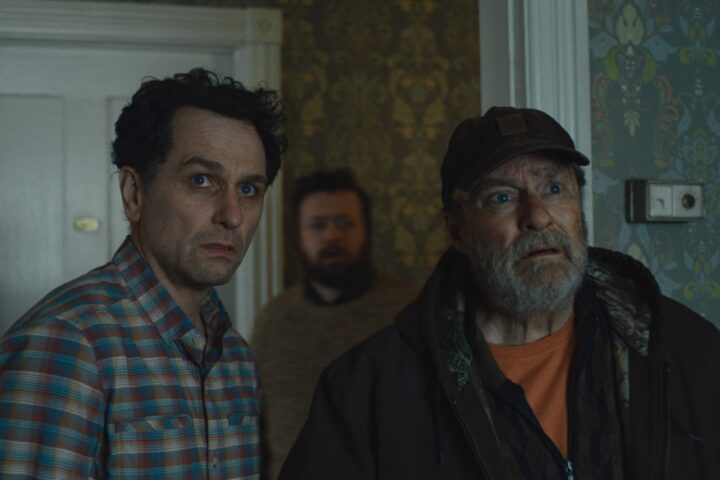
Some of the least funny SNL sketches from the past decade have been the cold opens, namely those that consist mostly of lightly rewritten versions of recent speeches, congressional testimonies, or interviews by politicians. One gets the sense that these skits are built to do nothing more than play on the audience’s mere recognition of what’s being referenced, patting us on the back for being in the know while vying for our laughter.
While Jason Reitman’s Saturday Night does, unlike those sketches, at least include some honest-to-goodness jokes, it often gives into the same pandering instincts. For instance, the film openly invites SNL aficionados and comedy nerds to point at the screen in collective recognition at the events and lore of the show’s past and nod along with pride in their knowledge.
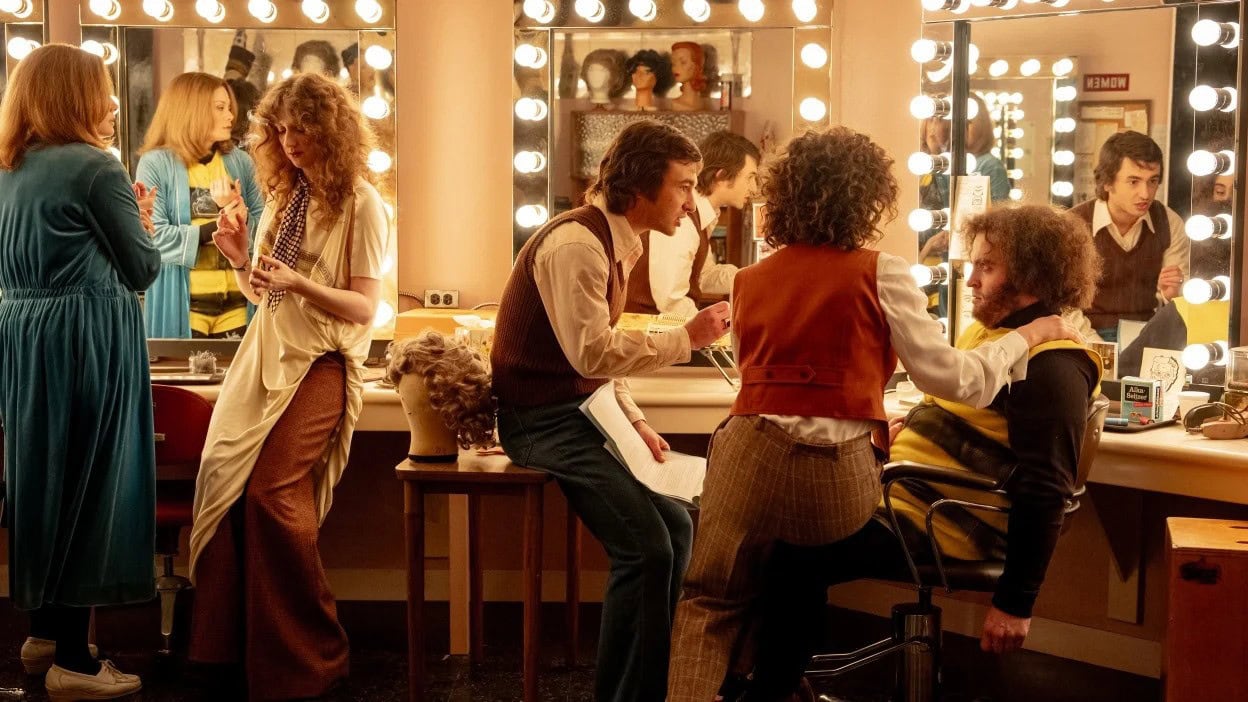
Written by Reitman and Gil Kena, the film offers us a glimpse of John Belushi (Matt Wood) and Chevy Chase’s (Cory Michael Smith) professional rivalry. And Andy Kaufman’s (Nicholas Braun) famed Mighty Mouse bit makes a conveniently timed appearance, while Milton Berle (J.K. Simmons) wanders down to the SNL set from a variety special that he’s filming upstairs to show off his legendarily large member. Even the long-running gag involving a llama, chorus girl, and Abe Lincoln randomly hanging out in the background backstage—started in 1979 during an Eric Idle-hosted episode and revived by Seth Meyers in the early 2000s—gets a nod.
Starting 90 minutes before the airing of SNL’s first episode in 1975, Saturday Night, which plays out in close to real time, is not unlike an average episode of the show that it so dutifully and relentlessly lionizes. Cinematographer Eric Steelman weaves his camera through the hallways of 30 Rockefeller Plaza—liberally borrowing from Emmanuel Lubezki’s work on Birdman—whip-panning what seems like at least two or three times per minute to shift focus from one group of characters to the next, moving from one subplot to another like the show does from sketch to sketch. And as with many so-so episodes of the show, the bad stretches in Saturday Night feel like they go on for an eternity while the hits fly by all too fast.
This generally hurried pace is heightened by Jon Batiste’s Jon Brion-aping score and the growing sense of urgency as one disaster follows another as the 11:30 p.m. airtime approaches. But for all the anxiety-inducing elements of Reitman’s film, one never gets the sense that very much is at stake, both because the outcome is never in any doubt and because this re-creation never moves beyond mimicry. The performances are simply never given the space to breathe—that is, to move past imitation and get at something approaching real, emotional truth, even though Saturday Night certainly tries to flailingly gesture toward it at times.

At the center of the chaos of this high-pressure night is the show’s creator, Lorne Michaels (The Fabelmans star Gabriel LaBelle), who we learn has essentially been set up to fail by NBC bigwigs in the midst of a contract dispute with Johnny Carson. LaBelle’s Michaels isn’t the all-seeing, domineering maestro that he would come to be known as over the next couple decades, but this doesn’t prevent Saturday Night from presenting the neurotic, inexperienced showrunner as a genius bound to change television forever. The film also treats the cast as uniformly brilliant—albeit wildly undisciplined and disorganized—even when, in reality, it took them time to truly find their footing and effectively express their various talents on screen.
Indeed, the amount of times that someone in Saturday Night tells Lorne that he’s going to fail comes comically close to matching the number of all those whip-pans. And it’s this 20/20 vision of hindsight that becomes the film’s most obnoxious quality. Most of us know how things turned out for SNL, but Saturday Night repeatedly hammers home just how off the mark the powers that be were, and it delights in setting them up as easy targets for derision.
Along with Lorne being constantly discouraged by NBC VP of Talent Relations David Tebet (Willem Dafoe), who lurks around the set like a vulture waiting to pull the plug on the show, he also gets a phone call from Carson, who ensures him that he’ll be out of a job by the following Saturday. And when Berle swings by the set, he makes sure to put Chase in his place, announcing in front of Chase’s fiancée (Kaia Gerber) that he’ll always be a nobody. It’s certainly true that there were many doubters of SNL early on, but the film takes far too much pleasure in reverse-engineering their understandable skepticism into unfettered foolishness.
Also regrettable is the way in which Saturday Night uses the show’s hipness as a means of condescending to all the square pegs of the mid-’70s (read: anyone who didn’t immediately recognize the genius of SNL’s writers), viciously mocking Jim Henson (also played by Braun), of all people, time and again as a hopelessly lame and naïve idealist who’s too nerdy to be worthy of respect. Head writer Michael O’Donoghue (Tommy Dewey) even takes a cheap shot at George Carlin (Matthew Rhys), berating him as “feeding off the corpse of Lenny Bruce” during a rehearsal of a sketch that the stand-up comic thinks is going to bomb with audiences.
O’Donoghue’s smugness is ultimately very much in line with that of the film, which takes glee in showing just how uncool and out of touch everyone involved in the making of SNL outside of Lorne and his inner circle were. There’s a certain pleasure in basking in the anarchic behavior of the SNL cast as depicted in Saturday Night, but it’s rendered hollow by the film’s often grating mythologizing of them, which includes trying to turn the 90 minutes before the first episode into a frenetic comedy of Safdie-esque proportions. But for all its feigned sturm und drang, the film is simply too solipsistic to make any sense out of the chaos, remaining in awe of the legendary tales of the show’s past yet unable to offer an insightful perspective into it.
Since 2001, we've brought you uncompromising, candid takes on the world of film, music, television, video games, theater, and more. Independently owned and operated publications like Slant have been hit hard in recent years, but we’re committed to keeping our content free and accessible—meaning no paywalls or fees.
If you like what we do, please consider subscribing to our Patreon or making a donation.