No American filmmaker, save for Steven Spielberg, has so unapologetically dedicated his career to the allure of spectacle as Robert Zemeckis. He strives to entertain, finding the fantastical in the quotidian. Naysayers ignore the unique dexterity of his craftsmanship: He doesn’t simply rely on special effects to tell his stories, but rather tells stories that can only be told with special effects. From the gee-golly nostalgic wonderment of Back to the Future to the conflation of corporeal humans and cartoons in Who Framed Roger Rabbit?, Zemeckis has long been fascinated with the impossible, with how technology can augment how films are made and how we watch them.
With 2016’s Allied, a World War II romance thriller in the elegant vein of classic Hollywood, he veered into R-rated territory, after having spent most of the 2000s making motion-capture features (The Polar Express, Beowulf, A Christmas Carol). Freed from the confines and constraints of the PG-13 rating, he seemed invigorated by the possibilities of serious adult entertainment. Now, Zemeckis has regressed and made the kind of film his detractors have often accused him of making. Welcome to Marwen, based on the real-life story of Mark Hogancamp, who created a WWII town in his backyard using dolls and action figures in the wake of an assault that left him brain-damaged, is saccharine where his better films are bittersweet, cumbersome where his spectacles are supple and graceful—a dull, torpid endeavor from a filmmaker who had, until now, prided himself on eschewing the boring bits of movies.
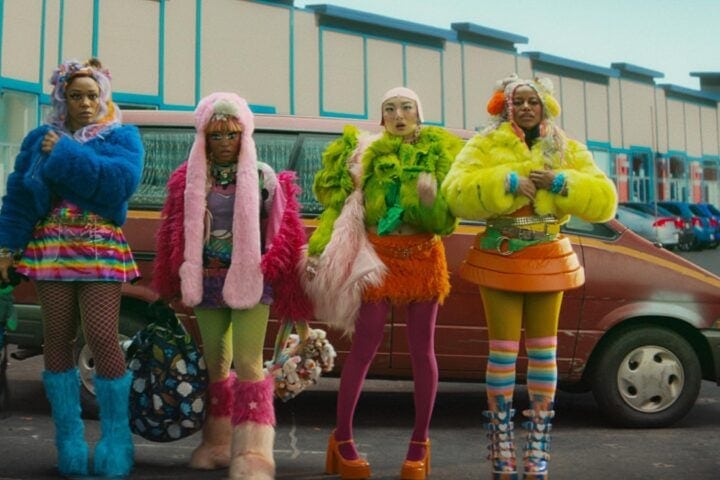
Because of his innocuous crossdressing proclivities, Mark (Steve Carell) is beaten into a coma by a gaggle of thugs. (In real life, Hogancamp had fragments of skull embedded in his brain and eyeballs, but Welcome to Marwen jettisons such grotesqueries.) When he wakes, Mark has virtually no memory of his prior life. Having had his world torn away from him, he creates a new one: a one-sixth scale replica of a WWII-era Belgian town, populated with dolls of the people in his life, including a coterie of women (played by Leslie Mann, Merritt Wever, Janelle Monáe, Eiza González, and Gwendoline Christie) who help him through his tumult. The film basically follows a pattern: Mark retreats into his CGI world, something bad happens and he’s thrust back into the harshness of reality, and one of the women in his life comforts him.
A traumatized man who creates a fantastical world in his backyard sounds like an elevator pitch for a Zemeckis movie. The filmmaker has always been interested in people who retreat from their banal or brutal existences, and the juxtaposition between—and melding of—artifice and reality has been a recurring motif in this work. One gets glimmers of Zemeckis’s deft sense of scale, space, and movement throughout the film’s action-packed mini set pieces, but the CGI is so distractingly awkward—recalling the creepy and cringeworthy uncanny valley animation of his mid-aughts films, or, at its worst, cut scenes from a two-generations-old video game—that it’s difficult to appreciate the bravado camerawork. And the live-action scenes are afflicted with a cloying sentimentality: Carell strains to tug your heartstrings, trying so hard to elicit some sort of emotional reaction other than boredom, but he never delves into the darkness of a man who’s had his life stolen from him.
Zemeckis, who’s never had a stomach for gore, also turns his back to the dark heart of Marwencol’s story, which came to many people’s attention with Jeff Malmberg’s 2010 documentary Marwencol. The whole endeavor feels like a disservice to Hogancamp’s story, in no small part because no one in the film feels human, even outside doll form. Everyone is a type: the pitiable loser for whom we feel bad, the perfect love interest for whom we cheer, and so forth. Joan Didion once wrote: “We tell ourselves stories in order to live.” Hogancamp creates art because he has to, living a retracted life among plastic people, compulsively recreating the horrors that haunt him. That isn’t exactly feel-good material, which makes the perpetual niceness of this film, its fear of upsetting anyone, feel so stomach-churning. Zemeckis has always tried to search for the human splendor in spectacle, but in Welcome to Marwen he struggles to find either anything human or spectacular.
Since 2001, we've brought you uncompromising, candid takes on the world of film, music, television, video games, theater, and more. Independently owned and operated publications like Slant have been hit hard in recent years, but we’re committed to keeping our content free and accessible—meaning no paywalls or fees.
If you like what we do, please consider subscribing to our Patreon or making a donation.