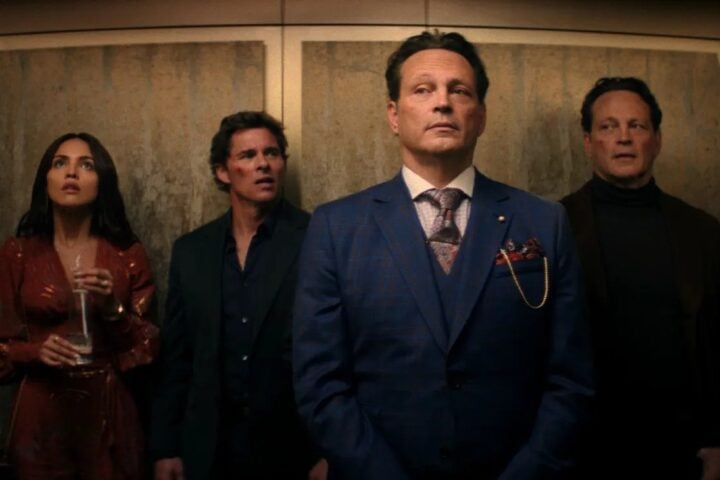
Michael Dowse’s action-comedy-cum-Uber-commercial Stuber is tiresome from its very first scene, a dizzying chase through a ritzy hotel whose shaky-cam presentation is a disorienting imitation of an action style now a decade out of date. L.A.P.D. partners Vic Manning (Dave Bautista) and Sarah Morris (Karen Gillan), whose collegial friendship is quickly and awkwardly established in a pre-fight conversation about whether Vic’s grown daughter (Natalie Morales) is having anal sex, are in pursuit of Oka Teijo (Iko Uwais), a drug dealer who, as the film will frequently remind us, sells heroin to kids. After some incoherent wrangling, Teijo escapes, and Sarah has been felled by a bullet to the gut, making Vic’s continued hunt for the dealer—you guessed it—personal.
Stuber imagines Vic as working-class superhuman, his hypermasculine, extralegal excesses justified by the logic that, as a cop hunting a drug peddler, he is ipso facto a good guy—perhaps the best guy. It would be one thing if this tired myth became an object of satire or derision, but the film’s feeble attempts at irreverence don’t extend to the L.A.P.D. or Vic’s violent machoism. The humor that revolves around Vic concerns chinks in his aging hard-body armor, like his fading eyesight, or the thought that—gasp—such a man might accidentally end up in a male strip club. Vic’s methods of pursuing an investigation—his referring to criminals as subhuman animals, his intentional escalation of confrontations, his torturing of suspects—aren’t undermined by the film’s humor, but presented as the things that real men do.
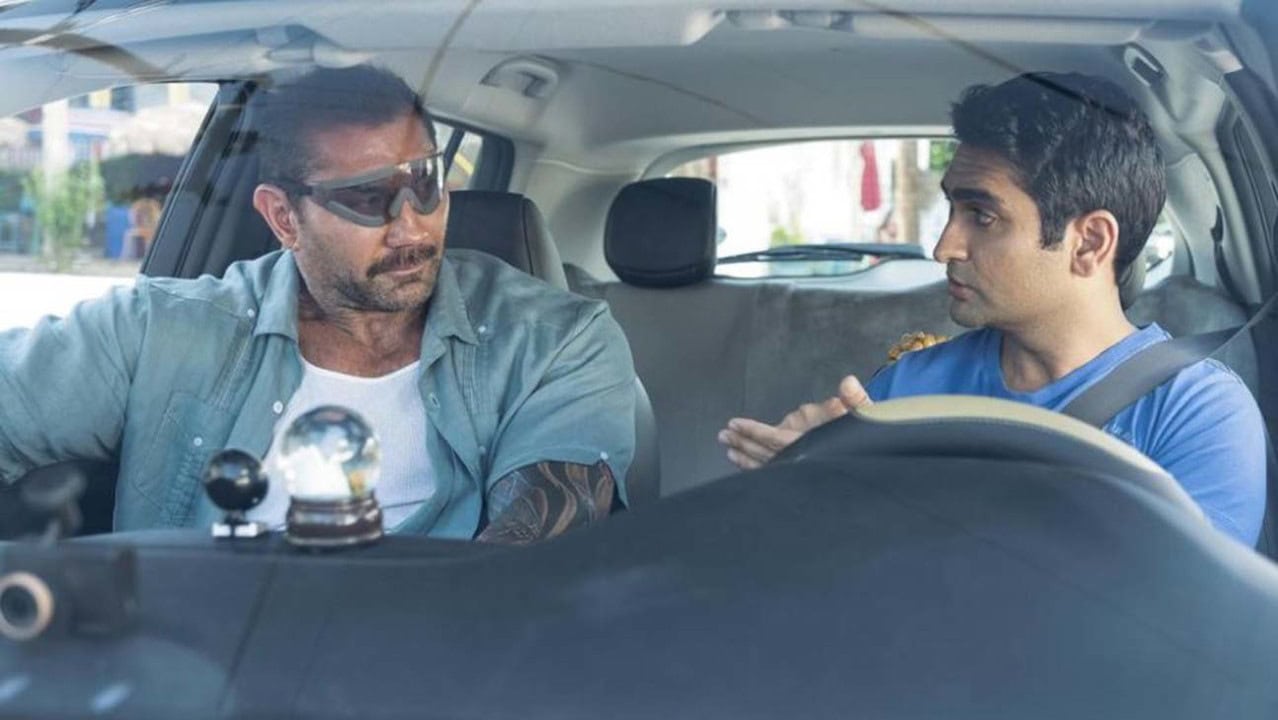
In short, Vic is Stuber’s straight man, in every sense of the term, and his Uber driver, Stu (Kumail Nanjiani), is the innocent goofball whose trepidation and reluctance to commit violence creates the film’s odd-couple dynamic. Still recovering from Lasik surgery, Vic has to order an Uber after crashing his car while pursuing a lead on Teijo’s whereabouts. Never quite understanding that Uber isn’t like a taxi in a Hollywood film, Vic ropes Stu into his quest, instructing him to “run his meter” while the cop saunters into gang hideouts and seedy strip clubs in search of Teijo. And Stu follows Vic on his journey through the film’s stereotyped suburban Los Angeles, full of Latino gangsters who seem to have sprung from Mike Huckabee’s nightmares, because he needs a good Uber rating from his clearly unhinged passenger.
Seemingly sensing that this constitutes rather thin motivation for Stu’s participation in the extremities of Vic’s trail of vengeance, the film provides additional motivation by having Nanjiani intone, “Heroin is so bad, and I think it’s worse when kids do it.” Nanjiani does his best to sell the line with his sardonic deadpan, but it would be funnier if it didn’t capture the precise extent to which Tripper Clancy’s script has thought out its primary conflict.
True to the buddy-movie formula, Vic and Stu learn to appreciate each other’s divergent lifestyles as they barely escape gunfights and car chases, with Vic learning that it’s okay to be sensitive sometimes and Stu learning to embrace ultra-violence as an essential expression of masculinity. If that sounds like reactionary nonsense, well, that’s because it is. Before he overcomes his purported weakness with Vic’s help, Stu is further feminized by his association with a fledging spin-cycle business he has just signed a lease on with his friend Becca (an underserved Betty Gilpin). He’s never had the guts to confess his undying love to Becca, and in between bloody shoot-outs, Vic counsels him on “manning up” and telling Becca how he feels.
In addition to its abortive attempts at establishing a funny buddy-comedy dialectic, Stuber aims at shock humor through the gratuity of its violence, but it’s hardly the first comedy to make close-ups on crushed faces and bullet wounds part of the hijinks. More than its violence, the film is defined by its vileness, its straight-faced attachment to outmoded ideas about masculinity and law enforcement. Only the repetitious mention of the Uber brand and Stu’s token references to meme-era wokeness distinguish this film from any given Arnold Schwarzenegger vehicle from three decades ago. It would be quaint if it weren’t so dull.
Since 2001, we've brought you uncompromising, candid takes on the world of film, music, television, video games, theater, and more. Independently owned and operated publications like Slant have been hit hard in recent years, but we’re committed to keeping our content free and accessible—meaning no paywalls or fees.
If you like what we do, please consider subscribing to our Patreon or making a donation.