As American pop culture’s obsession with 1980s artifacts continues unabated, along comes Kevin McMullin’s Low Tide, which paints the Jersey Shore of yesteryear as a haunted dreamland—a place that brings to mind The Goonies and Bruce Springsteen’s catalog in equal measure. Thankfully, Low Tide is more intimately acquainted with the Boss’s dashed hopes than with the shrill stereotypes that Richard Donner’s film peddled, as McMullin displays a piercing awareness of the tensions that drive the dynamics of adolescent outsiders.
In The Goonies, and later progeny like Stranger Things, characters embrace whatever reduced “type” they are, which is how these productions flatter our sentimentalized versions of our childhoods. In Low Tide, however, the characters feel embittered and trapped by roles that are determined for them subliminally by their physical prowess and the economic status of their families. This social context allows the film to transcend its nostalgic roots and feel dangerous, reminiscent of Tim Hunter’s River’s Edge or the best parts of Rob Reiner’s Stand by Me.
Low Tide concerns a group of young townies who rob the affluent homes of seasonal residents, whose mobility and freedom they resent. This resentment is allowed to float in the air, essentially unmentioned, as McMullin’s poetic script has an uncanny grasp of the unspoken. The leader of the group is Red (Alex Neustaedter), who commands the loyalty of his cohorts through fear rather than kinship. Red has that preternatural sense of “adultness” that’s evident in teenagers who’re already capable of hard crimes, and Neustaedter doesn’t overplay Red’s volatility. In a performance reminiscent of the work of Peter Greene, Neustaedter allows Red to be scariest when it’s most evident that the character is fighting to keep himself from boiling over. Yet the actor doesn’t make Red a monster either, as he understands Red’s rage to be the ultimate manifestation of the rootlessness and entrapment that hound the others.
Red’s polar opposite is Smitty (Daniel Zolghadri), the nerdy oddball who never has anything witty to say to the girls on the boardwalk and who’s perpetually hustling as a defense against his scrawniness. Zolghadri brings to visceral life the watchfulness of a calculator—a natural born stool pigeon. Smitty and Red, who seem to hold each other hostage in accordance with their respective advantages, are an unusually thorny and resonant example of the bully-wimp partnership that American cinema so often plays for laughs.
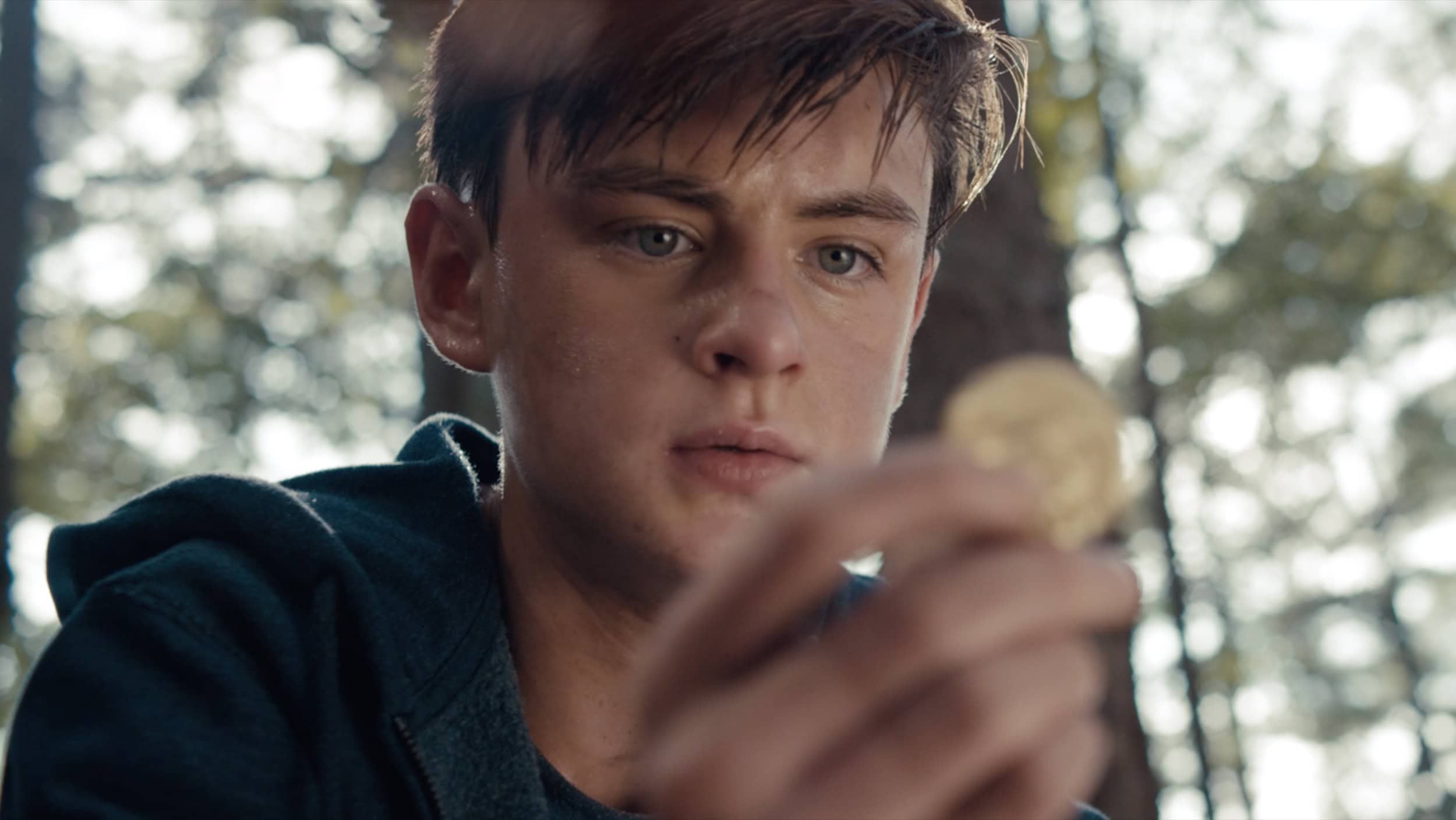
Red and Smitty are Low Tide’s villains. They signify all the perils that two brothers, Alan (Keean Johnson) and Peter (Jaeden Martell), must navigate after finding a sack of golden coins that they bury and hide from their friends. Alan and Peter suggest a healthier, bizarro version of Red and Smitty, as Alan is a brawny yet empathetic man of action while Peter is a thinker who tries to keep Alan from exposing their crime with his carelessness. As vividly alive and multifaceted as this cast uniformly is, Martell walks away with Low Tide, dramatizing an internal war to be sensitive and optimistic, and to escape his impoverishment the right way, rather than succumb to the hopelessness that’s turned Red into a psychopath.
McMullins has a flair for both sentimentalizing and de-sentimentalizing a setting, illustrating the comfort his characters take in the boardwalk and the nearby fishing piers as well as the torment of tourist sports cars that suggest unattainable status. McMullins’s Jersey Shore is a place of danger as well as of the faux heaven of carnival lights glowing in the sky. Certain slow-motion passages—of the lighting of a cigarette, of the approaching of a beautiful girl—suggest the blossoming of the nostalgia that will seep into these adolescents in adulthood. Yet McMullins doesn’t forget the uncertainty and self-loathing of young life, which, in this case, bubbles into a climax of primordial bloodshed that suggests a rematch between Cain and Abel.
Since 2001, we've brought you uncompromising, candid takes on the world of film, music, television, video games, theater, and more. Independently owned and operated publications like Slant have been hit hard in recent years, but we’re committed to keeping our content free and accessible—meaning no paywalls or fees.
If you like what we do, please consider subscribing to our Patreon or making a donation.