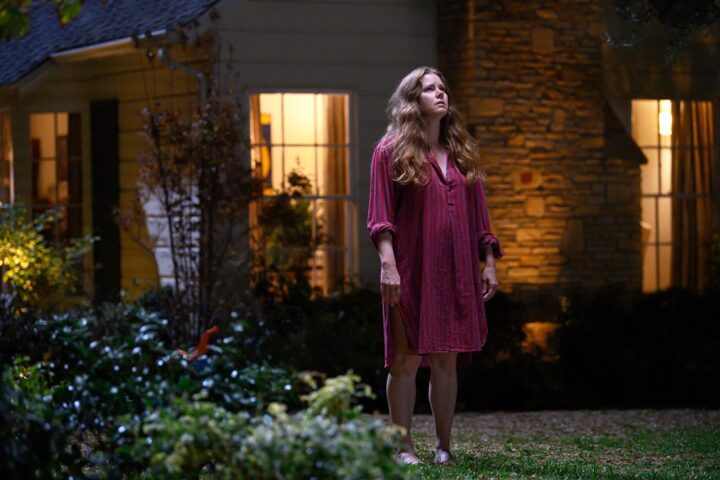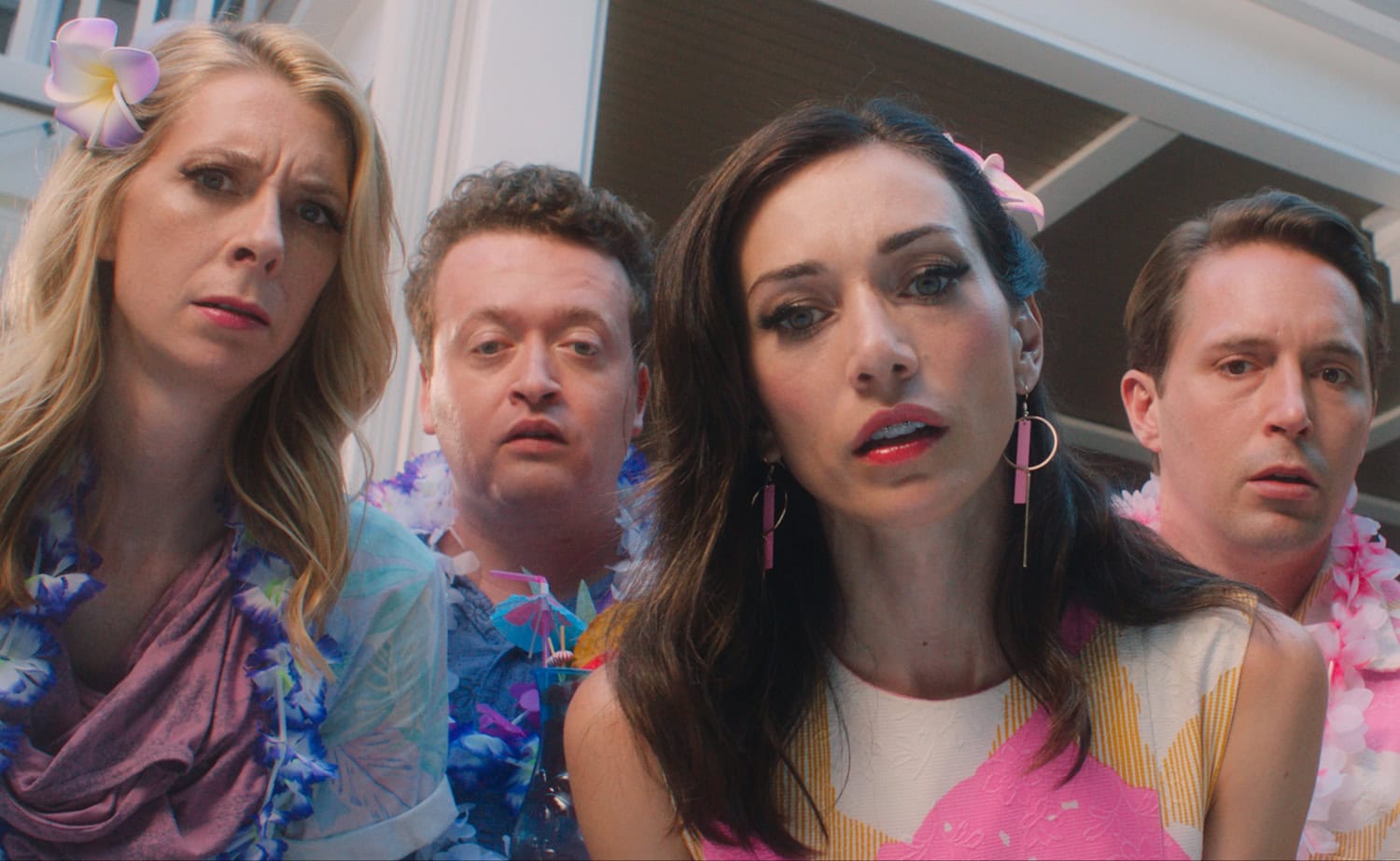
The opening credits of Greener Grass linger on a twitching, toothy smile covered in braces. Everyone in the film wears braces. Everyone drives a golf cart, too, and dresses in gentle pinks and blues. The lighting is soft and sun-drenched, an effect that’s most pronounced during the film’s soccer matches. In the opening of David Lynch’s Blue Velvet, the camera creeps through a suburb’s pleasant veneer to reveal the rot that festers beneath. But for Greener Grass co-directors, co-writers, and co-stars Jocelyn DeBoer and Dawn Luebbe, the very surface is the thing that’s so unsettling, a place populated by slithering, rictus-grinning meat puppets penned in by white picket fences and their own crippling need to conform.
The trouble, if you could call it that, begins when Jill (DeBoer) abruptly gifts Lisa (Luebbe) with her newborn baby as they watch their other children play soccer. This isn’t, in the film’s bizarre conception of suburbia, a particularly outrageous act. At worst, it’s overly generous, like giving someone a gift more expensive than they’re comfortable accepting; another neighbor, Kim Ann (Mary Holland), later laments that she wasn’t given the child instead. The children in Greener Grass are essentially property, status symbols to reflect upon their owners in their pristine homes and yards, all of which feeds into an undercurrent of pervasive competition that nonetheless reinforces conformity and simply not rocking the boat.
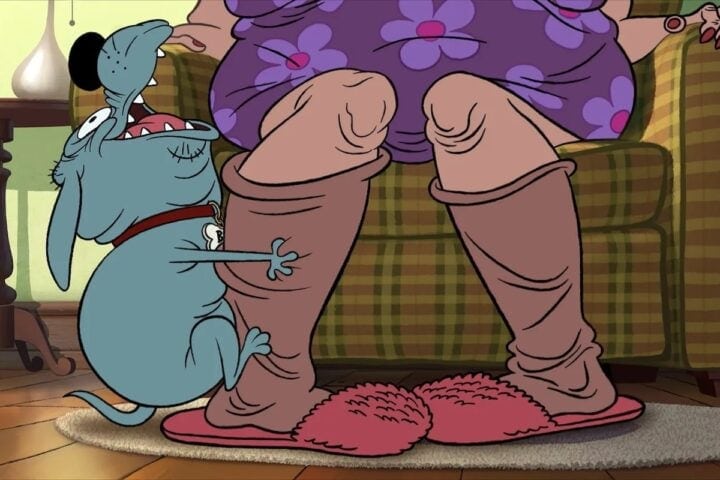
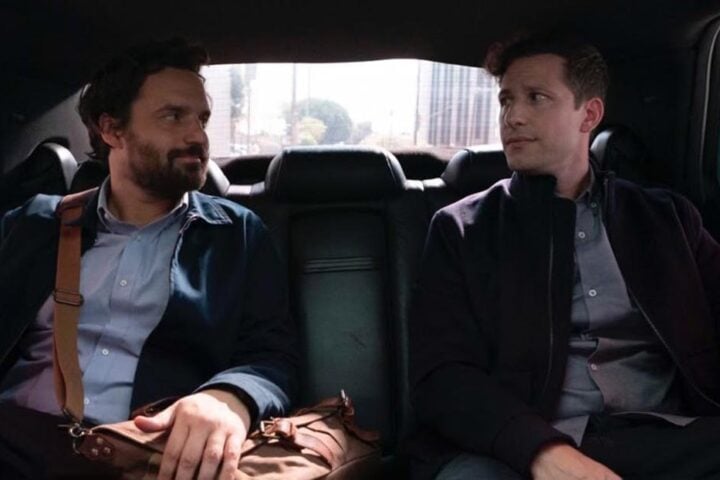
Everything is seemingly interchangeable in Greener Grass. At a cookout, it takes a full conversation for Jill and Lisa to notice that they’re smooching and hanging on the arms of the wrong husbands, Dennis (Neil Casey and Nick (Beck Bennett), respectively. And when Jill’s young son, Julian (Julian Hilliard), inexplicably transforms into a dog, she’s horrified, but Nick, the boy’s father, seems pleased: Julian may no longer be able to take the advanced math class, but he’s now a prodigy when it comes to playing catch in the backyard.
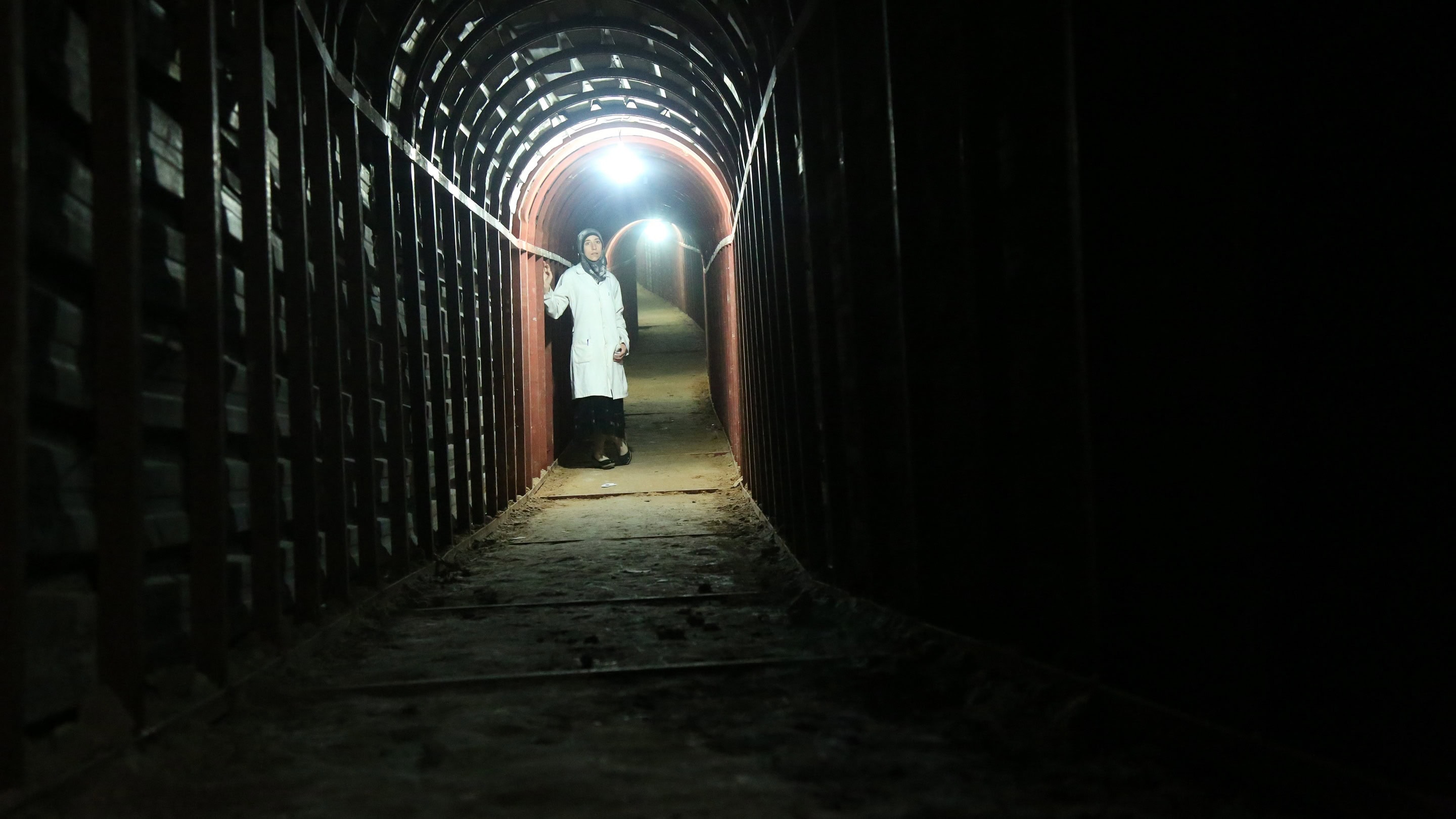
There isn’t much of a traditional plot to the film, which plays more as a recurring series of sketches that subtly further Jill’s downward spiral. DeBoer and Luebbe let their scenes linger long past the point of discomfort, both in the length of mannered dialogue exchanges and the amount of time they hold a shot without cutting; the camera gingerly pulls out or pushes in while characters perform odd actions in the background, like perpetually folding tighty-whities or fishing out a seemingly infinite supply of pocket change. It feels voyeuristic, and sometimes it is: In one scene, a hand appears to reveal that we’re watching a POV shot, and in another, an off-screen voice begins breathing heavily and starts mock-repeating dialogue.
A schoolteacher, Miss Human (D’Arcy Carden), fixates on the deaths of American pioneers making their way to the West. In pursuit of “a better life,” they lost things along the way, as the people of Greener Grass have lost themselves in their migration to the suburbs. The film is more unsettling for its lack of an ordinary plot structure where, say, Jill might break out of her suburban funk or get everything to explode with violence in a revolt against conformity. In the film’s world, there can be no real resistance. Here, the burbs have already won, having already sent out the white picket fences like tendrils as far as the eye can see. There is no escape.
Since 2001, we've brought you uncompromising, candid takes on the world of film, music, television, video games, theater, and more. Independently owned and operated publications like Slant have been hit hard in recent years, but we’re committed to keeping our content free and accessible—meaning no paywalls or fees.
If you like what we do, please consider subscribing to our Patreon or making a donation.